
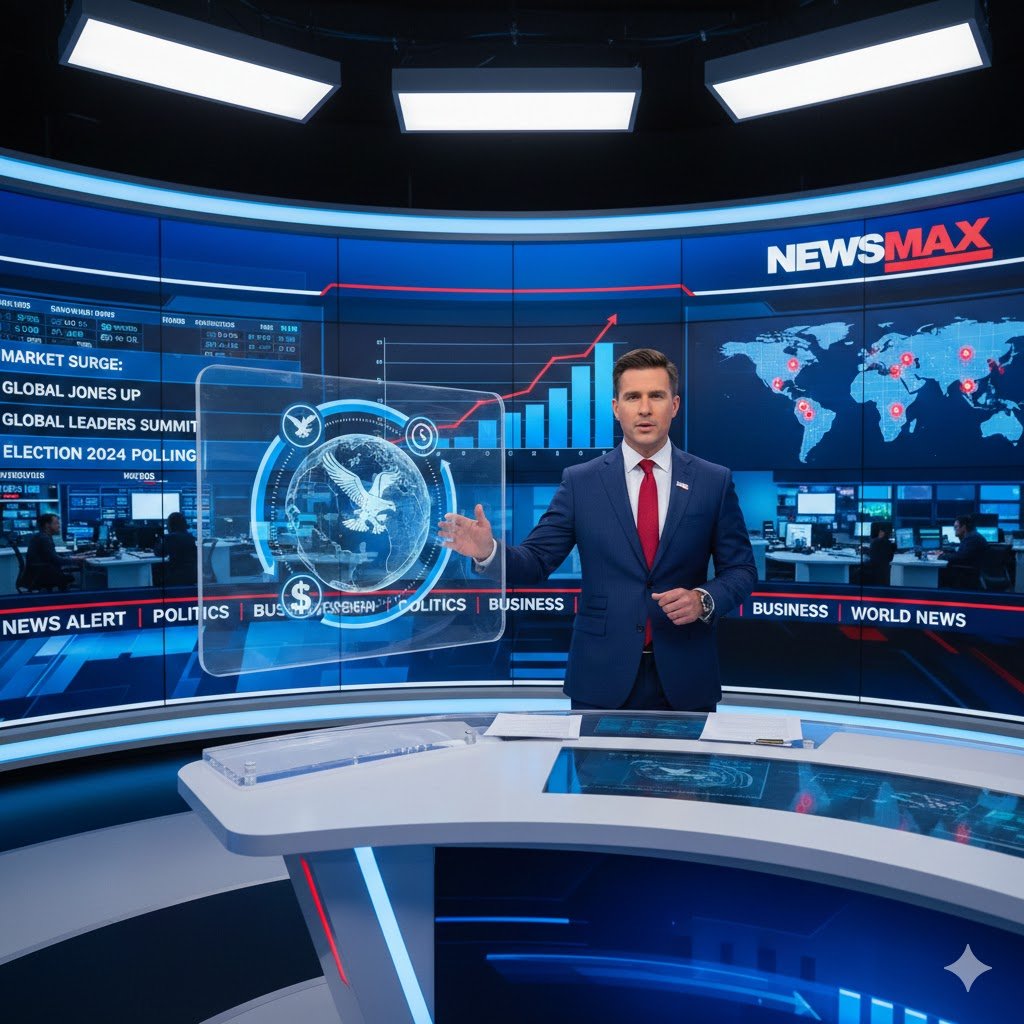
Newsmax is a major American news media company that has become an influential voice in the United States and beyond. Founded as a website in 1998, it expanded into cable television and digital media, drawing attention for its conservative perspective, rapid growth in a polarized media environment, and involvement in high‑profile legal and political controversies. This article explores Newsmax’s history, reach, editorial stance, business development, and the debates surrounding its role in modern media.
What Is Newsmax?
Newsmax, Inc. is an American media company known for its conservative‑leaning news coverage and commentary. It operates multiple media platforms, including:
- Newsmax.com — a high‑traffic digital news website covering politics, health, finance, and world news.
- Newsmax TV — a cable and streaming news channel launched in 2014.
- Newsmax magazine — a monthly print publication.
Founded on September 16, 1998, by journalist Christopher Ruddy, Newsmax has developed into one of the most recognized voices in American conservative media, especially among audiences seeking alternatives to mainstream news outlets.
Early History and Founding
Christopher Ruddy, Newsmax’s founder and current CEO, began his journalism career as an investigative reporter. After working for major publications, Ruddy launched Newsmax as an online news platform, aiming to provide news and opinion content aligned with conservative viewpoints.
For many years, the site grew modestly, earning a reputation among conservative audiences for political commentary and alternative perspectives on national events. As cable news competition intensified, Ruddy strategically expanded Newsmax into television with the launch of Newsmax TV in June 2014, bringing the brand into millions of American households via DirecTV, Dish Network, and other distribution partners.
Growth and Audience Reach
Although Newsmax’s audience remains smaller than major cable outlets like Fox News, its growth in key political moments has been notable. Research shows that the network’s average weekly audience grew significantly around major U.S. political events, such as presidential elections and times of heightened partisan engagement.
By 2019, Newsmax claimed distribution to roughly 70 million households — a considerable reach for a relatively young cable network.
The digital side of Newsmax also commands influence: the main website and mobile apps attract millions of visitors, and the company reports strong social media followings across platforms like X (formerly Twitter), Facebook, and LinkedIn.
This multi‑platform presence allows Newsmax to engage audiences across television, online, and mobile channels, amplifying its content far beyond traditional broadcasting alone.
Editorial Stance and Bias
Newsmax has been widely characterized as having a conservative editorial stance and is often ranked on the right side of political bias surveys. Independent evaluations, such as those by AllSides, place Newsmax consistently in the Right to Lean Right category, indicating that its content frequently reflects conservative viewpoints and commentary.
Critics, including media watchdogs like Media Bias/Fact Check, have labeled Newsmax as a questionable source due to its promotion of content that has sometimes included conspiracy theories, controversial narratives, or poorly sourced material. These assessments highlight concerns about credibility and factual accuracy in some segments of its reporting.
Supporters and Newsmax leadership, however, argue that the outlet champions free press and viewpoint diversity, offering perspectives that they believe are underrepresented in mainstream media. This debate reflects broader tensions in how news organizations are evaluated in an increasingly polarized information landscape.
Newsmax’s Role in U.S. Politics
During the 2020 U.S. presidential election cycle, Newsmax gained national attention by offering coverage that appealed to conservative viewers unhappy with how other networks reported election results. In particular, after major news outlets projected Democratic candidate Joe Biden as the winner, Newsmax maintained narratives questioning the legitimacy of election processes — a stance that resonated with a segment of the audience.
This editorial approach led to significant growth in viewership, as audiences seeking alternative perspectives tuned in. However, it also brought Newsmax into the center of legal controversies and scrutiny.
Legal Challenges and Defamation Settlements
One of the most significant events in recent years involved defamation lawsuits tied to Newsmax’s coverage related to the 2020 election.
In March 2025, Newsmax agreed to pay $40 million to settle a lawsuit from Smartmatic, a voting machine manufacturer that claimed Newsmax falsely alleged its machines manipulated election results.
Soon after, the company also reached a $67 million settlement with Dominion Voting Systems to resolve similar claims of damaging false statements. These legal outcomes stemmed from allegations that Newsmax disseminated inaccurate information about the elections, leading to reputational harm for the firms involved.
While Newsmax maintained that its reporting met journalistic standards, these settlements underscore the legal and ethical complexities of modern news coverage in a politically charged environment.
Public Trading and Financial Milestones
In March 2025, Newsmax completed a highly publicized financial milestone: its initial public offering (IPO) on the New York Stock Exchange under the ticker symbol NMAX. The stock’s debut attracted significant investor enthusiasm, with shares surging dramatically in early trading and temporarily creating a high market valuation for the company.
This public trading status marked a new chapter in Newsmax’s evolution from a niche conservative outlet into a publicly traded media company with a broader financial footprint. However, the stock’s volatility in subsequent months highlighted the challenges inherent in balancing media influence with commercial performance.
Regulatory and Industry Engagement
Newsmax has also engaged in regulatory debates. In 2025, the company filed comments with the Federal Communications Commission (FCC) opposing changes to rules limiting how much television market share a single broadcaster can hold. Newsmax argued that loosening ownership caps could reduce media diversity and concentrate power in a few large networks, potentially marginalizing smaller outlets.
This type of engagement illustrates how Newsmax positions itself not just as a content producer but as a stakeholder in broader discussions about media ownership, competition, and regulatory policy in the communications industry.
Global Reach and Digital Expansion
Although primarily focused on U.S. audiences, Newsmax has pursued international distribution and partnerships, including broadcast deals in countries like Israel and Armenia — moves that extend its presence beyond American borders. These efforts reflect broader ambitions to compete in a global media landscape.
Digital growth has also been a priority, with Newsmax expanding through apps, social platforms, and streaming services to reach audiences who consume news online and on mobile devices. This strategy mirrors trends across the media industry as traditional cable viewership declines and digital engagement rises.
Criticism and Public Perception
Newsmax’s influence is paired with controversy. Critics argue that its editorial choices — especially on politically sensitive topics — have contributed to polarization and misinformation. Independent media watchdogs frequently warn readers to verify Newsmax content and consider potential bias when consuming its reporting.
Public perceptions also vary widely: while many conservative viewers praise Newsmax for providing alternatives to major networks, others see it as a promoter of agenda‑driven narratives. This divide reflects broader challenges facing media consumers in an era of fragmented information sources and partisan media ecosystems.
Conclusion
Newsmax’s journey — from a small conservative website to a multi‑platform media company — illustrates the dynamic evolution of American news media in the 21st century. Its growth, political influence, legal challenges, and financial developments offer a case study in how modern news outlets expand, engage audiences, and navigate complex ethical landscapes. Whether celebrated as a voice for conservative perspectives or critiqued for bias and controversy, Newsmax remains a significant player in media debates today.