
Spatial transcriptomics news: Why this field is getting so much attention right now
Spatial transcriptomics news is drawing attention because the field is moving from promising innovation to practical scientific engine. Researchers are no longer talking only about whether spatial transcriptomics works; they are now asking how to make it faster, cheaper, more reproducible, and more useful across cancer, neuroscience, developmental biology, immunology, and precision medicine. The latest wave of studies shows exactly that shift. New computational approaches are reducing the need for expensive imaging, commercial platforms are being evaluated more rigorously, and multi-omics methods are linking RNA, proteins, and tissue structure in the same experiment.
That matters because spatial biology solves a problem that ordinary transcriptomics cannot: it tells scientists not only which genes are active, but where those genes are active inside the tissue. That “where” is often the difference between a useful biological insight and a misleading average. Tumors, fibrotic lesions, inflamed tissue, and developing organs are all spatially organized systems, and the latest research shows that spatial context can reveal hidden cell-cell interactions, local disease niches, and microenvironment changes that bulk RNA methods would flatten away. In other words, the field is not just producing data; it is changing what counts as biological evidence.
The biggest shift in spatial transcriptomics news: from expensive imaging to smarter workflows
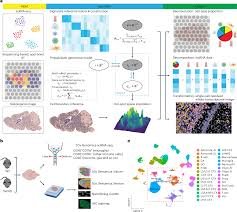
One of the most important developments in spatial transcriptomics news is the growing effort to cut complexity without losing biological value. A Broad Institute team recently reported a method that removes the need for imaging and instead uses computational reconstruction to infer spatial gene expression, making it possible to map larger tissue regions more quickly and at lower cost. The big takeaway is not just speed; it is access. By lowering the barrier to entry, the method could bring spatial analysis to labs that do not have specialized imaging infrastructure.
That trend fits a wider pattern across the field. Many spatial methods have become powerful enough to produce remarkable tissue maps, but they have also become technically demanding, expensive, and harder to standardize across institutions. A 2025 Nature Biotechnology study established the Spatial Touchstone dataset, a multi-site, multi-platform effort designed to benchmark reproducibility and performance, because spatial transcriptomics still lacked the kind of standard metrics that researchers need for fair comparison across sites. The message is clear: the next phase of progress is not only about higher resolution, but about trustworthy, repeatable workflows that more scientists can actually use.
That is why the field feels so active right now. The most exciting “news” is not one single breakthrough, but a series of practical improvements that push spatial transcriptomics toward real-world adoption. Lower cost, better reproducibility, more accessible software, and stronger reference datasets are all making spatial biology easier to deploy in everyday research rather than leaving it locked inside elite labs.
Better platforms, better data: what current benchmarking studies are revealing
Another major theme in spatial transcriptomics news is independent benchmarking. A Nature Methods study evaluating Xenium showed that the platform can map hundreds of genes in situ at subcellular resolution, while also stressing that platform choice and downstream analysis matter more than many users assume. The study compared 25 Xenium datasets across tissues and species, along with eight other spatial technologies, and looked at preprocessing, cell segmentation, spatially variable features, and domain identification. That kind of analysis is valuable because it moves the conversation away from marketing claims and toward practical performance.
A separate 2026 Nature Methods paper went even deeper into quality concerns, focusing on Xenium data in breast and lung tumors. It examined technical noise, transcript spillover, assay specificity, panel performance, segmentation strategies, and cell-type annotation. The authors introduced SPLIT, a method that improves signal purity by reducing mixed transcriptomic signals. That is a meaningful step because it acknowledges a reality many users face: spatial data can be powerful and still be noisy, especially when signal is crowded into dense tissue environments.
These benchmarking papers matter for a very simple reason. If spatial transcriptomics is going to shape clinical research and translational biology, scientists need to know which tools work best for which tissues, which questions, and which quality thresholds. The current news cycle shows a maturing discipline that is now testing itself more rigorously. That is usually the moment when a field becomes truly useful, because it stops relying on excitement alone and starts building shared standards.
AI is becoming a core part of spatial transcriptomics news
Artificial intelligence is no longer a side topic in spatial transcriptomics news; it is becoming part of the field’s foundation. One of the clearest examples is Nicheformer, a transformer-based foundation model trained on more than 110 million cells from single-cell and spatial transcriptomics data across 73 tissues. The model was built to learn spatial context and then transfer that information to downstream tasks such as spatial composition prediction and spatial label prediction. Importantly, the authors showed that models trained only on dissociated data fail to recover the complexity of spatial microenvironments, which is a strong argument for integrating spatial data into modern biological machine learning.
This matters because spatial transcriptomics is generating more data than researchers can manually interpret at scale. AI offers a way to turn those maps into predictions, annotations, and biological hypotheses. Instead of looking at a tissue image and then separately analyzing expression values, researchers can now ask models to infer missing context, identify niche-specific patterns, and support spatial reasoning across multiple datasets. That is especially useful in studies where tissues are heterogeneous, samples are noisy, or the number of markers is limited.
At the same time, the latest research suggests that AI is not replacing biology; it is making spatial biology more legible. The strongest models are not simply guessing patterns from images. They are being trained on large, curated, multi-technology datasets and evaluated on practical tasks that reflect real scientific use cases. That combination of scale, context, and validation is exactly why AI has become one of the most important storylines in the field.
Multi-omics is becoming the new frontier
The next big chapter in spatial transcriptomics news is not just transcriptomics by itself, but spatial multi-omics. Researchers are increasingly combining RNA with protein, chromatin, histology, and other layers of tissue information to capture biology more completely. Nature Methods highlighted Spatial-Mux-seq, a multimodal spatial platform that can profile transcriptome, chromatin accessibility, histone modifications, and targeted proteins in tissues. That kind of integration is important because many disease mechanisms are not explained by RNA alone; they emerge from interactions across multiple molecular layers.
This same direction is visible in the Broad Institute’s IN-DEPTH work, which uses spatial proteomics-derived imaging to guide transcriptomic capture on the same slide without RNA loss. The paper also introduced a proteomic-transcriptomic framework called SGCC to resolve spatially coordinated changes across interacting cell populations. In diffuse large B-cell lymphoma, the approach revealed coordinated tumor-macrophage-CD4 T-cell remodeling and suggested a candidate IL-27-STAT3 signaling axis. That kind of result shows why the field is moving toward integrated measurement rather than single-modality snapshots.
The broader implication is powerful. Multi-omics spatial biology can help answer questions that older methods could only approximate: Which cells are physically adjacent? Which molecules are shared across a local niche? Which signaling pathways appear only in a very specific microenvironment? As more laboratories adopt same-slide and same-sample approaches, spatial transcriptomics is likely to become less of a standalone technique and more of a central hub connecting many other molecular readouts.
Spatial transcriptomics news in cancer research is especially active
Cancer research is one of the strongest engines behind spatial transcriptomics news. That is because tumors are not uniform masses; they are ecosystems. They include malignant cells, immune cells, stromal cells, blood vessels, and extracellular structures arranged in spatial neighborhoods that shape disease progression and treatment response. Spatial transcriptomics is ideal for uncovering those hidden neighborhoods, and recent studies continue to show why the field has become indispensable in oncology.
Recent publications and reports point to this trend in several ways. A 2025 Blood study highlighted by 10x Genomics used Xenium in situ profiling to generate the first map of human bone marrow in multiple myeloma, and the findings challenged a long-held assumption about a universal disease-specific microenvironment. Instead, the study suggested that distinct plasma cell subpopulations reshape local bone marrow niches in different ways. That is exactly the sort of result that makes spatial transcriptomics so valuable in cancer: it can overturn broad assumptions and replace them with anatomically grounded mechanisms.
Cancer-focused spatial work is also expanding through larger pan-cancer studies and cross-platform methods. A recent Cell Reports Medicine paper reported a pan-cancer spatial transcriptomic analysis across 373 samples from 12 cancer types, identifying local cellular programs that help explain how tumors organize themselves. Meanwhile, the IN-DEPTH study showed how same-slide spatial multi-omics can expose microenvironmental reorganization in lymphoma. Together, these examples suggest that cancer is becoming the proving ground where spatial transcriptomics moves from descriptive mapping into mechanistic discovery.
Developmental biology and whole-organ mapping are pushing the limits
Another major headline in spatial transcriptomics news is the field’s move toward larger biological scales. Instead of only mapping small tissue sections, researchers are now attempting whole-embryo, whole-organ, and three-dimensional analyses. A Science report in 2026 described whole-embryo spatial transcriptomics at subcellular resolution in zebrafish embryos, detecting transcripts for 495 genes across an entire embryo. That level of coverage hints at a future where spatial data can follow development from early patterning to organ formation with much finer anatomical detail.
A 2025 Science paper also reported deep-tissue transcriptomics and subcellular imaging at roughly 310 micrometers of depth, supporting whole-embryo transcriptomics imaging and precise 3D gene expression mapping. These developments matter because biology happens in three dimensions, not flat slices. As spatial techniques improve, researchers can begin to reconstruct how cells organize across depth, how lineages emerge in situ, and how tissue architecture evolves over time.
There is also growing excitement around sequencing-free whole-genome spatial transcriptomics. A 2025 Cell paper reported profiling transcripts from about 23,000 human genes or 22,000 mouse genes at single-cell resolution in tissue sections. That points toward a future where spatial readouts may be both broader and more accessible than many earlier targeted methods. Put simply, the field is trying to solve one of biology’s biggest problems: how to see the whole tissue, not just the parts we already expect to be important.
Why quality control and reproducibility are becoming headline issues
When a field grows quickly, quality control becomes news. Spatial transcriptomics is now at that stage. The 2025 Nature Biotechnology Spatial Touchstone study created a multi-site benchmark to evaluate reproducibility, sensitivity, dynamic range, signal-to-noise ratio, false discovery rates, cell type annotation, and agreement with single-cell profiling. It also launched open-source tools and best-practice guidance. That is a sign of maturity, because mature fields do not just produce data; they produce standards.
Quality control is especially important because spatial data can be affected by segmentation choices, panel design, tissue quality, and technical contamination. The 2026 Xenium paper on sensitivity and signal contamination is a good example of why that matters. It showed that transcript spillover can distort interpretation, and it introduced SPLIT to improve signal purity using snRNA-seq reference information. That kind of correction may sound technical, but it has major consequences: better quality control can change which cell types appear to be present, which pathways appear active, and which disease mechanisms researchers think they are seeing.
The practical lesson is straightforward. Anyone following spatial transcriptomics news should pay attention not only to new assays and flashy images, but also to validation studies, benchmarking papers, and software updates. These are the pieces that decide whether spatial biology remains a specialist tool or becomes a durable, trusted research standard. In a young field, technical rigor is not a side issue; it is the difference between hype and long-term value.
What researchers, students, and biotech readers should watch next
If you are following spatial transcriptomics news as a student, researcher, or biotech reader, the most important trend to watch is convergence. The field is converging across platforms, across modalities, and across analysis methods. Imaging-based methods are getting stronger, computational methods are reducing cost barriers, and multi-omics approaches are linking spatial RNA to protein and chromatin data. At the same time, AI models are being trained to understand spatial context rather than ignoring it. That convergence suggests that the next generation of studies will be more complete, more standardized, and more clinically relevant.
This also means the field is becoming more practical for real-world use. Commercial platforms like Xenium are being tested in independent studies, and researchers are publishing direct recommendations for best practices. Broad and other groups are building methods that lower the barrier to entry. Meanwhile, high-resolution and whole-embryo studies are expanding the scale of what spatial methods can capture. That combination is rare in biology: the field is moving both downward into finer resolution and outward into broader accessibility at the same time.
For readers searching for the real story behind spatial transcriptomics news, this is it: the technology is no longer just about beautiful tissue images. It is about translating tissue architecture into biologically and clinically meaningful insight. The most valuable updates now come from methods that are cheaper, faster, more reproducible, and more integrated with other data types. That is the direction every serious lab, biotech team, and biomedical writer should keep an eye on.
Final thoughts on spatial transcriptomics news and why it deserves your attention
Spatial transcriptomics is moving fast because it answers a question that modern biology keeps running into: what is happening, where is it happening, and which cells are involved in the process? The newest studies show a field that is solving practical problems as quickly as it is producing new discoveries. It is learning how to scale without losing quality, how to integrate multiple molecular layers without losing interpretability, and how to use AI without losing biological meaning. That combination is why the field feels so important right now.
And the momentum is likely to continue. With whole-embryo mapping, subcellular imaging, sequencing-free whole-genome approaches, standardized metrics, and same-slide multi-omics all advancing at once, spatial transcriptomics news is no longer niche news for a small community. It is becoming essential reading for anyone interested in cancer, development, immunology, neuroscience, biotechnology, or the future of precision medicine. If you want to stay ahead of where biology is heading, this is one field worth tracking closely.
If this topic matters to your readers, bookmark this page, share it with your audience, and come back for the next update—because the next major breakthrough in spatial transcriptomics news may change how we understand tissue biology all over again.