
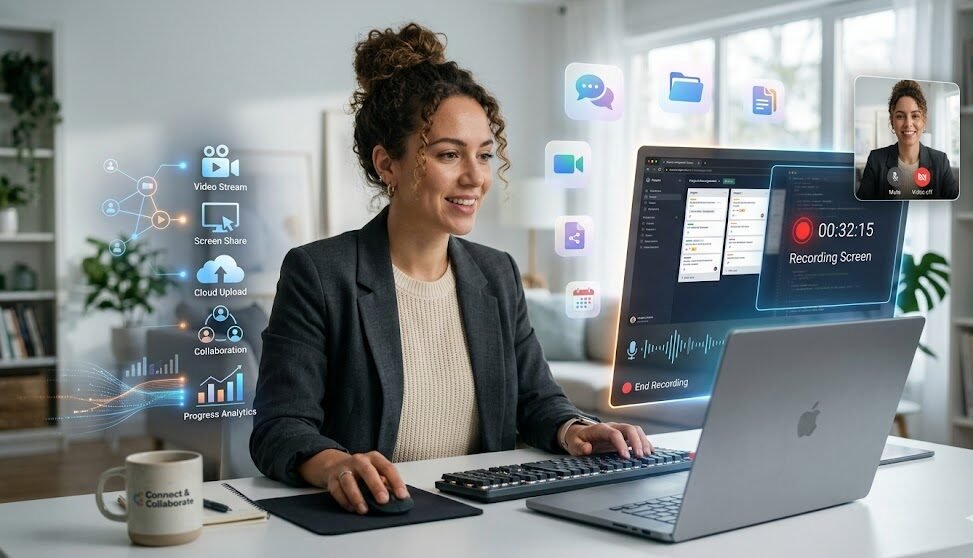
Screen Recording Software That Skyrockets Work Efficiency 10X Today
In today’s fast-moving digital workplace, clear communication is no longer a luxury. It is the difference between confusion and productivity, between delayed projects and smooth collaboration, and between an idea that stays stuck in a message thread and an idea that actually gets implemented. That is exactly why screen recording software has become such an essential part of modern work. Whether you are a teacher explaining a lesson, a marketer walking a client through a campaign, a developer reporting a bug, a founder sharing a product update, or a remote team member trying to reduce long meetings, the right screen capture app can instantly make communication more human, more visual, and far more effective.
Loom has become one of the most recognized tools in this space because it helps people record their screen, voice, and camera in a simple, fast, and practical way that brings work to life.
What makes Loom especially valuable is not just the ability to record a screen. Many tools can do that. The real power lies in how Loom turns everyday communication into something easier to understand, easier to share, and easier to act on. Instead of writing a long explanation or scheduling yet another meeting, you can open the app, record your screen, talk naturally, and send the video within minutes. That speed matters. So does clarity. In a world where people are overloaded with notifications and meetings, screen recording software like Loom helps teams save time, reduce friction, and communicate in a way that feels personal without requiring everyone to be online at the same moment.
Loom is often described as a screen recorder, but that description barely scratches the surface. It is better understood as a communication tool built for the way people work now. The app allows users to capture what they see on their screen and combine it with voice narration, facial expressions, and often a polished sharing experience that makes the finished video easy to watch. Instead of sending a wall of text, you can guide someone through a process visually.
Instead of repeating the same instructions over and over, you can create one recording and reuse it whenever needed. Instead of relying on memory after a live meeting, you can send a recorded explanation that people can revisit anytime. That is why so many professionals now see screen recording software as an everyday work tool rather than a niche convenience.
One of the biggest reasons Loom stands out is its simplicity. Many people avoid making videos because they assume the process will be complicated, technical, or time-consuming. Loom removes much of that pressure. The interface is designed for quick use, which means users can start recording with minimal setup. That is especially important in a busy environment where the goal is not to create a cinematic production but to explain something clearly and efficiently. A polished but overly complicated tool can actually slow work down. A lightweight and intuitive app, on the other hand, encourages people to communicate more often and more effectively. That is exactly the kind of behavior good screen recording software should inspire.
Another major advantage of a screen capture app like Loom is the way it supports asynchronous communication. Not every conversation needs a live meeting. Not every explanation needs a call. Sometimes the best way to share information is to record it once and let others watch it when they are ready. This is especially useful for distributed teams, international teams, and busy professionals who work across time zones. By recording your screen and voice, you give your audience the flexibility to absorb the information on their own schedule while still receiving a clear, guided explanation. That flexibility can reduce unnecessary meetings and create more focused workdays for everyone involved.
For remote teams, this matters even more. Working remotely can create communication gaps if people rely too heavily on text messages, email chains, or meetings that are hard to coordinate. Screen recording software bridges that gap by allowing team members to show exactly what they mean. A designer can present a mockup and explain choices visually. A support specialist can demonstrate a fix instead of typing step-by-step instructions. A project manager can review progress without making everyone join a meeting. A sales rep can create a personalized walkthrough for a prospect. In each case, the screen capture app becomes a more natural and efficient way to share information than static text alone.
Loom also shines because it makes work feel more human. Text is efficient, but it can be cold or misunderstood. Voice adds tone. Camera adds presence. When you record yourself explaining something, people can hear your emphasis, understand your intent, and feel more connected to the message. That human touch is particularly valuable in workplaces where people may never meet in person. A short screen recording can build trust more effectively than a long email because it shows the person behind the message. In that sense, screen recording software is not just a productivity tool; it is also a relationship-building tool.
The use cases for Loom are broad, and that is one reason it has become so popular. Educators use it to create lessons and tutorials. Customer support teams use it to answer questions and guide users through solutions. Product teams use it to share feature demos, product walkthroughs, and bug reports. Marketing teams use it to review creative ideas, content drafts, or website updates. Sales teams use it to send personalized prospect videos. Founders use it to communicate vision, updates, and announcements. Even freelancers and agencies use screen recording software to improve client communication, present work clearly, and avoid endless revision loops. The same simple action, recording your screen, can serve many different professional needs.
A good screen capture app also helps reduce misunderstandings. One of the most common reasons work gets delayed is that instructions were unclear. A person reads a message, interprets it one way, and then produces something slightly off-target. That leads to clarification rounds, edits, and frustration. With Loom, you can show exactly what you mean, point to the relevant part of the screen, and explain the context in real time. This visual clarity lowers the chances of error and makes collaboration smoother. In many cases, it is faster to record a two-minute video than to write a detailed explanation, and the video is often easier to follow as well.
Another important part of the Loom experience is the speed at which videos can be shared. The faster a message can move from your screen to someone else’s inbox or workspace, the more useful it becomes. If a tool is too slow or too cumbersome, people stop using it. Loom’s appeal is that it removes barriers between creating and sharing. That ease encourages more frequent communication, and frequent communication often leads to better teamwork. For businesses that care about efficiency, that is a major benefit. Time saved on communication can be redirected into actual execution, which is where real growth happens.
When people search for screen recording software, they are often looking for more than a technical feature set. They want a solution that fits the way they work. Some want a simple way to record tutorials. Others want a professional tool for customer demos. Some want to replace meetings with short updates. Others want to create training content that can be watched again and again. Loom appeals to all of these needs because it sits at the intersection of simplicity, speed, and clarity. That combination makes it one of the most practical tools for everyday business communication.
The best software does not just do one thing well; it removes friction from an entire workflow. Loom does this by allowing people to explain, demonstrate, and share without needing a separate production process. There is no need to set up a complex editing environment just to send a quick explanation. There is no need to write long, repetitive messages when a visual walkthrough would be better. There is no need to call a meeting simply because a process is hard to describe. By making recording easy, Loom helps teams communicate more naturally and with less overhead.
This matters a great deal in customer-facing roles. Imagine trying to support a user who is confused about how to navigate a dashboard, complete a setup, or change a setting. Long text instructions often create more confusion, not less. A short screen recording, on the other hand, can guide the user step by step in a way that is calm, clear, and reassuring. The same applies to onboarding new team members or helping clients understand a deliverable. Screen recording software can become a support asset, a training asset, and a customer experience asset all at once. That versatility makes it worth far more than a basic recording tool.
Loom is also valuable because it encourages better habits. Once people realize how easy it is to record a quick explanation, they often start replacing time-consuming habits with smarter ones. They stop writing overly long emails. They stop calling unnecessary meetings. They start sharing concise, visual updates. They start documenting processes in a way that can be reused. Over time, this changes the culture of communication inside a team. Work becomes more transparent. Questions get answered faster. People spend less time waiting and more time moving forward. That kind of shift can have a real impact on productivity and morale.
If you are building content for a website, a blog, or a business page, the topic of Loom and screen recording software is also strong from an SEO perspective because it speaks to a real need. People are constantly searching for faster communication tools, better remote work solutions, and easier ways to create tutorials or demos. Content that explains how a screen capture app can improve workflow is naturally useful to readers and highly relevant to search intent. That is why articles like this can perform well when they are written with depth, clarity, and practical examples. Search engines reward content that satisfies user intent, and readers reward content that answers their questions in plain language.
When writing about this topic for Rank Math and SEO success, it is important to keep the focus keyword natural and useful. Repeating “screen recording software” too often can weaken the reading experience, but using it in strategic places helps search engines understand the page topic. The stronger approach is to cover the subject thoroughly, answer common user questions, and explain benefits in a way that sounds human. That is what makes content trustworthy and engaging. Readers do not want keyword stuffing. They want useful information that helps them make a decision or understand a topic better. A well-structured article about Loom can achieve both goals at once.
The value of screen recording software is also tied to the way people consume information today. Audiences are busy. Attention spans are limited. Visual learning is powerful. A short video can explain in two minutes what might take ten paragraphs to describe. This is why screen recordings have become such a practical format for tutorials, walkthroughs, presentations, and internal updates. Loom makes this process accessible to more people, not just video professionals. That accessibility helps smaller teams, solo entrepreneurs, educators, and nontechnical users communicate at a higher level without needing advanced editing skills.
Another reason Loom feels useful is that it lowers the barrier to sharing knowledge. Many people know how to solve problems, but they do not always know how to explain them well in writing. Screen recording provides a bridge between expertise and communication. You can demonstrate exactly what you are doing and talk through the steps in real time. That makes knowledge transfer much easier. In businesses where people frequently onboard new hires, train clients, or explain recurring tasks, this is a major advantage. It creates a library of reusable explanations that can save time for months or even years.
Loom also fits well into a modern workflow because it respects the user’s time. Instead of forcing people into a long editing process, it encourages concise communication. Instead of making users choose between professionalism and speed, it tries to give them both. That balance is one of the reasons it remains so widely adopted. Many screen capture apps can record. Fewer can help people communicate in a way that actually improves workflow. The best tools are the ones people keep coming back to because they make life easier, and Loom has clearly earned that kind of loyalty for many users.
For businesses, this can translate into real operational benefits. Fewer meetings can mean more focus time. Better explanations can mean fewer revision cycles. Faster internal communication can mean quicker decisions. More personalized customer communication can mean stronger relationships. Better training materials can mean faster onboarding and fewer repeated mistakes. All of these outcomes are connected to the same underlying capability: recording and sharing information clearly. That is why the market for screen recording software continues to grow, and why a screen capture app like Loom remains so relevant in 2026 and beyond.
There is also a creative side to using Loom. Not every recording has to be purely functional. People use screen recordings to narrate ideas, tell stories, present product journeys, and create more engaging content. A simple video can make a process feel more alive. A product demo can become more persuasive when the speaker sounds natural and confident. A tutorial can feel more supportive when the instructor is visible and approachable. These small human details can make a big difference in how the audience receives the message. That is part of what it means to bring work to life.
As teams grow, communication tends to become more complex. More people are involved, more steps are required, and more things can go wrong. Tools that simplify explanation become increasingly valuable under these conditions. Loom helps teams maintain clarity even as complexity increases. It gives people a dependable way to show, not just tell. That matters because visual communication reduces guesswork. It helps everyone work from the same understanding. In fast-moving organizations, that shared understanding can be the difference between momentum and confusion.
A good screen recording strategy is not only about the app itself. It is also about how thoughtfully the tool is used. The most effective videos are usually clear, focused, and direct. They begin with the purpose, move through the explanation logically, and end with a next step. Loom makes it easy to follow that approach because it supports fast, natural recordings that do not require elaborate scripting. Over time, users learn to communicate more effectively because the format encourages clarity. That is another reason screen recording software is so valuable: it improves not only the message but also the way people think about the message.
For content creators and business owners, this topic offers a strong opportunity to educate audiences. People want to know how to communicate better, save time, and use practical tools that improve everyday work. An article about Loom can address all of those needs while also building trust with the reader. The more useful and specific the content is, the better it performs for both users and search engines. That is why in-depth, human-written content remains so important. It does not just attract traffic. It creates confidence. And confidence is what turns a visitor into a loyal reader or customer.
The bigger story here is that modern work is becoming more visual, more flexible, and more asynchronous. Screen recording software fits that evolution perfectly. It gives people a fast way to share context. It helps teams reduce noise and focus on what matters. It supports learning, onboarding, support, sales, product development, and internal collaboration. Loom is one of the clearest examples of how a simple tool can have an outsized impact when it is designed around real human behavior. It is not just about recording a screen. It is about making communication easier to understand, faster to share, and more personal to receive.
If your goal is to explain something clearly, reduce meetings, improve collaboration, or create a more polished communication workflow, Loom is worth serious attention. It shows how a screen capture app can become much more than a utility. It can become part of the way your business teaches, supports, sells, and collaborates. That is the true value of screen recording software today. It does not simply save time. It improves the quality of work itself by making communication stronger, simpler, and more effective.
In the end, the best tools are the ones that fade into the background while helping you do better work. Loom does that by making screen recording feel easy, natural, and useful. It helps people express ideas visually, connect with others more clearly, and move projects forward without unnecessary friction. Whether you are a solo creator, a growing startup, or an established team, the ability to capture your screen and explain your thinking in real time can transform how you work. That is why Loom continues to matter, and why screen recording software remains one of the most practical and powerful tools in modern digital communication.
If you are ready to make your communication clearer, faster, and more human, start using a screen capture app that helps your work speak for itself. Loom is built for exactly that purpose. Record once, explain better, and let your ideas reach people with more impact. That simple shift can save hours, reduce confusion, and make every message more effective. In a busy world, that is not just convenient. It is a competitive advantage.