
If you have ever asked yourself what is american roulette, you are asking about the version of the game most people in the United States actually play. I first sat down at one of these tables in Atlantic City, and at first glance it looked exactly like the roulette I had seen in films. It took me a few spins to notice the difference, and once I saw it, I could not unsee it. There are two green pockets on this wheel, not one, and that small detail changes everything about the game.
In this guide I will explain how the wheel works, what every bet pays, why the house edge sits at 5.26 percent, and how this version compares with the European game, plus a few myths and the bankroll habits that keep my sessions fun.
Table of Contents
What Is American Roulette? The Wheel With Two Zeros
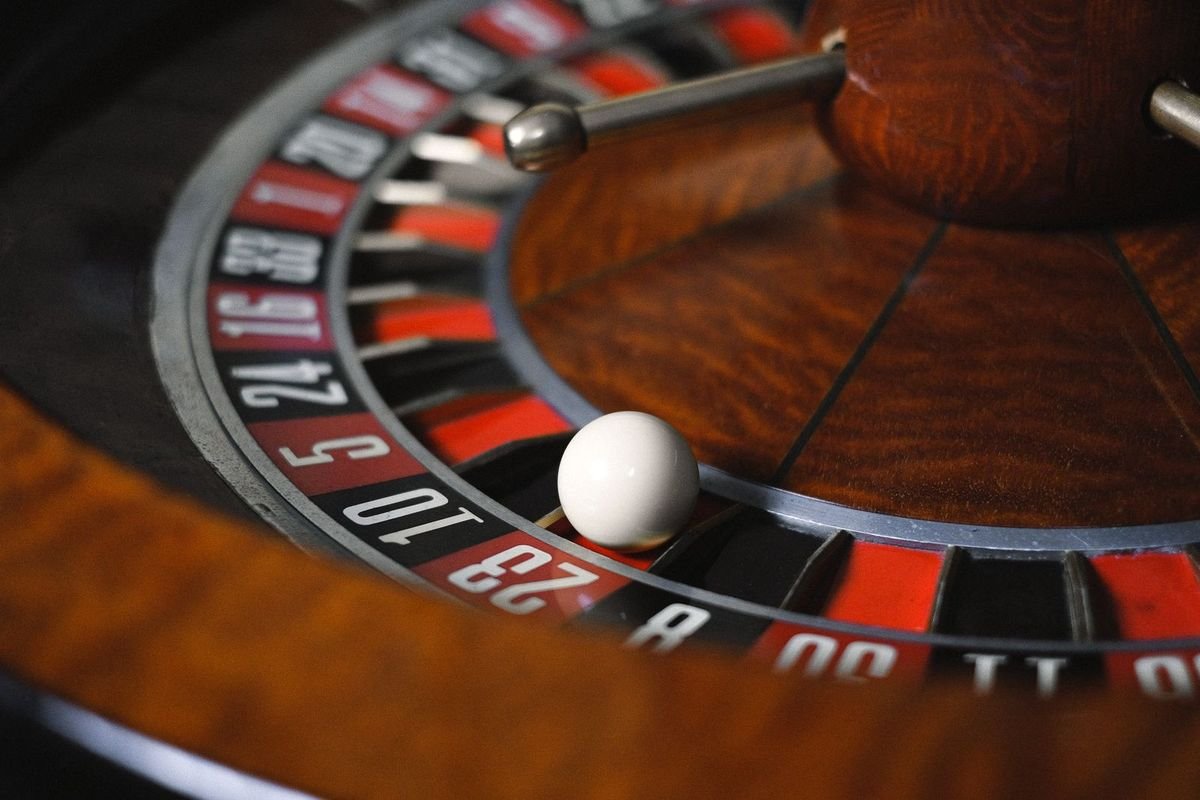
So, what is american roulette in the simplest terms? It is a casino table game where a dealer spins a wheel, drops a small ball onto it, and players bet on where that ball will land. The wheel has 38 numbered pockets: the numbers 1 to 36, plus a green 0 and a green 00. The numbers are split evenly between red and black, eighteen of each, while the two zeros sit in green pockets of their own.
The layout next to the wheel mirrors those numbers. You place chips to say where you think the ball will stop: a single number, a group of numbers, a colour, odd or even, or a range like 1 to 18. Once bets are placed, the dealer spins the wheel one way, sends the ball the other way, and calls “no more bets” as it slows down.
The pace is relaxed compared with slots or blackjack: a spin takes a minute or so, with time to chat with the dealer or the player next to you. But before you sit down and buy chips, it helps to understand what that second zero is really doing to your money, because it is not decoration.
The 5.26% House Edge, Explained in Plain English
Here is the part most new players skip, and it matters most. Understanding what is american roulette means understanding why the house edge is 5.26 percent, and that number comes straight from the two zeros.
Bet a dollar on a single number and, if it hits, the casino pays 35 to 1: your dollar back plus 35. That sounds generous until you count the pockets. Your real chance is 1 in 38, so a fair payout would be 37 to 1. The casino pays 35 to 1 instead, and that gap is where the house edge lives.
The same gap shows up on even-money bets. Bet on red and you might think you have a fifty-fifty chance, but you do not: eighteen red pockets, eighteen black, and two green. Your chance of red is 18 out of 38, about 47.4 percent, and when the ball lands on 0 or 00, every red and black bet loses.
In practice, the casino expects to keep about $5.26 of every $100 wagered over a long stretch of play. In a single session, anything can happen: you might walk away up fifty dollars or down a hundred. But the longer you play, the more results drift toward that average, and remembering it stops me from treating a hot streak as skill.
Inside Bets: Big Payouts, Long Odds
Inside bets are the wagers on the numbered part of the layout, and they carry the big payouts. The first thing I tell friends learning what is american roulette is to treat inside bets as the spice, not the main course. A straight-up bet on a single number pays 35 to 1. It is the most exciting bet on the table, and the one you will lose most often: your chance is 1 in 38, about 2.6 percent, so I treat it like a lottery ticket rather than a plan.
A split covers two neighbouring numbers and pays 17 to 1: place your chip on the line between them and either one wins. A street covers three numbers in a row and pays 11 to 1, a corner covers four numbers meeting at a point and pays 8 to 1, and a six-line covers two rows of three and pays 5 to 1.
I like inside bets in small doses: a couple of chips on my favourite numbers adds excitement, and when one hits, the payout feels wonderful. But I never build a whole session around them, because the payouts are large precisely because wins are rare, and a losing run can eat a bankroll fast.
Outside Bets: Smaller Wins, Steadier Play
Outside bets sit on the outer part of the layout and cover big groups of numbers. Red or black, odd or even, and high (19 to 36) or low (1 to 18) all pay even money, 1 to 1. Dozens cover twelve numbers at a time (1 to 12, 13 to 24, or 25 to 36) and pay 2 to 1, and columns work the same way.
These bets win far more often than inside bets, which is why they feel calmer to play. A red-or-black bet wins about 47 times out of every hundred spins. The trade-off is that the payouts are small, so a winning session built on outside bets grows slowly rather than in sudden jumps. I find this suits longer, more social sessions, where I want to stay at the table for an hour without my stack disappearing in ten minutes.
One thing I want to be clear about is that outside bets do not have a lower house edge. That 5.26 percent applies to them too, thanks to the two green pockets. They simply smooth out the ride: you lose more slowly and win more often in small amounts, but the casino still holds the same advantage over time.
The Five-Number Bet: The Worst Bet on the Table
There is one bet on the American layout that deserves its own warning, and it is the five-number bet, also called the basket bet. If you only remember one warning from this guide to what is american roulette, make it this one: skip the five-number bet. You place a chip on the corner where 0, 00, 1, 2, and 3 meet, and it covers all five of those numbers at once. It pays 6 to 1 if any of them hits.
The problem is the maths. A fair payout would be 33 to 5, or 6.6 to 1, but the casino pays only 6 to 1, and that shortfall pushes the house edge on this bet up to 7.89 percent. That makes it the worst bet on the entire table, and the only one where the edge is not 5.26 percent.
Covering both zeros feels clever, like you have found a way to beat the very pockets that hurt the outside bets. But you have not: you have simply chosen the one bet where the casino takes an even bigger cut. I skip it entirely. If you want to cover the zeros, a straight-up chip on 0 and another on 00 keeps you at the standard 5.26 percent edge.
American vs European Roulette: The Real Difference
Comparing the two wheels is the fastest way to understand what is american roulette. The European game has a single zero, so its wheel has 37 pockets instead of 38, and that one missing pocket cuts the house edge almost in half, down to 2.7 percent. My guide to European roulette covers the single-zero game in detail.
The European game also has two player-friendly rules you will almost never see on an American table. With en prison, an even-money bet that loses to zero is held over for the next spin, and if your bet wins on that spin you get your stake back. La partage works in a similar spirit: when the ball lands on zero, you lose only half of your even-money bet. Both rules cut the house edge on even-money bets to about 1.35 percent, a huge difference from 5.26 percent.
So which should you play if both are on the floor? Honestly, the European wheel is the better deal by the numbers, and I choose it whenever I can. But in many American casinos the American wheel is the only roulette available, and it is still fun if you go in with your eyes open.
A Short History of the American Wheel
To understand what is american roulette today, it helps to know where the double-zero wheel came from. Roulette began in France in the 1700s, and the wheel crossed the Atlantic with European settlers in the 1800s. The early American wheels were even wilder than the ones we see today: some had a single zero, some had a double zero, and a few even had an American eagle symbol that acted as a third house pocket. The game found a home in New Orleans and spread west with the riverboats.
The double-zero wheel stuck in the United States for a simple reason: it made more money for the house. Operators liked the bigger edge, and players either did not notice or did not mind. Over time the eagle pocket disappeared, the layout was standardised, and the 38-pocket wheel became the American standard.
Meanwhile, in Europe, the single-zero wheel became the norm, partly because casinos there competed by offering the fairer game. That split is why the two versions still exist side by side today. The American wheel is not a mistake. It is a deliberate design choice, and that history explains why you will find it everywhere in Las Vegas and Atlantic City.
Myths That Won’t Help You Win
Some of the myths around what is american roulette sound convincing at the table, but none of them hold up. The most common is the idea of “due” numbers. A player watches red come up six times in a row and becomes convinced black is due. It is not. The wheel has no memory. Each spin is independent, and the chance of red on the next spin is exactly the same as on the last one, no matter what happened before.
Dealer signature is another popular one. The theory says a dealer spins the wheel the same way every time, so the ball lands in a predictable area. In reality, dealers vary their spin speed, the ball bounces around the pockets in chaotic ways, and modern wheels are built to be as random as possible. I have watched dealers for years and never seen a pattern I could bet on.
Then there are the betting systems. Martingale, where you double your bet after every loss, sounds logical until you hit a losing streak and either run out of money or hit the table limit. Fibonacci, D’Alembert, Labouchere: they all rearrange your bets, but none of them changes the house edge or the odds of the next spin. A system can change how your bankroll rises and falls, but not turn a 5.26 percent disadvantage into an advantage. If a system really beat roulette, casinos would have removed the tables long ago.
Enjoy the myths as table talk and nothing more. They are fun to discuss over a drink, but they should never decide how much money you put on the layout.
Bankroll and Session Tips That Actually Help
No guide to what is american roulette is complete without a word on bankroll, because money management is the only real skill in this game. I set a session budget before I sit down and treat it like the price of a night out: money I am comfortable losing, never cash I need for bills, rent, or food. When the budget is gone, I walk away. That rule sounds simple, and it is the hardest one to keep.
I also set a time limit. Roulette is a slow, relaxing game, and it is easy to look up and realise two hours have passed. I give myself an hour, maybe ninety minutes, then take a break whether I am up or down. A short walk, a coffee, some fresh air. It clears my head and stops me from making tired, sloppy bets late in a session.
For bet sizing, I keep my bets small compared with my session budget. A common guideline is to keep each spin to no more than one or two percent of what you brought, so a hundred-dollar budget means one- or two-dollar bets. It sounds cautious, but it keeps you in the game long enough to actually enjoy it. Chasing losses by suddenly tripling your bets is the fastest way to turn a bad evening into a terrible one, and I have learned that lesson the expensive way. If you want a deeper look at the maths behind the game, the roulette odds page is a clear, honest reference I keep coming back to.
Where You’ll Find American Roulette
If you are wondering where to play what is american roulette, the answer in the United States is almost anywhere. The American wheel is the standard in Las Vegas, Atlantic City, and almost every tribal and commercial casino across the country. Walk onto any casino floor and you will find a roulette table, usually near the craps and blackjack pits.
Online, the American version is just as common. Most online casinos that serve American players list it alongside the European game, and the rules are identical to the live version. Online play has its own advantages: lower minimum bets, the freedom to play slowly, and free-play modes where you can learn the layout without risking a cent. I always suggest trying the free version first if you are new.
One word of caution, whether you play in person or online: stick to licensed, reputable casinos. A licensed casino uses regulated equipment and publishes its rules openly. An unlicensed site can offer whatever odds it likes and nobody is checking. If the rules are unclear, the payouts look odd, or the site will not tell you who regulates it, walk away.
Frequently Asked Questions
How many pockets are on an American roulette wheel?
There are 38 pockets: the numbers 1 to 36, plus a green 0 and a green 00. The numbers 1 to 36 are split evenly between red and black, eighteen of each. The two green pockets are what give the house its edge.
Why is the house edge 5.26 percent in American roulette?
The edge comes from the gap between the true odds and the payout. A single number has a 1 in 38 chance of hitting, but the casino pays only 35 to 1 instead of the fair 37 to 1. That shortfall works out to 5.26 percent.
Is American roulette worse than European roulette?
By the numbers, yes. European roulette has one zero instead of two, so its house edge is 2.7 percent, roughly half the American figure. European tables may also offer en prison or la partage, cutting the edge on even-money bets to about 1.35 percent.
What is the five-number bet, and should I play it?
The five-number bet covers 0, 00, 1, 2, and 3, and it pays 6 to 1. Avoid it: its house edge is 7.89 percent, the worst on the table, while every other bet carries a 5.26 percent edge.
Can a betting system beat American roulette?
No. Systems like Martingale or Fibonacci change the size and order of your bets, but they do not change the odds of any spin or the 5.26 percent house edge. They can make a session feel more structured, but they cannot turn a losing game into a winning one.
My Honest Take
After all the numbers and the history, here is what I actually think. What is american roulette, once you strip away the glamour? It is a fun, social, slow-paced casino game with a higher house edge than its European cousin, and that is a fair trade if you know what you are paying for. I still play it in the States, because the American wheel is what is on the floor. I just play it with small bets, a fixed budget, and no illusions about beating the maths.
If you take one thing from this guide, let it be this: choose the single-zero wheel when you have the choice, skip the five-number bet always, and treat your session budget like a ticket price rather than an investment. Do those three things and roulette stays a good night out instead of an expensive lesson.
Gamble responsibly. 18+ only.