
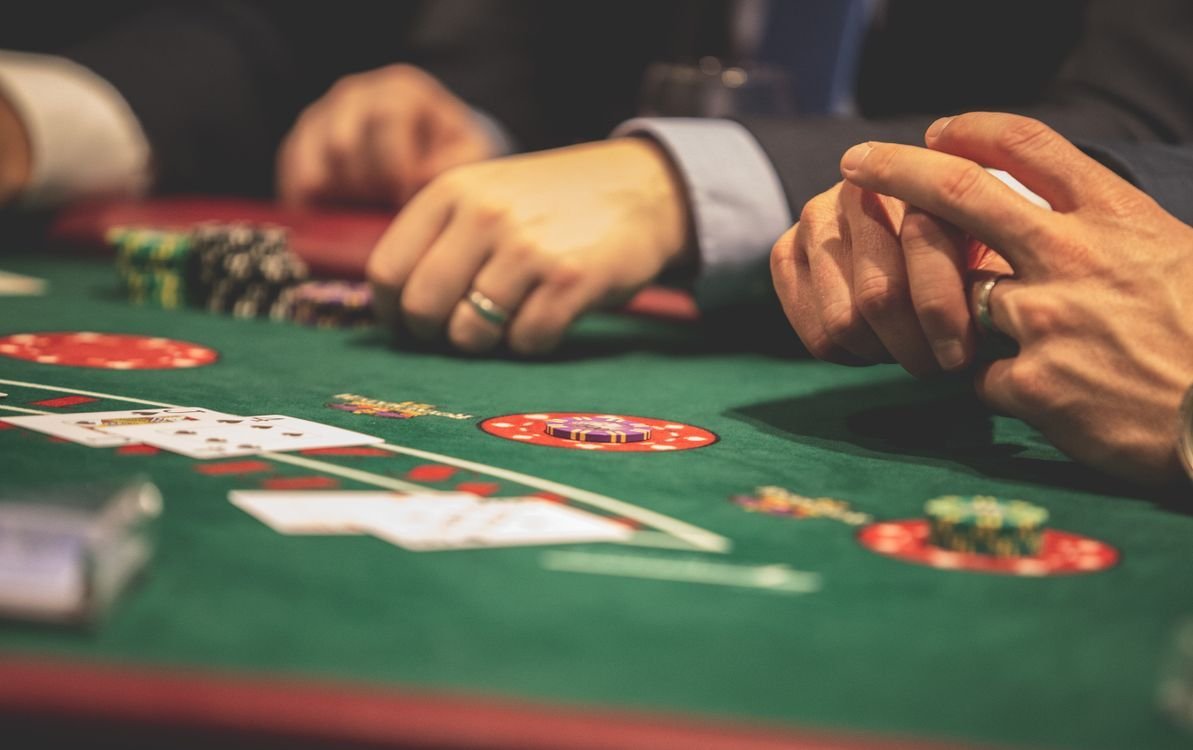
If you’ve ever sat down at a blackjack table and wondered what is the house edge in blackjack, you’re asking the single most useful question a player can ask. I remember my first few sessions years ago, happily doubling down on anything that looked good and wondering why my chips kept drifting toward the dealer even on nights when I felt like I was playing well. The answer wasn’t bad luck. It was the edge, quietly doing its job hand after hand.
Table of Contents
The house edge is the reason casinos can offer blackjack at all, and it’s also the reason blackjack is one of the fairest games on the floor — if you know what you’re looking at. If you understand what is the house edge in blackjack, you’ll never look at a 6:5 table the same way again. In this guide, I’ll walk you through what the number actually means, why blackjack’s edge is so much lower than most casino games, how your own decisions move it up or down, and how to spot the tables worth your money and walk past the ones that aren’t.
What Is the House Edge in Blackjack, Really?
Let’s strip away the jargon first. The house edge is the small built-in advantage the casino holds over you, expressed as a percentage of every dollar you bet. It doesn’t mean the casino takes that percentage out of your pocket on every hand. It means that over a very large number of hands, the casino expects to keep roughly that share of all the money wagered.
So what is the house edge in blackjack in practical terms? At a good table, with a player using basic strategy, it’s around 0.5%. That means that for every $100 you bet over the long run, the casino expects to keep about 50 cents. Compare that with slot machines, where the edge is often 4% to 10%, or American roulette at 5.26%, and you start to see why serious players love this game. The general idea of what is the house edge applies to every casino game, but blackjack is unusual because your decisions actually change the number.
Here’s the part most new players miss: the edge comes mostly from one simple rule — you act first. If you bust, you lose your bet immediately, even if the dealer busts right after you. The dealer plays by fixed rules and never has to make a judgment call, but they get to act last, and that ordering is worth a lot. Everything else — the payout for a natural blackjack, the dealer’s rules on soft 17, the number of decks — just nudges that core advantage up or down.
Why Blackjack’s Edge Is So Low Compared to Other Games
Blackjack is the rare casino game where skill genuinely matters. In roulette or baccarat, no decision you make changes the math. In blackjack, every hand asks you a question: hit, stand, double, split, or surrender? Each choice has a mathematically correct answer, and the gap between the right answer and a guess is exactly what the casino is counting on.
The game also pays you extra for the best hand. A natural blackjack — an ace plus a ten-value card on your first two cards — traditionally pays 3 to 2. That bonus payout is a big part of why the edge stays low. You’re getting paid $15 on a $10 bet for the hand you’ll hit roughly once every 21 hands, and that extra money offsets a lot of the grind. When casinos cut that payout to 6 to 5, as many now do, the edge jumps sharply, and I’ll explain why in a moment.
Another reason the edge stays small is that blackjack gives you options other games don’t. That’s why asking what is the house edge in blackjack before you sit down matters more here than at any other table game — the answer depends on how you play, not just on where you play. Doubling down lets you put more money on the table exactly when the odds tilt in your favor, like holding 11 against a dealer’s 6. Splitting pairs lets you turn one bad hand into two good ones. Surrender lets you cut your losses on a hopeless hand. Every one of these tools is a lever that pulls the edge down — but only if you use them at the right time.
How Basic Strategy Lowers the Edge
Basic strategy is the set of mathematically correct plays for every combination of your hand and the dealer’s upcard. Once you know what is the house edge in blackjack at the table you’re playing, basic strategy is how you keep it as low as it can possibly go. It was worked out by running millions of simulated hands, and it tells you the play that loses the least money over time. It’s not a hunch and it’s not a “system.” It’s just the math, written down on a small chart you can carry to the table.
Here’s the honest truth: most players think they play basic strategy, and most don’t. They stand on 16 against a dealer’s 7 because hitting feels scary. They never split 8s because it means risking more money. They take insurance because it sounds like protection. Every one of those deviations adds to the edge. A player who guesses their way through a session is often giving the house an edge of 2% or more — four times what a basic-strategy player faces.
With perfect basic strategy, what is the house edge in blackjack at a decent table? Usually around 0.5%, and on the very best rule sets it can dip to about 0.4% or even lower. That doesn’t mean you’ll win. It means your money lasts far longer, your swings are gentler, and you get far more entertainment — and far more chances to hit a good run — for the same bankroll.
Learning basic strategy isn’t as hard as it looks. Start with the big rules: always split aces and 8s, never split 10s or 5s, double 11 against anything except an ace, and stand on hard 17 or higher. Then learn the soft hands and the surrender plays. You can practice free online, and after a few sessions the common decisions become automatic. I’ve seen friends go from losing their buy-in in an hour to playing the whole evening on the same money, just by fixing a handful of bad habits.
If you want to dig into the numbers behind the game, the blackjack odds pages at Wizard of Odds are one of the most respected sources out there, and they’re a great place to check the math behind any rule set you’re curious about.
How Table Rules Change the Edge
This is where the money is made or lost, because not all blackjack tables are equal — not even close. The answer to what is the house edge in blackjack changes from table to table, and the rules are the reason why. Two tables side by side can have edges that differ by a full percentage point or more, and the difference is written in small print on the felt or on a little sign next to the table. Learning to read those rules is the single most valuable skill a casual player can pick up.
Blackjack pays 3:2 vs 6:5. This is the big one. On a 3:2 table, a $10 blackjack wins you $15. On a 6:5 table, it wins you $12. That missing $3 might not sound like much, but it shows up about once every 21 hands, and it adds roughly 1.4% to the house edge all by itself. A 6:5 table can turn a 0.5% game into a 1.9% game. My rule is simple: if a table pays 6:5, I don’t sit down. The math isn’t worth arguing with.
Dealer hits or stands on soft 17. A soft 17 is a hand with an ace counted as 11, like ace-6. If the dealer must hit soft 17, the house edge goes up by about 0.2%, because the dealer gets a chance to improve a hand that would otherwise stand. If the dealer stands on all 17s, that’s better for you. You’ll see “Dealer must stand on all 17s” printed on the felt at player-friendly tables — treat it as a green flag.
Number of decks. All else being equal, fewer decks are better for the player. A single-deck game has a slightly lower edge than a six-deck game, roughly 0.5% better depending on the other rules, because your chances of hitting a natural blackjack go up slightly and doubling and splitting become a touch more profitable. That said, single-deck games often come with worse rules — like 6:5 payouts or restricted doubling — that wipe out the advantage. Don’t pick a table by deck count alone.
Doubling and splitting rules. A table that lets you double down on any two cards is better than one that only allows doubling on 10 or 11. Being able to double after splitting is worth about 0.14% to you. Being able to re-split aces is worth a little more. These sound like small numbers, and individually they are, but they stack up. The difference between a generous table and a stingy one is usually the sum of half a dozen of these small rules.
Surrender. Late surrender — giving up your hand after the dealer checks for blackjack and losing only half your bet — is worth about 0.07% to the player when used correctly, mostly on hard 16 against a dealer’s 9, 10, or ace, and hard 15 against a 10. It’s not a huge number, but it’s free money if you know when to use it, and a table that offers it is a table that respects its players.
The dealer peeking for blackjack. In most American casinos, the dealer checks for blackjack when showing an ace or ten, which means you can’t lose extra doubled or split bets to a dealer blackjack. In some European no-hole-card games, you can. That detail matters, so check the rules before doubling into a dealer’s ace.
The Edge Is Not Your Chance of Winning a Session
This is the misunderstanding that costs players the most money, and it’s worth saying plainly: a 0.5% house edge does not mean you have a 49.75% chance of winning tonight. It means that over tens of thousands of hands, the casino expects to keep about 0.5% of everything wagered. A single session is mostly noise.
You can play perfect basic strategy at a great table and still lose five sessions in a row. You can also play terribly and win big on a lucky night. Short-term results are dominated by variance — the natural swings of a game where a single hand can swing your stack by several bets. The edge only reveals itself over time, the same way a coin that’s weighted 51-49 still lands tails plenty of times in a row.
Understanding what is the house edge in blackjack really means understanding this split between the long run and tonight. The edge tells you how expensive the game is over time. It tells you how long your bankroll should last and which table gives you the best value. It does not predict tonight, and anyone selling a system that claims to beat the edge with a betting pattern is selling you a story, not math. Betting progressions change the size of your swings, not the edge.
This is also why bankroll management matters so much. If you’re playing a 0.5% game with a $200 bankroll at $10 a hand, the edge will only cost you a few dollars per hour on average — but a bad run of cards can still take the whole $200. The edge is small, but the swings are real. Play at stakes where a normal losing run doesn’t wipe you out, and you’ll get to enjoy the low edge instead of being knocked out by variance.
Practical Tips for Playing at Low-Edge Tables
Knowing the theory is one thing; using it at a real table is another. Knowing what is the house edge in blackjack at your table is only half the job — the other half is acting on it before you place your first bet. Here’s the checklist I actually run through when I walk into a casino or open a live-dealer game online.
First, read the felt before you sit down. Look for “Blackjack pays 3 to 2” — if it says 6 to 5, keep walking. Check whether the dealer stands on all 17s. Note the minimum bet, because a table with great rules and a $50 minimum is no good if your bankroll is built for $10 hands.
Second, bring a basic strategy card or keep one on your phone. Casinos are fine with this at the table — it’s not cheating, it’s just a chart. Use it on every hand where you’re unsure. The hands that cost you the most money are the ones where you go with your gut instead of the math, especially 12 through 16 against a strong dealer upcard.
Third, skip the side bets and the insurance bet. Insurance is a side bet that the dealer has blackjack, and it carries an edge of around 7% — far worse than the main game. Side bets like Perfect Pairs or 21+3 are fun, but their edges run from 3% to 10% or higher. They’re entertainment, not strategy, and they quietly undo all the good work your basic strategy is doing.
Fourth, decide your session budget before you play and stick to it. The low edge in blackjack means your money lasts longer than at almost any other table game, but only if you don’t chase losses by doubling your bets after a bad run. Set a win goal and a loss limit, and when you hit either one, walk away. The tables will still be there tomorrow.
Finally, if you play online, check the rules just as carefully. Live-dealer games often use the same rules as a good land-based table, but some digital versions use continuous shuffling machines or pay 6:5, and the edge can be much worse than you’d expect. The same checklist applies: 3:2 payout, dealer stands on 17, and surrender and double-after-split if you can find them.
Final Thoughts
By now you should have a clear answer to what is the house edge in blackjack — and, more importantly, what to do with that answer. At a good table with solid basic strategy, you’re looking at roughly 0.5%, one of the lowest edges in the casino. But that number is not fixed. It rises when you play 6:5 tables, when the dealer hits soft 17, and every time you guess instead of following basic strategy. It falls when you pick player-friendly rules and play each hand the way the math says to.
That’s the real lesson here: in blackjack, you’re not a passenger. Your choices move the number, and the table you choose moves it even more. Learn the chart, read the felt, skip the sucker bets, and you’ll be playing one of the fairest games a casino offers. The house still has its edge — it always will — but at a good blackjack table, it’s the smallest edge in the building, and that’s about the best deal a gambler can ask for.
Frequently Asked Questions
What is the house edge in blackjack with perfect basic strategy?
With perfect basic strategy at a table with good rules — 3:2 blackjack payout and the dealer standing on all 17s — the house edge is usually around 0.5%. On the very best rule sets it can drop closer to 0.4%, while a table with poor rules can push it above 1% even with perfect play.
Does a 6:5 payout really matter that much?
Yes, it matters more than almost any other rule. A 6:5 payout adds roughly 1.4% to the house edge compared with 3:2, turning a good game into a mediocre one. On a $10 bet, you lose $3 every time you hit a blackjack, and that happens about once every 21 hands.
Can counting cards beat the house edge?
In theory, yes — card counting can flip the edge slightly in the player’s favor by tracking the ratio of high to low cards left in the shoe. In practice, casinos use multiple decks, shuffle frequently, and watch for counters, so it takes serious skill, a large bankroll, and discipline most players don’t have.
Does the number of decks change the edge?
Yes, but only slightly. Fewer decks are generally better for the player, with a single-deck game offering a slightly lower edge than a six- or eight-deck game. The difference is small, though, and bad rules like a 6:5 payout on a single-deck table will easily erase the advantage.
Is the house edge different in online blackjack?
It can be. Live-dealer online blackjack often mirrors land-based rules and can have a similar edge of around 0.5% with basic strategy. But some digital versions pay 6:5 or use continuous shuffling, which raises the edge, so always check the rules and payout before you play online.
Gamble responsibly. 18+ only.