
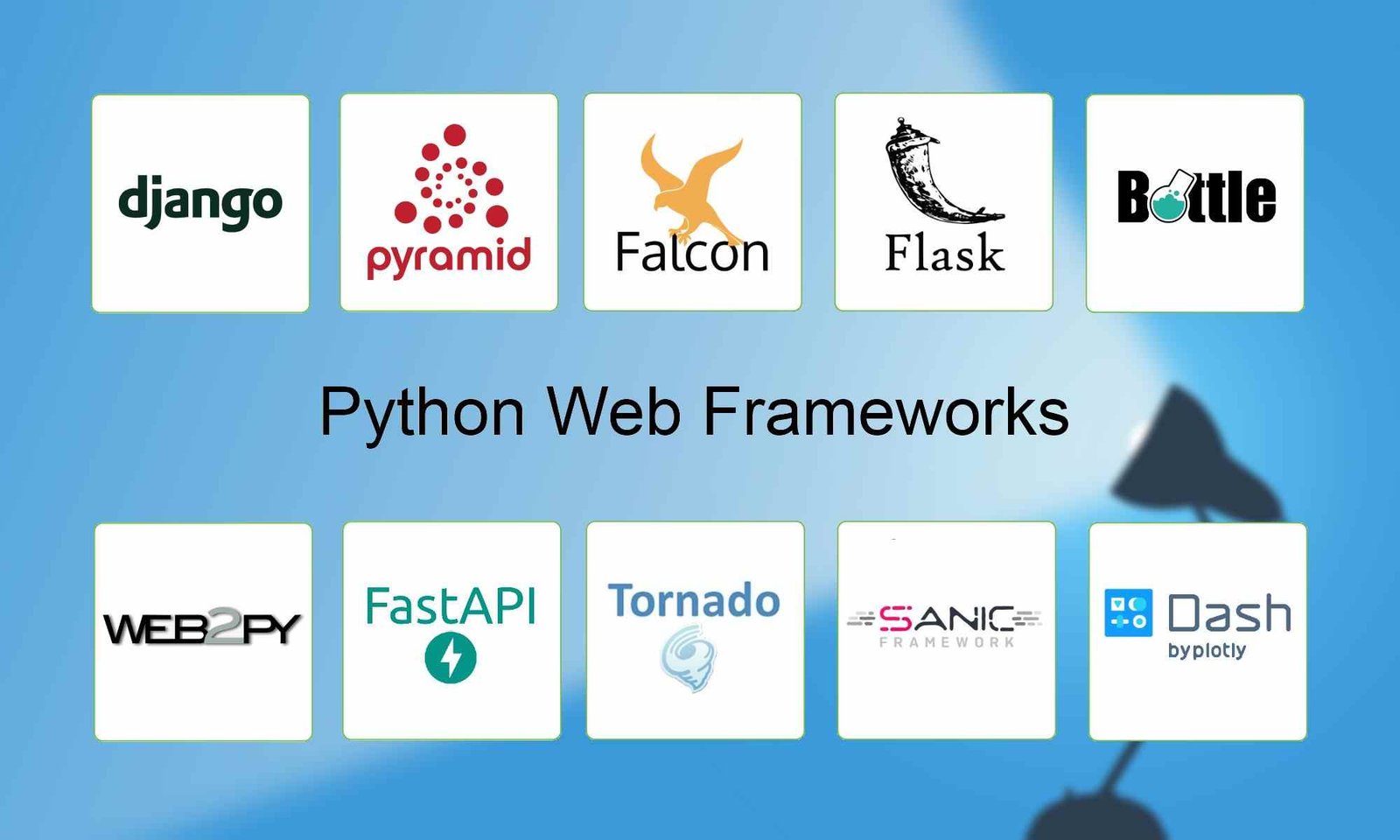
Python has become one of the most dependable languages for building modern web applications, and the reason is simple: it helps developers move from idea to product quickly without sacrificing maintainability. When people talk about Python web development frameworks, they are usually talking about the structured tools that make web projects faster to build, easier to organize, and simpler to scale. These frameworks handle common web tasks such as routing, templating, database interaction, validation, authentication, and security, so developers can focus on product logic instead of rewriting the same plumbing again and again. In practice, that means less repetitive code, fewer mistakes, and a cleaner path from prototype to production.
What makes Python especially attractive for web development is the variety within its ecosystem. Some projects need a full-stack framework that gives them nearly everything out of the box. Others need a small, flexible tool that lets them assemble the exact pieces they want. That is where the Python framework landscape stands out: Django offers a batteries-included approach, Flask keeps the core lightweight and extensible, FastAPI focuses on modern API development and performance, Pyramid gives teams a flexible middle ground, and Tornado is built for asynchronous workloads and long-lived connections. The right choice depends less on hype and more on the shape of your product, your team’s experience, and the kind of user experience you want to deliver.
Why Python web development frameworks matter so much
A web framework does more than save time. It provides architecture. Without that structure, teams often end up with scattered code, inconsistent patterns, and technical debt that becomes expensive to fix later. A good framework gives your project a sensible default organization, which is especially valuable when multiple developers are working on the same application. It also provides well-tested patterns for tasks that every web application needs, such as form handling, request processing, and dynamic HTML rendering. Django, for example, makes it clear that models, forms, templates, and the admin interface are central pieces of its design, while Flask and Pyramid allow more freedom in how those building blocks are assembled.
Frameworks also play a major role in security and consistency. Django’s documentation explicitly covers protections against common web vulnerabilities such as cross-site scripting, CSRF, SQL injection, clickjacking, and session security, which shows how security is built into the development philosophy rather than added as an afterthought. FastAPI improves consistency through type hints, automatic schema generation, and validation, which reduces the chance of inconsistent request handling. Flask stays intentionally small, which can be a strength when you need precise control, but it also means the developer must make more decisions about structure and dependencies. In other words, the framework you choose shapes not just how you build, but how safely and predictably you build.
Django: the full-stack option for serious web projects
Django is one of the strongest choices for teams that want a complete, production-ready framework with a clear development path. Its documentation describes it as a framework with everything you need to get started, and its core concepts include models, forms, templates, the admin site, and a powerful command-line toolset. Django’s model layer gives each model a database-backed structure, its template system supports dynamic HTML generation, and its admin interface can be activated quickly and customized to match the application’s needs. This combination makes Django especially attractive for content-heavy sites, portals, dashboards, and applications that need speed in both development and administration.
One of Django’s biggest strengths is how it helps teams stay organized at scale. The framework’s built-in patterns reduce the number of architectural choices a team has to make at the start, which is useful when a project is expected to grow. Django’s docs also make clear that forms and validation are first-class parts of the framework, which matters because most real applications do not just display content; they collect, validate, and process user input. For projects that involve admin workflows, editorial control, user accounts, permissions, and complex data models, Django is often one of the safest and most productive choices.
Django is also a strong fit when SEO and content management matter. A structured template system, predictable URL patterns, and integrated handling for data-driven pages make it easier to produce clean, crawlable sites. That does not magically guarantee rankings, but it does remove many technical obstacles that can slow down optimization. For businesses building blogs, marketplaces, directories, or knowledge platforms, Django provides the kind of foundation that can support both marketing goals and long-term engineering reliability. Its design gives teams a reliable starting point rather than a blank page.
Flask: the lightweight framework for flexibility and control
Flask is often the first framework people recommend when a developer wants something simple, elegant, and easy to understand. The official documentation calls Flask a lightweight WSGI web application framework designed to make getting started quick and easy while still scaling up to complex applications. That balance is the key to Flask’s popularity. It gives you a small, clean core and lets you add the rest only when you need it. If your team prefers minimal abstractions and wants to decide exactly which database, form library, authentication system, or background task tool to use, Flask offers a very appealing level of control.
Flask works particularly well for APIs, prototypes, microservices, and applications where custom architecture matters more than built-in conventions. Its quickstart documentation shows how routing works through decorators, while the templating system uses Jinja for dynamic HTML rendering. Flask also supports blueprints, which help divide larger applications into reusable components, and application factories, which are a recommended pattern for creating scalable app structures. Those features are especially helpful when a small app grows into a larger product, and the codebase needs a cleaner, modular shape.
The biggest advantage of Flask is freedom. The biggest risk is also freedom. Because Flask makes fewer assumptions, you must make more decisions about project structure, packages, and conventions. That can be ideal for experienced teams, but it can also slow down beginners who are still trying to understand the bigger picture of web application design. For many projects, though, that trade-off is worth it. Flask is often the right answer when a developer wants a framework that gets out of the way without becoming limiting later.
FastAPI: the modern choice for high-performance APIs
FastAPI has quickly become one of the most talked-about Python web development frameworks because it combines modern developer ergonomics with strong performance-oriented design. Its official documentation describes it as a modern, fast, high-performance framework for building APIs with Python based on standard type hints. That type-hint-driven approach is a major reason developers like it: code becomes more readable, editors can provide better assistance, and the framework can use that structure to validate input and generate documentation automatically.
For API-centric applications, FastAPI brings especially valuable benefits. It can generate interactive documentation automatically using Swagger UI and ReDoc, and its OpenAPI support helps turn endpoints into a clearly documented contract for frontend teams, mobile apps, and third-party integrators. FastAPI also supports dependency injection, request validation, and asynchronous path operations, all of which contribute to cleaner code and better performance under the right workloads. If your project depends on well-documented endpoints, quick iteration, and modern async support, FastAPI is one of the strongest frameworks available in Python today.
FastAPI is especially attractive for teams building backend services that power web apps, dashboards, AI platforms, internal tools, and mobile applications. Its support for APIRouter makes it easier to organize larger applications into multiple files, which is useful as projects grow. It also works well with template engines when server-rendered pages are needed, even though its strongest reputation is in API development rather than traditional full-stack websites. In many modern stacks, FastAPI is the piece that connects data services to frontend apps quickly and cleanly.
Pyramid: the balanced framework for teams that want flexibility without chaos
Pyramid does not always receive the same attention as Django, Flask, or FastAPI, but it remains an important option for teams that want flexibility with structure. The official documentation describes Pyramid as a Python web application framework designed to make creating web applications easier, while also emphasizing that it is not particularly opinionated and has a relatively small built-in feature set. That makes Pyramid a practical middle ground for developers who want more built-in guidance than Flask but fewer assumptions than Django.
One of Pyramid’s strengths is the way it lets projects begin small and grow into larger systems without forcing a rigid design too early. The quick tour explicitly says Pyramid lets you start small and finish big, which is a useful fit for products that may evolve from a simple app into a more complex system over time. Its flexibility is also visible in the way it handles URL generation, routing, and traversal. For teams that value long-term configurability and want a framework that can support their own architecture rather than impose one, Pyramid deserves serious consideration.
Pyramid is not usually the first recommendation for a complete beginner, mainly because its appeal comes from its adaptability rather than its opinionated structure. But for experienced developers building custom enterprise systems, it can be a very elegant choice. It is especially useful in situations where a project may need to plug in different components over time and where the engineering team wants to keep control over the application layout. The more unique the architecture, the more attractive Pyramid becomes.
Tornado: built for real-time and asynchronous demands
Tornado is the framework to pay attention to when your application needs to handle many simultaneous connections or long-lived network activity. Its documentation explains that Tornado is both a Python web framework and an asynchronous networking library, and that its non-blocking I/O model allows it to scale to tens of thousands of open connections. This makes it especially relevant for WebSockets, long polling, chat systems, notification engines, live dashboards, and any application where persistent client connections are part of the core experience.
Unlike frameworks that focus mainly on page rendering or CRUD applications, Tornado is designed with real-time communication in mind. That does not mean it cannot serve regular web pages, but its real advantage appears when connection handling is the hard part of the problem. Applications that need responsiveness under concurrency pressure often benefit from Tornado’s event-driven design. For teams building products where every millisecond and every open socket matters, Tornado can be a strong strategic choice.
How to choose the right Python framework for your project
Choosing among Python web development frameworks becomes much easier when you start with the actual needs of the project rather than the popularity of the library. If you are building a full-featured website with user accounts, an admin dashboard, forms, permissions, and structured data, Django is a natural fit because it provides a large set of batteries-included capabilities. If you want minimal overhead and a custom stack, Flask gives you a very lightweight foundation. If your project is API-first and you want modern validation, async support, and automatic docs, FastAPI is often the strongest fit. If you need a flexible architecture with room to grow but do not want the full opinionated weight of Django, Pyramid makes a lot of sense. If your application depends on persistent connections and real-time behavior, Tornado deserves attention.
Team experience matters too. A highly experienced team may prefer Flask or Pyramid because they want more freedom to define their own standards. A product team moving quickly with a broad feature set may prefer Django because so much of the foundation is already there. A backend team building APIs for a mobile app or single-page frontend will likely appreciate FastAPI’s documentation and schema tooling. The best framework is rarely the one with the most features; it is the one that matches the product’s real constraints, developer skill level, and growth path.
It is also smart to think about maintainability from the beginning. A framework that feels fast on day one can become difficult later if the architecture is too loose. On the other hand, a framework that is too opinionated for the project can create friction and slow progress. Good framework selection is about balancing speed, structure, flexibility, and future evolution. That is why so many successful teams compare frameworks not just on popularity, but on how easily the app can be tested, documented, scaled, and handed off to other developers.
Python frameworks and SEO: what actually helps rankings
A framework does not rank a website by itself, but it can create the technical conditions that help SEO perform better. Fast, stable pages, clean URL structures, server-side rendering where appropriate, and predictable HTML output all make it easier for search engines and users alike. Django and Flask both support template-based rendering, which is useful for content sites that need crawlable HTML. FastAPI can serve templates too, but it is more commonly used for API services that support a frontend application. In every case, the framework is part of the technical foundation that influences load speed, usability, and how easy it is to keep the site organized as it grows.
Django is particularly helpful for SEO-heavy websites because its structure works well for large content systems and its built-in conventions keep the codebase manageable. Flask can also support SEO-friendly websites when it is paired with careful architectural decisions and a solid templating strategy. The important point is that a framework should make optimization practical, not painful. When developers can add metadata, structure content logically, and generate pages efficiently, the website is usually in a better position to grow organically.
Common mistakes when selecting a Python framework
One common mistake is choosing a framework because it is trendy rather than because it matches the project. FastAPI is excellent for APIs, but that does not automatically make it the best choice for a content-heavy editorial site. Django is powerful, but it may be more framework than a tiny utility service needs. Flask is elegant, but teams that want strong conventions and a lot of built-in functionality may eventually wish they had picked something more opinionated. A pyramid can be ideal for custom architecture, but it is not always the best first choice for beginners who want a simpler on-ramp. Tornado is outstanding for concurrency-heavy workloads, but it is not the right answer for every app.
Another mistake is underestimating the long-term cost of weak structure. Teams sometimes start with a very small Flask app and only later realize they need blueprints, application factories, extension discipline, testing standards, and deployment patterns they did not plan for from day one. That does not mean Flask is a bad choice; it means the team must design intentionally. The same is true for every framework. The easiest path at the beginning is not always the easiest path after six months of growth.
A practical way to think about the framework landscape
A simple way to remember the landscape is this: Django is for “complete platform,” Flask is for “minimal core,” FastAPI is for “modern API performance,” Pyramid is for “flexible architecture,” and Tornado is for “async and long-lived connections.” That mental model is not a substitute for deep evaluation, but it is a good starting point when discussing projects with clients, product managers, or teammates. Once you know what kind of application you are building, framework selection becomes far less confusing.
The most successful teams usually test a small proof of concept before committing to a stack. They check how quickly the framework supports their core user flow, how easy it is to write tests, how clean the routing and data model feel, and how naturally the project structure scales. They also think about the developer experience, because a framework that makes the team productive will usually produce a better product over time. This is exactly where Python frameworks shine: they let teams move quickly without giving up clarity.
Final thoughts: Which Python web development framework should you use?
There is no single “best” framework for every web project, and that is actually good news. It means Python gives you options that fit different goals. Django is a strong choice when you need a full-stack system with built-in security, an admin interface, forms, templates, and clear conventions. Flask is ideal when you want simplicity and freedom. FastAPI is a standout for APIs, async workloads, and automatic documentation. A pyramid is excellent when flexibility matters, and you want a balanced architecture. Tornado is the framework to explore when real-time connections and asynchronous performance are central to the product.
If your goal is to build faster, ship smarter, and avoid unnecessary technical debt, the best move is to choose the framework that matches your current project and your likely future scale. Start with the problem, not the trend. Start with the product, not the hype. Then build with the framework that makes the work feel clear, maintainable, and future-ready. That is the real advantage of Python web development frameworks: they do not just help you write code. They help you build the kind of web application that can actually grow.