
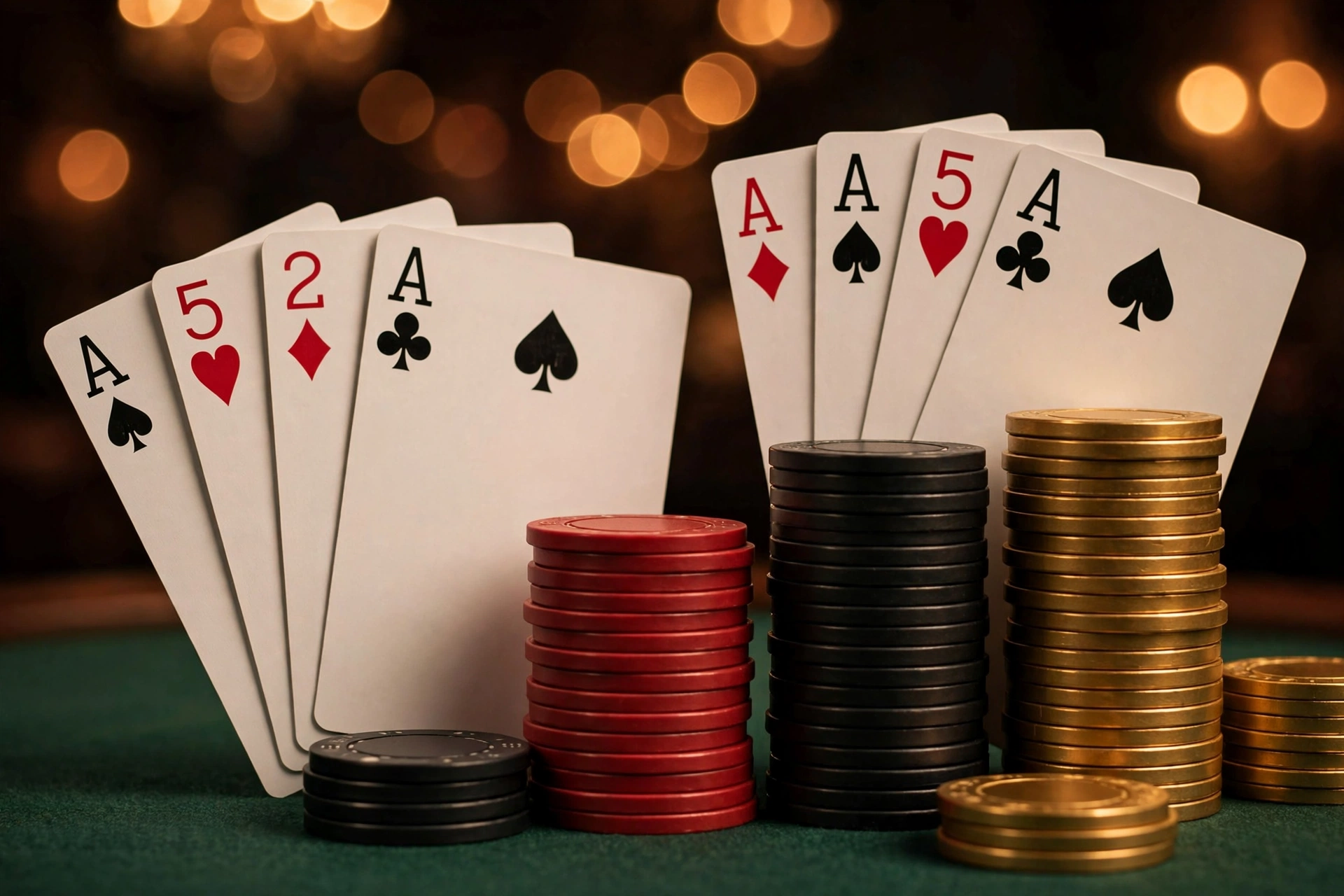
I’ll never forget the first time I watched a grown man celebrate losing a poker hand. In a small card room, this guy lost with four eights to a straight flush. The table went quiet — then the dealer grinned: “That’s a bad beat jackpot, folks.” I had no idea what is a bad beat jackpot, but judging by the loser’s sudden smile, getting crushed had just become the best thing that ever happened to him.
Here’s the short version I wish someone had given me that night: it’s a special progressive prize pool, funded by the players themselves, that pays out when someone loses with an incredibly strong hand. If you’ve ever wondered what is a bad beat jackpot and why a loser would celebrate, you’re about to find out — because the “loser” walks away with the biggest share of a jackpot that can reach six figures.
In this guide, I’ll cover how the jackpot works, how it’s funded, which hands qualify, how the money gets split, and the myths to ignore. Every room runs its own rules, so I’ll flag where things vary.
Table of Contents
What Is a Bad Beat Jackpot? The Simple Definition
So what is a bad beat jackpot, exactly? It’s a promotional progressive jackpot offered by brick-and-mortar poker rooms that pays out when a player loses a hand despite holding a qualifying monster — think quad eights or better, beaten by an even stronger hand. The classic trigger is four-of-a-kind losing to a higher four-of-a-kind or a straight flush.
The key word is progressive: a tiny slice of rake from eligible cash games gets diverted into the pool, so the prize climbs until somebody hits it. I’ve seen jackpots from a few thousand dollars to well over a hundred thousand. When it hits, the pool pays out and rebuilds from a seeded minimum.
This is a live-poker promotion, not a casino game feature — you won’t find it on slots. It exists to keep cash-game tables full, because nothing fills seats faster than the rumor the jackpot is “due.”
How It Differs From Regular Poker Winnings
In a normal poker hand, there is one winner and everyone else loses — that’s the game. A bad beat jackpot flips that on its head: the biggest payday can go to the player who lost the hand.
Regular winnings come from the pot — just the chips everyone bet. But what is a bad beat jackpot’s money made of? It’s funded separately, through the promotional drop I’ll explain below. You can win the pot and trigger the jackpot in the same hand: the winner collects the pot, then the jackpot money gets distributed on top. The hand’s loser doesn’t win the pot, but they typically receive the largest jackpot share, often far more than the pot itself.
Normal poker pays one player. A bad beat jackpot often pays half the table — everyone dealt into the qualifying hand usually gets a cut, which is why entire tables erupt when it hits, even among players who folded pre-flop.
How the Jackpot Is Funded: The Small Rake Drop
The money comes from the players, one dollar at a time: rooms take a small additional drop from cash-game pots — often around a dollar per hand once the pot reaches a certain size — and funnel it into the pool.
This is separate from the standard rake the house takes for running the game. You’ll usually see it called the “jackpot drop,” and it only applies to designated games and stakes. Because hundreds of hands are dealt daily, that steady trickle answers the funding half of what is a bad beat jackpot — a pool that grows into serious money.
That dollar comes out of your potential winnings — over thousands of hands, regulars fund the prize they hope to hit. A massive jackpot with a tiny drop is player-friendly; a small jackpot with an aggressive drop is mostly marketing.
Typical Qualifying Hands: How Strong Is Strong Enough?
Every room sets its own minimum qualifying hand, and this is where you must read the posted rules. When players ask what is a bad beat jackpot’s qualifying hand, the most common answer I’ve seen is quad eights or better losing — quad eights beaten by quad nines or higher, or by a straight flush. Some rooms set the bar lower at quad fives or deuces; a few require quad tens or better.
The “or better” matters: quad kings losing to quad aces qualifies, but quad sevens losing to quad eights doesn’t — neither hand meets the minimum. Generally both the losing and winning hands must meet the threshold, not just the loser.
Rules are posted on the wall or a table placard, and floor staff can confirm them. I snap a photo of them before sitting down — arguing after the fact never works.
Why Both Hole Cards Must Play
This is the rule that breaks hearts almost as often as the bad beats themselves. In nearly every room, both of your hole cards must play — both cards in your hand must be used to make your best five-card hand.
Picture this: you hold pocket eights and the board runs out 8-8-A-K-Q. You technically have quads, but only one hole card is in your best five-card hand — the board holds the other three eights. In most rooms, that does not qualify.
Without this rule, jackpots would hit constantly on paired boards and the pool would never grow. It’s the most misunderstood rule in the building: if both hole cards aren’t in your best five cards, there is no jackpot.
How the Prize Gets Split Between Players
When the jackpot hits, what is a bad beat jackpot’s payout structure? The money doesn’t all go to one person — and the loser of the hand gets the lion’s share. A very common structure: the player who lost with the qualifying hand receives around 40–50%, the winner gets roughly 20–25%, and everyone else dealt into the hand splits the rest evenly.
On a $100,000 jackpot, the “loser’s” share might take $40,000–$50,000; the winner gets $20,000–$25,000 on top of the pot; and the rest of the table — even players who folded pre-flop — might each collect a few thousand just for being dealt in.
That’s why the whole table celebrates — and why players limp into every pot with any two cards when the jackpot gets huge, hoping to be dealt in. Rooms don’t mind; full tables mean more drops.
The Showdown and Table-Requirements Rules
First, the hand must go to showdown. If everyone folds, there’s no jackpot — even with a qualifying hand in the muck. The losing hand must be revealed, which is why players sometimes refuse to fold the nuts: they need that showdown.
Second, most rooms require a minimum number of players dealt in — often five or more — so short-handed games usually don’t qualify. Some rooms also restrict the jackpot to specific games (typically Texas Hold’em) and stakes.
Miss any single condition and the jackpot doesn’t pay. Never assume the rules match the last room you played in.
Famous Bad Beat Stories That Made Headlines
Every few years, a bad beat jackpot story breaks out of the poker world into the mainstream press, usually because the number is enormous. The biggest ones happen in large rooms where the pool has been building for months, and the “loser’s” share alone can run into six figures.
What I love about these stories is the emotional whiplash. Imagine losing with quad aces and feeling devastation for about three seconds — followed by the realization that you’ve just won more money than most people make in a year. Winners have their own strange moment: they took the pot, they get a jackpot share, and they still feel slightly guilty about it.
I won’t name specific rooms or dollar amounts, because records get broken and details get exaggerated in retelling. But when people ask what is a bad beat jackpot story really about, the pattern is always the same: a monster hand, a bigger monster, a showdown, and a table full of people who’ll be telling the tale for years.
How to Find a Room Offering One (and What to Ask)
Still wondering what is a bad beat jackpot’s availability near you? Not every poker room runs one, so a little homework goes a long way. Rooms that offer it advertise prominently — it’s a marketing tool. Check the room’s website or call the poker desk and ask directly about the current amount and qualifying rules.
Ask these specific questions: What is the minimum qualifying hand? What percentage goes to the loser, the winner, and the table? How many players must be dealt in? Which games and stakes are eligible? Is there a jackpot drop, and how much? The answers reveal whether the promotion is genuinely player-friendly or just window dressing.
If you’re new to live poker rooms, brush up on basic casino etiquette for beginners first. Good manners won’t hit the jackpot for you, but they make your session far more pleasant — and regulars notice.
Myths: A Bad Beat Jackpot Doesn’t Change the Odds
Let’s clear up the biggest misconception: what is a bad beat jackpot’s effect on the cards? Nothing — it does not change the odds. The deck doesn’t know about the promotion. Your pocket aces are exactly as likely to get cracked whether the jackpot sits at $5,000 or $500,000.
Related myth: that you should play differently to chase it. Calling with garbage in every pot just to be dealt in costs you blinds and calls — and the jackpot is still a lottery ticket. Play your normal game.
Another myth: that the jackpot is “free money” from the casino. It’s funded by the drop taken from players’ pots — your money coming back, minus the times someone else hits it. Most online rooms don’t run this promotion at all; it’s overwhelmingly a live, brick-and-mortar thing.
Frequently Asked Questions
What hands usually qualify for a bad beat jackpot?
The most common answer to what is a bad beat jackpot’s minimum qualifying hand is four-of-a-kind, eights or better, losing to a stronger hand — but every room sets its own bar. Some go as low as quad fives or deuces, while others require quad tens or better. Always check the posted rules at your room, because the qualifying hand is the most variable part of the promotion.
Do I need to win the hand to get paid?
No — the player who loses with the qualifying monster typically receives the largest share, often 40–50% of the pool. The winner of the hand gets a smaller share plus the regular pot, and everyone else dealt into the hand usually splits the remainder. Even players who folded pre-flop generally get a cut.
Why do both hole cards have to play?
Rooms require both hole cards to be part of your best five-card hand to keep the jackpot rare enough for the pool to grow. Without this rule, jackpots would trigger constantly on paired boards and the prize would never build into anything meaningful. Verify both of your cards actually play before celebrating — it’s the most misunderstood rule in the room.
Does the hand have to go to showdown?
Yes, in virtually every room. If everyone folds and you never show your cards, there’s no jackpot even if you held a qualifying monster. The losing hand must be tabled at showdown — which is why players sometimes call where they’d normally fold.
Are bad beat jackpot winnings taxable?
In many jurisdictions, gambling winnings — including jackpot payouts — count as taxable income, and large payouts are often reported by the casino directly. Rules differ enormously by country and even by state, so keep detailed records and talk to a tax professional who understands gambling income. For general guidance on gambling regulation and player protection, the UK Gambling Commission is a useful authoritative reference.
Conclusion
Now you know what is a bad beat jackpot: one of poker’s best ideas. It takes the most painful moment in the game — losing with a monster — and turns it into a celebration for the whole table. You know how it’s funded, which hands qualify, why both hole cards must play, how the prize gets split, and which myths to ignore.
Never chase the jackpot by playing badly — the odds don’t care about the prize pool. Do read the posted rules before you sit down. And if the poker gods ever deal you quad eights into a straight flush, try to look as happy as that man I watched all those years ago.
Gamble responsibly. 18+ only.