
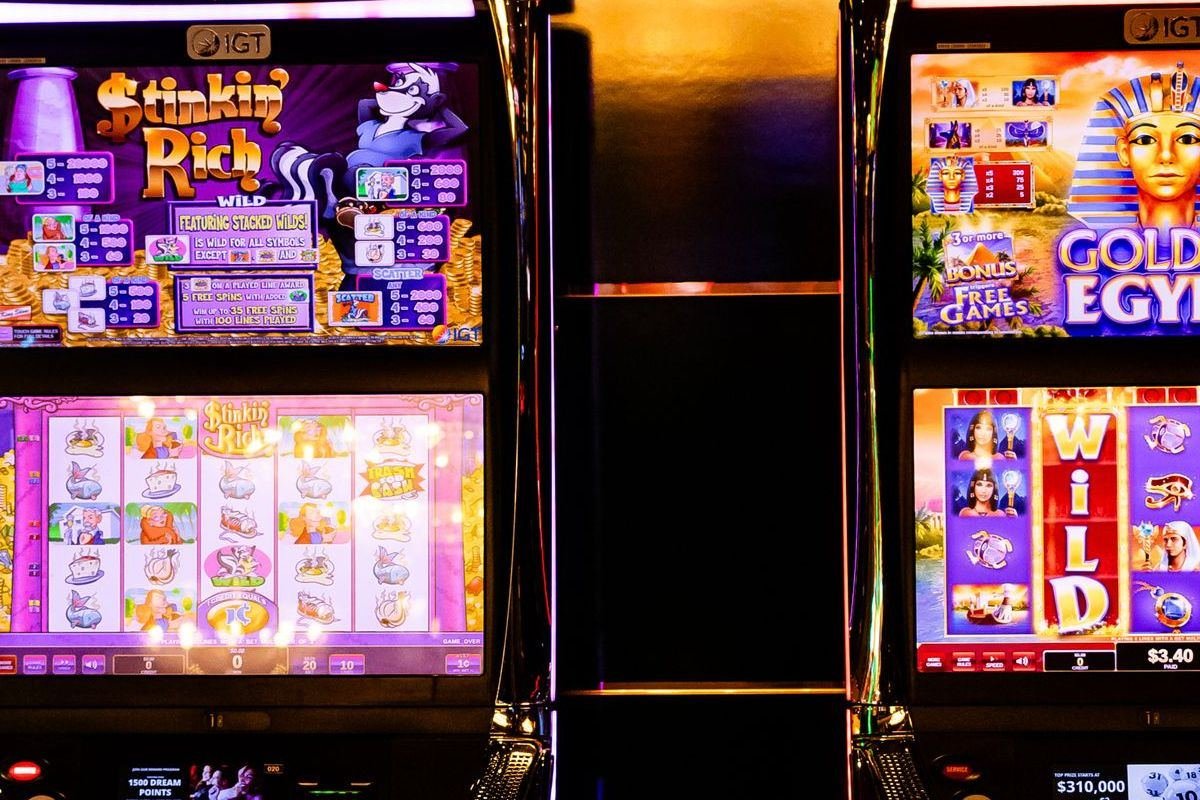
Do higher denomination slots pay better? It’s one of the most argued-about questions on any casino floor, and after years of playing, reading gaming reports, and losing my own money in instructive ways, I can tell you the honest answer: yes, they do — but that “yes” comes with a caveat big enough to drive a slot machine through. I’ve sat at both ends of that decision more times than I care to admit, and the truth is more interesting than most players expect. The numbers surprised me the first time I saw them, and the math on what it actually costs you per hour surprised me even more.
When someone asks me “do higher denomination slots pay better,” the short version is this. Published gaming data from states like Nevada consistently shows that higher-denomination machines are programmed to return a higher percentage of wagers over the long run than penny slots. But “a higher percentage” doesn’t automatically mean “you’ll lose less money.” That’s where most players get tripped up — and it’s exactly what we’re going to unpack.
Table of Contents
Do Higher Denomination Slots Pay Better? What the Numbers Actually Say
Let’s start with the facts, because this is the part most guides either skip or get wrong. Do higher denomination slots pay better? According to published state gaming revenue reports — Nevada’s Gaming Control Board publishes this kind of data regularly — the answer is yes. Typical long-run payback looks something like this: $1 machines generally hold around 94–96%, while penny slots usually sit around 88–91%. Multidenomination and 25-cent machines fall somewhere in between.
Be clear on what these numbers mean: they’re approximate, long-run, theoretical figures from published gaming data across thousands of machines. They describe what machines are programmed to return over millions of spins — not what happens on your Saturday night. You can lose your whole bankroll in twenty minutes on a 95% machine and hit something nice on an 89% penny slot. Short-term luck swamps long-term math completely. That’s gambling.
But the pattern is real and consistent year after year. Higher denominations get looser settings; penny slots — the casino’s biggest moneymakers — get tighter ones. Five or six percentage points is genuinely meaningful in the long run. Being brutally honest: slots are negative-expectation games at every denomination. The only question is how negative.
Why Casinos Set Higher-Denomination Slots Looser: Simple Economics
Here’s the part that made everything click for me. Casinos don’t set payback percentages out of generosity. They set them based on cold, simple economics, and once you see the math, the whole denomination puzzle solves itself.
Think about it from the casino’s side. A $1 machine might be spinning at $3 per bet. If it’s set to pay back 95%, the casino keeps 5% — about 15 cents per spin on average. Now picture a penny slot spinning at 60 cents a bet, paying back 89%. The casino keeps 11% — but 11% of 60 cents is only about 6.6 cents per spin. The penny machine, despite being “tighter,” actually earns the casino less per spin than the looser dollar machine.
But there are far more penny players than dollar players. A casino can afford a generous 95% on a $1 machine because every spin is worth real money to the house. The penny area needs a fatter margin per spin to justify its floor space.
So the honest answer to “do higher denomination slots pay better” is really an economic story. Casinos compete for higher-denomination players — the people betting real money per spin — and they use payback percentage as the competitive tool. A dollar player is worth courting. A penny player is already hooked on the low entry price, so the casino doesn’t need to offer as generous a return to keep them seated.
The Big Caveat: Higher RTP Does NOT Mean You Lose Less
This is the most important thing in this entire guide. Yes, higher-denomination machines return a higher percentage. But you bet so much more per spin that your expected losses can be worse — sometimes much worse — than grinding away at penny slots.
Let me walk through the math, because it’s eye-opening. Imagine two players, each planning to make 500 spins.
Player A sits at a $1 slot. It’s set to 95% payback — nice and loose. She bets $3 per spin. Her expected loss is the total wagered times the house edge: 500 spins × $3 × 5% = $75. So on average, over enough sessions like this, she loses about $75 for those 500 spins.
Player B sits at a penny slot. It’s set to a tight 89% payback. He bets $0.60 per spin. His expected loss: 500 spins × $0.60 × 11% = $33. About $33.
Read that again. The player on the “looser” machine loses more than twice as much per session on average. The higher payback percentage is completely overwhelmed by the bigger bet size. This is the trap in the question “do higher denomination slots pay better.” Paying better as a percentage and costing you less are two totally different things, and casinos are perfectly happy for players to confuse them.
None of this is destiny for a single session — variance is enormous, and either player could win big or lose everything. But over time, the expected cost per hour of dollar slots is usually higher, not lower. Higher denomination isn’t a discount. It’s a premium product with a better rate and a much bigger bill.
Denomination Doesn’t Change Randomness: Every Spin Is Independent
Now let’s clear up something that trips up a lot of players, including past versions of me. Whatever the payback setting, denomination has zero effect on the randomness of each spin. Every single spin on a modern slot machine is an independent event, decided by a random number generator — an RNG — that picks a result the instant you press the button.
I learned this the embarrassing way years ago, nursing a grudge against a machine I was convinced was “due.” It wasn’t. Machines are never due. The machine doesn’t know how much you’ve lost, how long you’ve been sitting there, or what happened on the last spin. Each spin starts from scratch, every time. If you want the full picture of how that works, read my breakdown of how online slots and RNGs actually decide each spin — the underlying mechanics are the same whether the machine takes pennies or hundred-dollar bills.
This matters because a lot of players assume a “looser” $1 machine is somehow on their side. It isn’t. A 95% machine will still eat your bankroll plenty of sessions — payback is a property of the long run, and your session is a rounding error in it. Randomness doesn’t care about your denomination, your loyalty card tier, or your lucky shirt.
Payback Percentage vs. Hit Frequency: Winning More Often Isn’t Paying Better
Here’s a distinction casino conversations mangle constantly: payback percentage is not hit frequency. Hit frequency is how often a spin pays anything at all; payback percentage is how much the machine returns in total over time.
A penny slot can have a high hit frequency — lots of little wins, constant little dopamine pings — while still having a miserable payback percentage. Those “wins” are often smaller than your bet — you bet 60 cents, “win” 20 cents, the machine celebrates, and you’re down 40 cents. Penny slots are designed around this trick: they feel rewarding while being expensive.
Higher-denomination machines often have lower hit frequency but bigger average wins. You can sit through long dry stretches on a dollar machine, which feels awful, even though the long-run math is kinder. So when someone argues do higher denomination slots pay better because their machine “hits all the time,” make sure you ask what they mean. If they mean “I hit more often,” that’s hit frequency talking, not payback — and a machine can pay often while paying badly.
Myth-Busting: What Higher Denomination Slots Definitely DON’T Do
The casino floor runs on folklore, and the denomination debate attracts more than its share. Let me kill a few myths with the facts.
Myth: Casinos tighten slots on weekends. Nope. Payback settings are registered with gaming regulators — changing them is a regulated process, not a dial a manager turns on a busy Friday night. Casinos make more on weekends because more people play, not because machines are tighter.
Myth: Machine location matters — “loose” machines near the entrance, tight ones in the back. This was sort of true decades ago when casinos deliberately placed looser machines where passersby would see winners. There’s no reliable evidence this happens systematically today, and you couldn’t spot a machine’s setting by looking anyway. Walk the whole floor if it makes you feel better. It won’t change your odds.
Myth: A higher denomination means you’ll win more often. As we just covered, that’s hit frequency confusion. A $1 machine can feel brutal precisely because the dry stretches are real, even when the payback percentage is better. Frequency and percentage are different dials.
Myth: Moving to a different machine or casino resets your luck. Luck isn’t a substance that accumulates on a machine. Every spin is independent, so moving machines doesn’t improve your odds — though quitting while you’re down is never a bad call.
Online Slots: How Denomination Works Differently
The denomination question works differently online. Most games publish their RTP right in the paytable — commonly 94–97% — and there’s usually no separate “penny version” and “dollar version” with different settings. You choose your bet size on the same game, and the RTP typically stays the same whether you’re betting the minimum or cranking it up.
Some games unlock extra features or slightly better RTP at higher bet levels, but the “do higher denomination slots pay better” pattern is mostly a land-based casino phenomenon, driven by the floor economics we covered earlier. Online casinos have far lower overhead per player, so the pressure to squeeze penny players just isn’t the same.
That said, the big caveat from earlier applies online too — bigger bets at the same RTP mean bigger expected losses per hour. The math doesn’t care whether the casino has a carpet or a loading screen. For the technically curious, the Wizard of Odds’ slot machine appendix is one of the best deep dives on the actual mathematics behind all of this, land-based and otherwise.
What Denomination Should You Actually Play? A Practical Bankroll Guide
Enough theory. Let’s talk about what to actually do with your money — because that’s the question hiding inside “do higher denomination slots pay better.” The real question is: what denomination should I play?
The honest framework is simple. Match your denomination to your bankroll and the session length you want. Decide how long you want to play, estimate your spins per hour (roughly 400–600 on a fast machine), and make sure your bankroll can absorb a bad run at your bet size.
On a $100 budget for an evening: penny slots at 40–60 cents a spin give you a real shot at a couple of hours of entertainment. The payback percentage is worse, but the bet size is survivable. Dollar slots at $2–3 a spin on that same $100 budget? You’re one cold streak away from being done in thirty minutes. The better RTP won’t save a bankroll that’s too small for the bet size.
My rule of thumb: bring a session bankroll of at least 100 times your average bet. Betting $3 a spin? Bring $300. Betting 60 cents? $60 will do. That guarantees nothing, but it keeps you in the game long enough for variance to breathe.
And the part nobody wants to hear: never chase. If the night’s budget is gone, the machine doesn’t owe you a comeback spin. Walk. The longer you play a negative-expectation game, the closer your results get to the expected loss. Quitting is the only move that beats the house edge.
So, Do Higher Denomination Slots Pay Better? The Final Verdict
After all of this, here’s where I land — the honest answer I promised at the start.
Do higher denomination slots pay better? Yes. The published data is consistent: higher-denomination machines carry higher long-run payback percentages than penny slots, usually by several percentage points. That’s documented casino economics, not folklore.
But — and this is the part that actually matters for your wallet — higher payback does not mean cheaper gambling. It doesn’t mean you’ll lose less, win more often, or have a better night. Because you wager so much more per spin on higher-denomination machines, your expected hourly loss is typically bigger, not smaller. The player who understood this stopped asking “which denomination pays better” and started asking “which denomination fits my budget.” That’s the real question, and it’s the one that’ll keep you playing longer and losing less.
Play the denomination your bankroll can handle, and don’t let a good RTP percentage talk you into bets that are too big for your wallet.
Conclusion
So, do higher denomination slots pay better? In pure payback percentage, yes — the published numbers say so, and the casino economics explain why. But the smarter question was never really about the percentage. It was about what the game costs you per hour, and on that measure higher denominations are usually the pricier seat in the house. Play what your bankroll can handle, ignore the myths, and never let a good RTP talk you into a bet you can’t afford.
Frequently Asked Questions
Do penny slots ever pay better than dollar slots?
In terms of payback percentage, essentially never — when you ask “do higher denomination slots pay better” the published data answers yes. But a lucky session on a penny slot can absolutely beat an unlucky session on a dollar machine, because short-term variance dwarfs the payback difference. Percentage is about the long run; your night is about luck.
Does betting max bet change the payback percentage?
Sometimes, but not in the way people think. On some machines, certain features like progressive jackpots are only available at max bet, which changes the effective value of each spin. But simply betting more on the same paylines doesn’t make the RNG any kinder. Read the paytable before assuming max bet buys you anything.
Are online slots looser than land-based slots?
Online slots often publish RTPs in the 94–97% range, which compares favorably with land-based penny slots. Online casinos have lower operating costs, so they can afford more generous settings. But the same warning applies: higher RTP with bigger bets can still mean bigger losses per hour, and bonus terms can eat into your returns.
Do casinos move “loose” machines around to trick players?
There’s no evidence of any systematic scheme like this in modern regulated casinos. Machine settings are registered with gaming regulators, and casinos have no incentive to shuffle machines to fool players who can’t see the settings anyway. Where you sit doesn’t change the math.
What denomination should I play on a $100 budget?
Stick to penny or low-denomination machines at 40–60 cents per spin. That gives your $100 a fighting chance at a full evening of play. Dollar machines at $2–3 per spin will chew through $100 fast on a cold streak, no matter how good their payback percentage looks on paper. Match the bet size to the bankroll, not the RTP.
Gamble responsibly. 18+ only.