
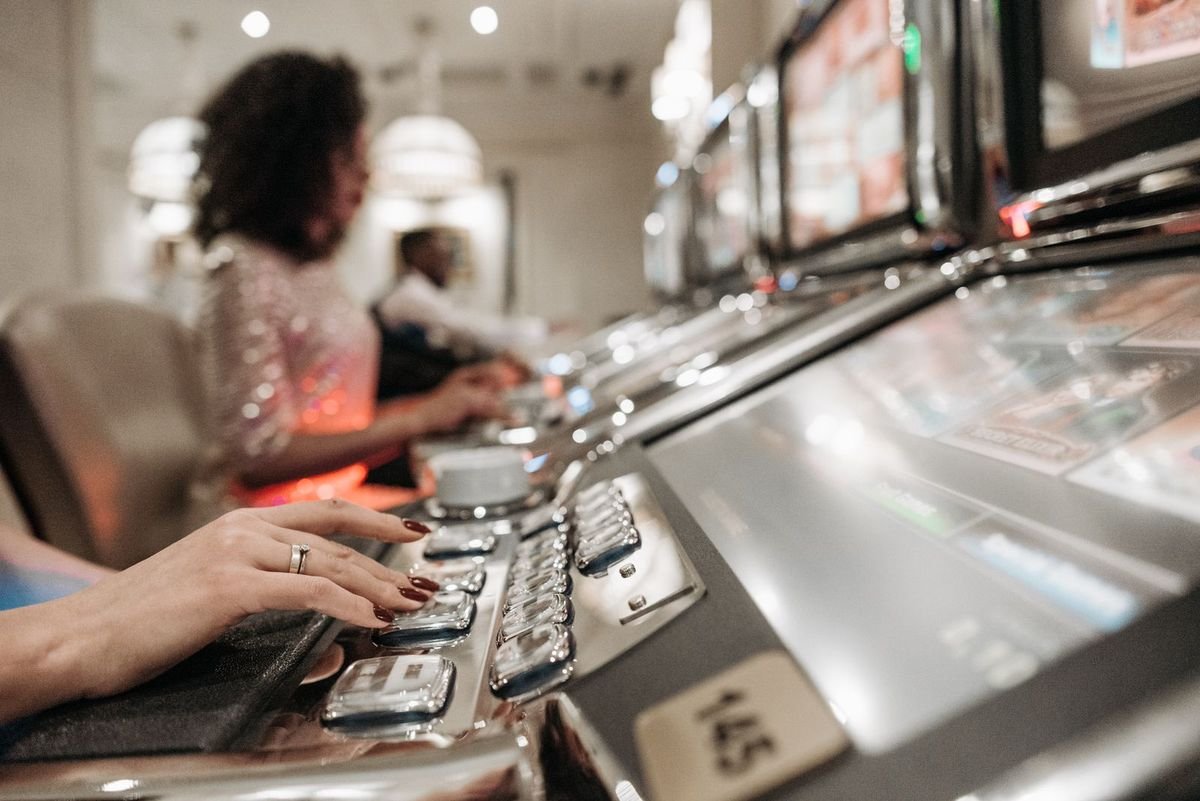
I will be honest with you. The first time I walked into a casino, I was struck by how much money seemed to be flying around. Chips stacked high, slot machines flashing, drinks arriving for free, and a building that looked like it cost a fortune to run. My first thought was not about winning. It was a much simpler question, and it stuck with me for years.
I kept asking myself how do casinos make money when they hand out free drinks, pay out jackpots, and sometimes watch a lucky player walk out with a small fortune. The building alone looked like it burned through cash every single day. So I started digging into it, reading about the math, the business model, and the way the whole operation actually works. What I found was far less mysterious than I expected, and honestly far more interesting.
The short answer is that casinos make money because the games are designed to pay back slightly less than they take in, on average, over a very long time. That small gap is everything. It is not a trick, it is not a rigged wheel, and it is not some secret switch under the table. It is math, printed right there in the payout table for anyone who cares to look. In this post I want to walk you through exactly how it works, game by game, and then show you where the rest of the money comes from.
Table of Contents
How Do Casinos Make Money? The One Idea That Explains Everything
So how do casinos make money, really? It all comes down to one idea: the house edge. Every casino game is built with a small built-in advantage for the house. That advantage means that for every dollar wagered over the long run, the casino expects to keep a few cents. The player can win on any single bet, any single night, or even over a whole lucky weekend. But across millions of bets, that tiny edge adds up to a fortune.
Think of it like a shop that buys a product for 97 cents and sells it for a dollar. One sale does not make anyone rich. A million sales do. A casino is the same kind of business, except its product is the game itself. The edge is the margin, and the volume of bets is what turns a small margin into serious money.
This is also why casinos love busy floors. More bets mean more chances for the edge to do its work. A quiet table with two players is fine, but a packed room full of slot machines spinning all day is a money machine. The casino does not need you to lose every time. It just needs you to keep playing, because time and volume are on its side.
The House Edge Is the Engine, Not a Rigged Game
Here is the part that surprised me most. The house edge does not mean the game is rigged. A rigged game would be one where the outcome is fixed or the equipment is tampered with. A fair casino game is random, and the randomness is real. The edge comes from the payout, not from cheating.
Take a simple example. Imagine a coin flip where you bet a dollar. If you win, you get 95 cents back instead of a full dollar. The flip itself is perfectly fair. You will win about half the time. But because the payout is slightly less than the true odds, you will slowly lose money if you keep playing. That missing five cents is the edge. Real casino games work the same way, just with fancier math.
I find it helps to think of the edge as an expected loss per hundred dollars wagered. If a game has a 4 percent edge, then a player who wagers a hundred dollars can expect to lose about four dollars over the long run. Notice the words “over the long run.” In the short run, anything can happen. You might double your money in an hour. But the expectation is always a small loss, and the casino is happy to wait.
If you want a deeper explanation of the concept itself, this guide to the house edge breaks it down in plain language. Understanding the edge is the key to understanding the whole casino business, because everything else is built on top of it.
House Edge by Game: Blackjack, Roulette, Slots, and Keno
Not every game takes the same cut, and that is where things get interesting. Once you see the edge, the next question is how do casinos make money across different games when the edge varies so much. Some games are relatively gentle on the player, while others take a much bigger slice. The difference comes down to the rules and the payouts, and smart players pay attention to it.
Blackjack is the classic example of a low-edge game. If you play with correct basic strategy, which means making the mathematically right decision on every hand, the house edge can be as low as around 0.5 percent. That is fifty cents per hundred dollars wagered. It is still an edge, so the casino still profits over time, but it is the friendliest table game in the building. The catch is that most players do not play perfect basic strategy, and every mistake hands a little more edge back to the house.
Roulette is a different story. European roulette, with a single zero, carries a house edge of about 2.7 percent. That means an expected loss of around two dollars and seventy cents per hundred wagered. American roulette adds a double zero to the wheel, and that one extra pocket nearly doubles the edge to about 5.26 percent. Same game, same excitement, but the American wheel quietly costs you almost twice as much over time. I had no idea about this difference until I looked it up, and now I always check which wheel I am looking at.
Slots sit somewhere in the middle, but with a much wider range. Most slot machines have a house edge of roughly 4 to 8 percent, depending on the game’s return to player, or RTP. A slot with a 96 percent RTP has a 4 percent edge. A slot with a 92 percent RTP has an 8 percent edge. The trouble is that casinos do not always advertise the RTP clearly, so players often have no idea which machine is the tighter one. The flashing lights and bonus rounds are the same either way.
Then there is keno, which is in a league of its own. Keno can carry a house edge of 20 percent or more, which makes it one of the worst bets in the casino from a pure math standpoint. People play it because it is slow, social, and fun, and because a small bet can dream about a big payout. The casino loves it for exactly the same reason. The edge is enormous, and the game moves at a relaxed pace that keeps players seated for hours.
House Edge vs Hold Percentage vs Drop and Handle
Once I understood the house edge, I ran into three more terms that sounded similar but mean very different things. Casinos, regulators, and industry reports throw around house edge, hold percentage, drop, and handle as if everyone knows the difference. They do not, so let me untangle them the way I wish someone had for me.
The house edge is a theoretical number. It is the mathematical advantage built into the rules of the game, calculated over an infinite number of bets. It never changes unless the rules change. It is what the game is designed to deliver in the long run.
The hold percentage is what actually happened. It measures the share of the money that players brought to the tables and left behind. If players buy in for ten thousand dollars in chips and leave with nine thousand, the hold is ten percent. Hold is a real-world result, and it can be higher or lower than the house edge on any given day because of luck, player skill, and how long people play.
Drop is the amount of money players exchange for chips at the tables, or put into a slot machine. Handle is the total amount wagered, including money that gets bet, won, and bet again. These two can be wildly different. A player who brings a hundred dollars, wins some, loses some, and keeps re-betting might generate a handle of a thousand dollars from a drop of only a hundred. Casinos care about handle because the edge applies to every bet, not just to the cash you walked in with. That is why a small bankroll can still produce a healthy profit for the house if it gets wagered over and over.
The Law of Large Numbers: Why Losing Nights Don’t Scare Casinos
If you have ever wondered how do casinos make money when someone hits a jackpot on a Friday night, this is the answer. The law of large numbers is the casino’s best friend, and it is the reason a single big win barely registers on the balance sheet.
The law of large numbers says that as the number of bets grows, the actual results get closer and closer to the expected result. Flip a coin ten times and you might get eight heads. Flip it ten thousand times and you will be very close to half heads and half tails. Casino games work the same way. One player might win big tonight, and a whole table might have a lucky streak. But across thousands of players and millions of bets, the results settle down to almost exactly what the house edge predicts.
That is why a casino can lose money on any given night and still be enormously profitable over a year. A jackpot payout is not a disaster. It is a budgeted cost, like a shop paying for a promotional giveaway. The casino knows that for every jackpot it pays, thousands of smaller losing bets are quietly funding it. The bigger the casino, the more bets it takes, and the more reliable the math becomes. Volume turns probability into near certainty.
Here is the simple worked example that made it click for me. Imagine a game with a 4 percent house edge. You wager a hundred dollars, over and over, re-betting your bankroll as you go. Each round, the casino expects to keep about four dollars of every hundred wagered. After ten rounds of a hundred dollars, the expected loss is about forty dollars. After a hundred rounds, it is about four hundred dollars. Your actual results will bounce around that expectation, sometimes better, sometimes worse. But the longer you play, the more your results look like the expectation. That is the whole business model in one paragraph.
Why Players Still Win Sometimes
If the math is so stacked in the casino’s favor, why does anyone ever win? This is the question that kept bugging me, because I have seen people walk out of casinos smiling, and I have had winning sessions myself. The answer is short-term variance, and it is completely real.
Variance is the gap between what happens in the short run and what the math expects in the long run. Over a hundred bets, anything can happen. Over a million bets, almost nothing surprising happens. A player who sits down for one evening is living in the world of variance. A casino that takes a million bets a month is living in the world of averages. Both things are true at the same time, and that is why the business works.
Jackpots are the most visible form of variance. A slot machine might pay out a life-changing sum to one lucky player, and the casino will happily take a photo and put it on the wall. That photo is great marketing, and the payout is already covered by the thousands of players who did not hit the jackpot. The winner’s story is real, and so is the profit behind it. The casino is not upset about the jackpot. The casino is counting on the fact that jackpots are rare and the edge is constant.
The Non-Gaming Money: Rooms, Restaurants, Shows, and Resort Fees
Ask how do casinos make money and most people picture the tables and the slots. But in the big resort casinos, the gambling floor is only part of the story. The rest of the building is a money-making machine in its own right, and for some resorts the non-gaming revenue is just as important as the gaming win.
Think about what a resort casino actually sells. Hotel rooms, often at premium prices on weekends. Restaurants ranging from cheap buffets to fine dining with celebrity chefs. Bars, nightclubs, and lounges where drinks carry a fat markup. Shows, concerts, and sporting events with ticket sales. Spas, pools, shops, and convention space. Parking, valet service, and resort fees that get added to every room bill whether you use the facilities or not.
These businesses make money on their own, but they also feed the casino floor. A guest who comes for a show stays for dinner, and after dinner they wander past the slot machines. A convention brings thousands of visitors who might never have come just to gamble. The resort model works because every part of the property supports the other parts. The rooms fill the restaurants, the restaurants fill the shows, and the shows fill the casino floor. It is a loop, and the casino sits at the center of it.
That is also why big resorts care so much about keeping guests on the property. Every hour you spend inside is an hour you might spend at a table, a bar, or a shop. The free shuttle, the convenient parking, and the everything-under-one-roof design are not accidents. They are business decisions, and they work.
Comps Are a Marketing Cost, Not Generosity
Nothing in a casino feels more generous than a comp. A free room, a free meal, a free show ticket, or a limo ride from the airport. When I first heard about comps, I thought the casino was just being nice to its best customers. Then I learned how the system actually works, and the generosity started to look a lot more like a marketing budget.
Comps are given based on your theoretical loss, not your actual loss. The casino tracks how much you bet, how long you play, and what game you are playing. From that, it calculates how much it expects to win from you over time. Then it gives you back a fraction of that expected win in the form of free rooms, meals, and perks. If your expected loss is a thousand dollars, a two-hundred-dollar room is a bargain for the casino. You feel valued, and the casino keeps you playing longer.
You might wonder how do casinos make money if they keep giving stuff away. The answer is that comps cost far less than the revenue they protect. A free room that would otherwise sit empty costs the casino very little in real terms. A free meal is cheap compared to the expected profit from a player who stays an extra night. Comps are not gifts. They are customer retention, and they are one of the most effective marketing tools in the business.
Taxes, Payroll, and the Costs Nobody Sees
It is easy to look at a busy casino floor and assume that every dollar of gaming win is pure profit. It is not. The costs of running a casino are enormous, and they eat a large share of the revenue before anyone talks about profit.
Start with taxes. Casinos pay gaming taxes that can take a significant percentage of their gaming revenue, and the rate varies by jurisdiction. Some places charge a modest rate, while others take a third or more of the win. On top of gaming taxes, there are corporate taxes, property taxes, and sales taxes like any other business.
Then there is payroll. A large casino employs thousands of people: dealers, security staff, cleaners, chefs, waiters, hotel staff, entertainers, managers, and surveillance teams. Many of those roles run around the clock, which means shift premiums and overnight staffing. Licensing and compliance add another layer of cost. Casinos are among the most heavily regulated businesses in the world, and they pay for licenses, audits, anti-money-laundering systems, and responsible gambling programs.
It is fair to ask how do casinos make money after all those bills are paid, and the answer is volume. The edge has to be big enough to cover taxes, wages, and compliance, and still leave a profit, which is why busy casinos with high betting volume do far better than quiet ones. Regulators such as the UK Gambling Commission set strict rules that licensed operators must follow, and meeting those rules costs real money. Add in utilities, maintenance, insurance, marketing, and the constant need to refresh the gaming floor with new machines, and the picture changes completely. Gaming win is revenue, not profit. The profit is whatever survives after all of those bills are paid, and the edge has to be big enough to cover them.
How Online Casinos Make Money Differently
Online casinos run on the same edge math as land-based casinos, but the business around it looks very different. I found this part fascinating, because the internet removes some costs and adds others, and the result is a leaner operation with its own challenges.
People often ask how do casinos make money online when there is no physical building at all, and the answer is the same edge with lower overhead. The core idea is identical. An online slot or table game has a built-in house edge, and over millions of bets the operator keeps its expected share. The random number generator replaces the dealer and the wheel, but the math is the same. A 4 percent edge online is still a 4 percent edge. The law of large numbers still applies, and short-term variance still lets players win.
What changes is the overhead. An online casino does not pay for a giant building, hundreds of dealers, or a hotel tower. It pays for software, servers, payment processing, customer support, and marketing. Those costs are real, but they scale differently. Adding a thousand new players to a website is far cheaper than adding a thousand new guests to a physical resort.
Bonuses are the online world’s version of comps, and they come with a catch that every player should understand. A welcome bonus might double your deposit, but it comes with wagering requirements. You might have to bet the bonus amount twenty or thirty times before you can withdraw any winnings from it. Those requirements are a cost control. They make sure the bonus is a marketing expense, not a gift, and they keep the edge working in the operator’s favor while you play through the bonus. A bonus can still be good value for a player who reads the terms, but it is never free money.
The Honest Bottom Line for Players
So how do casinos make money in the end? They make it from a small, visible edge applied millions of times, plus hotels, restaurants, shows, and fees, minus taxes, wages, and compliance costs. There is no secret. The edge is in the payout table in plain sight, and the business model is volume plus time.
That leaves one question that matters more than any other for players. Can any system beat the edge in the long run? The honest answer is no. Betting systems, lucky rituals, hot streaks, and pattern spotting cannot change the math. A system that doubles your bet after a loss can produce short winning streaks, but it also risks bigger losses, and the edge applies to every bet no matter how you size it. Card counting can shift the edge in blackjack under the right conditions, but casinos watch for it, and it is not a practical path for most players.
The best a player can do is choose low-edge games, learn basic strategy where it exists, set a budget, and treat gambling as paid entertainment rather than an income plan. If the cost of an evening is the price of a night out, and you walk away when the budget is gone, the math stops being an enemy and becomes a known price. The casino will still make its money over time. The question is whether you are comfortable with what your share of that costs.
Frequently Asked Questions
How do casinos make money if players win jackpots?
Jackpots are rare, high-variance events that the casino budgets for as part of its normal operations. The house edge applies to every bet, so thousands of small losing bets fund the occasional big payout. A jackpot is good marketing, and it does not change the long-run math.
Is the house edge the same as the casino being rigged?
No, the two are very different things. A rigged game would have a fixed or tampered outcome, while a fair game is genuinely random and the edge comes only from the payout being slightly less than the true odds. Licensed casinos are tested and regulated to keep their games fair, and the edge is disclosed in the rules and payout tables.
Which casino game has the lowest house edge?
Blackjack usually has the lowest house edge, at around 0.5 percent when played with correct basic strategy. European roulette at 2.7 percent is next among the popular table games, while slots typically range from about 4 to 8 percent. Keno is far higher, often 20 percent or more, which makes it one of the most expensive games to play.
How do casinos make money from hotels and restaurants?
Resort casinos earn significant revenue from rooms, dining, shows, nightlife, parking, and resort fees, and these businesses also keep guests on the property longer. A guest who stays for a show or a meal is more likely to spend time on the gaming floor. Non-gaming income supports the whole resort and makes the business less dependent on gambling alone.
Can a betting system beat the house edge long term?
No, no betting system can overcome the house edge over the long run. Systems change how wins and losses are distributed, but the edge applies to every individual bet regardless of bet size or pattern. The only honest approach is to pick low-edge games, set a firm budget, and treat gambling as entertainment with a known cost.
Gamble responsibly. 18+ only.