
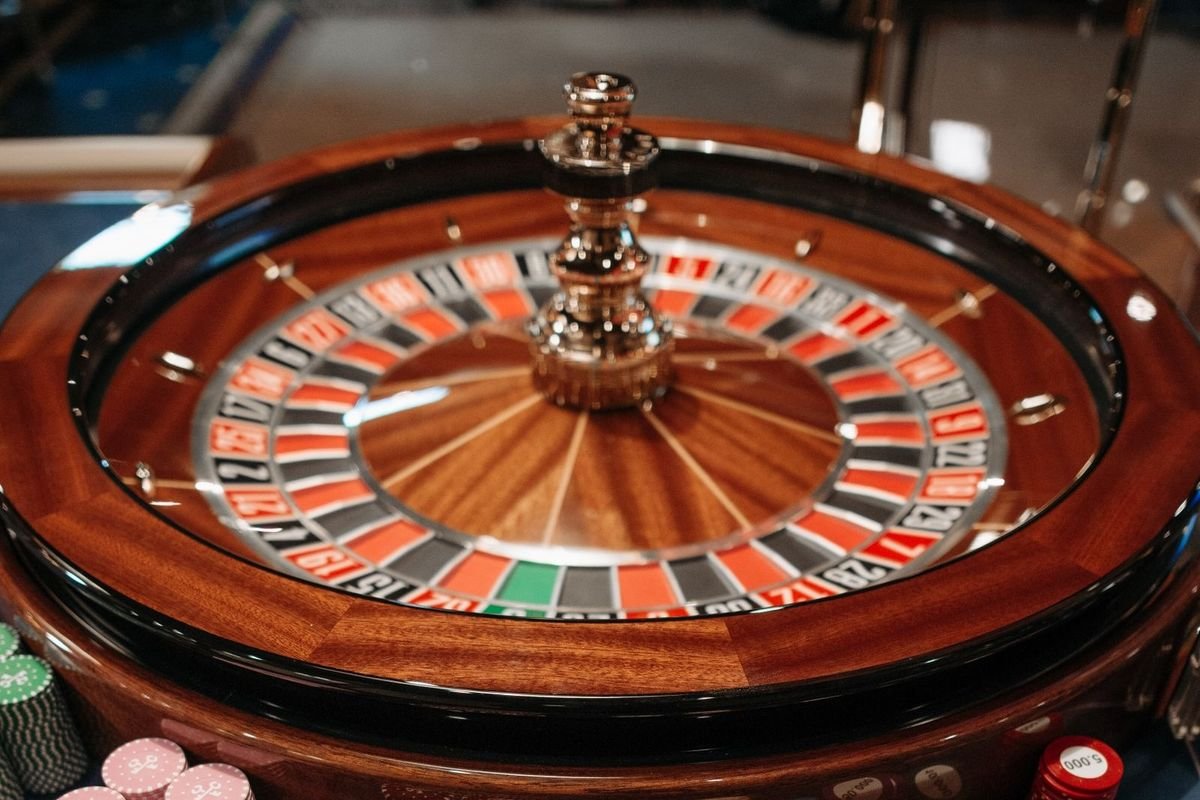
I still remember the first time I stood in front of a roulette table with no idea what I was supposed to do. The wheel was spinning and players were stacking little coloured chips all over the layout. If you are wondering how to play roulette at a casino for the first time, you do not need a maths degree or a big bankroll — just someone to walk you through what happens before you put your first chip down.
Roulette is one of the easiest casino games to learn on the spot — no hand to memorise, no strategy chart to study. You pick a number, a colour, or a group of numbers, you place your chips, and you watch the ball. The hard part is the stuff around the game — buying chips, knowing where to stand, and cashing out.
So let us walk through it together, from buying chips to placing bets, following a spin, and finishing with etiquette and money habits.
Table of Contents
How to Play Roulette at a Casino: The Table, the Chips, and the First Spin
A roulette table has two parts: a spinning wheel with numbered pockets and a betting layout printed on the felt. The wheel holds the numbers 1 to 36 in red and black, plus one or two green zero pockets. A small white ball spins one way while the wheel turns the other, and wherever it lands decides the winner. Your job is to guess where it will stop and place your chips to show your guess.
If you have never learned how to play roulette at a casino before, the good news is that you can learn the whole rhythm of the game by watching three or four spins before you bet a single chip. Stand behind the table and watch losing chips swept away and winners paid. Within minutes the pattern is obvious. Each spin takes about a minute, so there is no rush. One thing worth knowing: the European wheel has a single zero and a house edge of about 2.7 percent, while the American wheel adds a double zero and pushes the edge to about 5.26 percent. Pick the single-zero table when you can.
Walking Up to the Table: Finding Your Spot
The first thing I do is take a slow lap of the room. Roulette tables are easy to spot, and each has a small sign showing its minimum and maximum bets — some start at five dollars, others at ten or twenty-five. I always check that sign first, because there is nothing more awkward than sitting down and realising the minimum is four times what you planned to spend per spin.
When you find a table you like, look for an empty spot along the rail, the padded edge where players stand or sit. If the table is full, do not hover behind someone — wait nearby or move to another table. When a spot opens, just step in. You do not need to announce yourself. I had already tried blackjack that evening, and if you want the same walkthrough for that game, here is my guide to playing blackjack at a casino.
Buying In: How to Get Your Chips from the Dealer
Here is a moment that trips up almost every first-timer: you cannot just throw cash onto the layout and start playing. You buy your chips from the dealer. Wait for a quiet moment between spins, then place your cash flat on the table, outside the betting layout, and say how much you want — “One hundred in chips, please.” Dealers cannot take cash from your hand, so it goes on the table first, and the dealer counts it and slides your chips across.
The first practical step in how to play roulette at a casino is buying in this way, and it is also the moment to decide how much you are comfortable spending for the whole session. I always decide my budget before I reach the table and treat it like the price of a night out: one hundred dollars is my entertainment money, and if I lose it, I am done. I never go back to the cash machine for more. The dealer will ask what denomination you want; if you are new, ask for the smallest the table allows. Most tables do not accept cards, so bring cash.
Why Roulette Chips Are Coloured (and Why That Matters)
This part surprised me the first time I played. When you buy in, the dealer does not give you standard casino chips with dollar amounts printed on them. Instead, you get a stack of chips in one solid colour, and that colour belongs to you and only you while you are at that table. Every player gets a different colour, because lots of people place chips on the same numbers, and without colours nobody would know whose chips were whose.
These are called non-value chips: they have no fixed dollar amount printed on them. Their value is whatever you agreed when you bought in — five dollars a chip means your blue chips are worth five each, while the player next to you might have red chips worth twenty-five each. Because of this, you cannot take your coloured chips to another table or to the cashier. When you are ready to leave, hand them back to the dealer, who exchanges them for standard casino chips. Then you take those to the cashier.
Reading the Table Layout Without Feeling Lost
The betting layout is the big printed grid on the felt. It breaks down into two zones. The middle is a grid of the numbers 1 to 36, in three columns and twelve rows, with the zero (and double zero, on American tables) at the top — the inside bets, on specific numbers. Around the outside are the larger boxes for the outside bets: red or black, odd or even, low or high, dozens, and columns. Inside is for numbers, outside is for groups.
Learning how to play roulette at a casino means getting comfortable with this layout, but you do not need to memorise it before you sit down. It is printed right there in front of you, and the outside boxes are labelled in plain words. If you can read “red”, “black”, “odd”, and “even”, you can already place a bet. My trick on my first night: I spent my first few spins betting only on the outside boxes, which let me get used to handling chips and following the rhythm without thinking about the number grid. Then I tried small inside bets.
Inside Bets: Straight Up, Split, Street, and Corner
Inside bets are placed on the number grid, and they are where the big payouts live: a single number pays 35 to 1. Your chances of winning are lower, so treat them as the fun, high-reward part of your play. Here are the four every beginner should know:
- Straight up: your chip sits directly on one single number. If the ball lands on it, you win 35 times your bet, plus your chip back — five dollars on 17 pays one hundred and seventy-five plus your five back.
- Split: your chip sits on the line between two neighbouring numbers and pays 17 to 1 if either comes up.
- Street: your chip sits on the edge of a row of three numbers and pays 11 to 1.
- Corner: your chip sits on the cross where four numbers meet and pays 8 to 1.
The pattern is simple: the more numbers you cover, the lower the payout, but the better your chances. Keep inside bets small and spread them around. The Wizard of Odds roulette page lays out every bet, its payout, and its house edge in one clear place. Once you have tried a few inside bets, you will know how to play roulette at a casino with confidence at the number grid.
Outside Bets: Red or Black, Odd or Even, Dozens and Columns
Outside bets sit around the edge of the layout and are the best friend of any first-timer. They cover large groups of numbers, so they win far more often than inside bets, but pay much less. The classic ones are the even-money bets: red or black, odd or even, and low (1 to 18) or high (19 to 36). Each covers eighteen numbers and pays 1 to 1 — bet five dollars, win five, plus your chip back. Your chances on a European wheel are 18 in 37, just under half. The zero is what stops it being exactly half, and that is where the house gets its edge.
That near-fifty-fifty feeling is why beginners love outside bets: you win often enough to stay in the game, and you can play a long time on a modest budget. The other outside bets cover twelve numbers and pay 2 to 1 — dozens cover 1 to 12, 13 to 24, or 25 to 36, and columns cover one of the three vertical columns. Once you know how to play roulette at a casino at this level — a couple of inside bets for excitement and a couple of outside bets for steady play — you have the whole game in your hands.
How a Spin Actually Works, Second by Second
Knowing the bets is one thing; knowing how a spin unfolds is what makes you feel comfortable. After the previous number is paid out, the dealer clears the losing chips and the table opens for new bets. This is your window. You place your chips while the dealer watches, and the other players do the same. On a busy table the window can be short, so know roughly what you want to bet before it opens.
Once the bets are down, the dealer spins the wheel one way and sends the small white ball around the track the other way. The ball circles, losing speed, until the dealer waves a hand and calls out “no more bets”. From that moment, you cannot place, move, or remove any chips. The ball rattles, bounces between the pockets, and settles into one numbered pocket. The dealer announces the winning number and colour, then places a small marker, called a dolly, on the winning number. While it sits there, the table is frozen: the dealer sweeps away losing chips, then pays the winners. When the dolly is lifted, the next round begins. That rhythm is the real answer to how to play roulette at a casino in practice.
What Happens When You Win (and When You Don’t)
Winning feels wonderful. When the ball lands on your number or colour, the dealer pushes your winnings toward you along with your original chips. A straight-up win pays 35 to 1, an even-money bet pays 1 to 1, and everything else falls in between. The dealer does the maths, so you do not need to calculate anything — just pick up your chips and put them neatly in front of you.
When you win, it is customary — though not required — to tip the dealer a chip now and then, especially after a decent win. Losing is the other half of the game, and it happens far more often. The dealer simply sweeps your chips away. The only mistake is chasing the loss — doubling your bets in frustration, or deciding that the next spin simply has to be your number. Each spin is independent and the wheel has no memory. Accept the loss, take a breath, and either place your next bet calmly or sit a spin out.
Table Minimums, Maximums, and Managing Your Money
Every roulette table has a minimum and a maximum bet, both printed on the small sign at the end of the table. The minimum is the smallest amount you can bet on one spin, and for a first-timer it is the number that matters, because it decides how long your money lasts. Here is the maths I do before I sit down: a five-dollar minimum and one hundred dollars means at least twenty spins, usually more, because I will win some back. A twenty-five-dollar minimum means four spins, and a cold streak could end my night in five minutes.
Managing your money means setting rules before you start and sticking to them. Mine are simple: I decide my total budget before I reach the table, I never buy in a second time, and I set a point where I walk away if I am ahead. If I double my money, I pocket the original amount and only play with the winnings. None of this changes the odds, but it changes how long I play and how I feel when I leave.
Cashing Out: Turning Your Chips Back Into Cash
When you are ready to leave, cashing out is straightforward. Wait for a break between spins and push your coloured chips toward the dealer. Say “colour up, please”. The dealer counts your chips, works out what they are worth, and exchanges them for standard casino chips. You then take those to the cashier’s cage for cash.
The step that surprises most beginners is that you cannot take your coloured chips straight to the cashier. The cashier has no way of knowing what your colour was worth, because coloured chips have no printed value — only the dealer at your table knows. If you walk away with coloured chips still in your pocket, you will have to come back to that same table, and if it has closed, it becomes a hassle. Always colour up at the table before you walk away. I decide in advance that I will leave when I have doubled my money, or when my budget is gone, whichever comes first. Cashing out while you are ahead is one of the best feelings in a casino. Knowing how to play roulette at a casino is as much about this ending as it is about the beginning.
Table Etiquette: The Unwritten Rules That Keep Things Smooth
Roulette is a social game with a handful of unwritten rules nobody prints on the layout. Dealers are forgiving with beginners who are clearly trying. The most important rule is about your hands. Once the dealer has called “no more bets” and the ball is spinning, keep your hands off the layout and your chips. Do not reach for a winning chip early, do not adjust a bet after the call, and do not touch anyone else’s chips. Wait until the dealer lifts the dolly and waves the table open again.
The second rule is about space and patience: the layout is shared, so do not lean across other players or reach over someone’s stack; if you cannot reach a spot, ask the dealer to place the bet for you. Third, be kind to the dealer and the other players — a polite player always gets a warmer reception than someone who snaps about the results, and the dealer does not control where the ball lands. Finally, about phones and drinks: do not photograph the layout or other players, and keep your glass away from the felt. Learning how to play roulette at a casino is partly about the bets and the wheel, but it is just as much about knowing how to behave in a shared space, and leaving the table as graciously as you joined it is the perfect way to finish your first night.
Frequently Asked Questions
Do I need to know the rules before I walk up to a roulette table?
No. Learn by watching a few spins and starting with simple outside bets like red or black. The best way to learn how to play roulette at a casino is to watch, ask a quick question between spins, and place your first small bets once the rhythm feels familiar.
How much money should I bring for my first time playing roulette?
Bring only what you can comfortably afford to lose, and treat it as the cost of a night out. A hundred dollars on a five-dollar table gives you at least twenty spins, usually more. Decide your budget before you reach the table, buy in once, and do not go back for more.
Can I place a bet after the dealer says “no more bets”?
No. Once the dealer calls “no more bets”, the table is closed for that spin and you must keep your hands off your chips. If you were too slow, wait for the next spin, about a minute away.
What is the difference between European and American roulette?
The European wheel has a single zero and a house edge of about 2.7 percent; the American wheel adds a double zero and pushes it to about 5.26 percent. The games play identically, but your money lasts longer on the European wheel.
Can I take my coloured roulette chips to another table or the cashier?
No. Coloured chips have no printed value and are only good at the table where you bought them. Hand them to the dealer, who exchanges them for standard casino chips, then take those to the cashier — so always colour up at the table before you walk away.
That is really all there is to it. The wheel spins, the ball bounces, and sooner or later it lands on your number or colour. If you walk in knowing how to play roulette at a casino — how to buy in, read the layout, place a bet, and cash out — the evening stops feeling like a test and starts feeling like a night out. Keep your bets small, keep your budget fixed, and let the game come to you one spin at a time.
Gamble responsibly. 18+ only.