
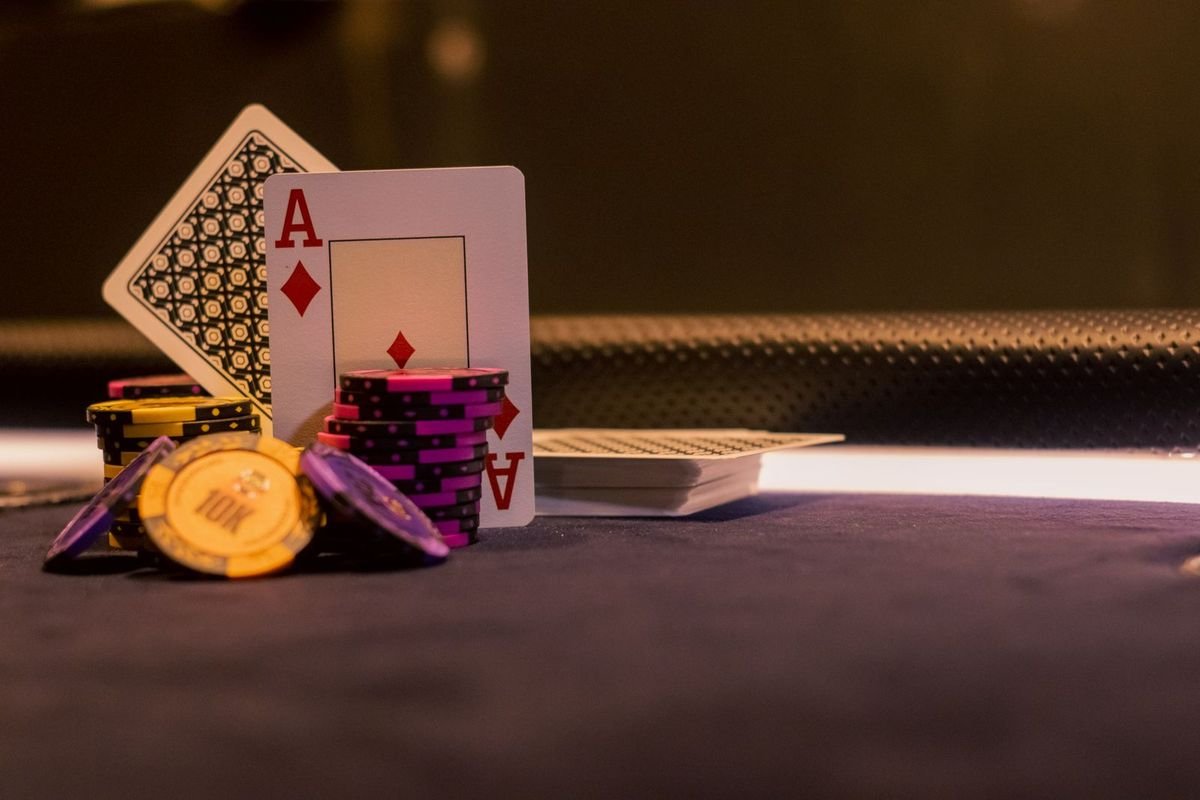
The first time a friend asked me what is live baccarat, I gave him the short version: it’s baccarat, but with a real dealer, real cards, and a real table — streamed to your screen as it happens. He nodded, then asked the question that actually matters: is it just a video of someone dealing cards, or is it a real game I’m part of?
It’s a real game you’re part of: you place your bets on screen, the dealer deals physical cards on a real table in a studio, and you watch every card turn over live. In this guide, I’ll explain it all in plain English: how the studio works, how a round plays out, what the bets pay, and which variants are worth your time.
Table of Contents
What Is Live Baccarat? The Short Answer
So what is live baccarat in one sentence? It’s the classic card game of baccarat, played online with a human dealer who shuffles and deals real cards in a casino studio while cameras stream the action to your device in real time.
You join from your phone or laptop, place chips on Player, Banker, or Tie using the on-screen panel, and watch the dealer do the rest. The cards are physical, the shoe is real, and the result is whatever the cards say — not what a computer decided a split second earlier.
What makes it different is the human layer: a dealer who greets you, a pace set by real hands moving real cards, and the trust of seeing the shuffle with your own eyes.
How a Live Baccarat Studio Actually Works
Once you understand what is live baccarat behind the scenes, it feels less like magic and more like a very well-run television studio. That’s basically what it is — a casino floor rebuilt inside a studio, with cameras, lights, and a dealer who is also a presenter.
Several cameras cover the table — a wide shot of the dealer, a close-up on the cards, sometimes an overhead view — and the software switches between them. Hidden sensors read each card as it leaves the shoe, so your screen shows the running totals instantly.
Betting windows last 15 to 20 seconds, and the stream runs only a second or two behind real life. If the picture ever freezes, wait for it to catch up before you bet.
How a Round of Live Baccarat Plays Out
If you’re wondering what is live baccarat like in practice, a single round is the best way to understand it. The rhythm becomes familiar fast — most rounds take under a minute from the first bet to the payout.
First, the betting window: the timer starts, and you tap chips onto Player, Banker, or Tie, plus any side bets. When the timer hits zero, the window locks.
Then the dealer draws two cards each for Player and Banker, face up, and the totals appear on your screen as each card lands. Next, the drawing rules kick in automatically — a third card may be drawn for one or both hands — with no decision for you or the dealer to make. Finally, the dealer announces the winner, payouts are credited, and the next betting window opens.
The Bets and Payouts: Player, Banker, and Tie
The betting is the part of what is live baccarat that trips up most beginners, because it looks like there are only three choices — and for the main bets, there are. But each behaves very differently, so it’s worth knowing what you’re actually buying.
The Player bet pays even money, 1 to 1: you win if the Player hand finishes closer to nine than the Banker hand. It’s the simplest bet on the table, and the one most beginners start with, because there’s no commission to think about.
The Banker bet also pays even money, but with a catch: the casino takes a 5% commission on Banker wins. Bet $20 and win, and you keep $19 of profit. The Banker hand wins slightly more often than Player — which is exactly why the commission exists.
The Tie bet pays 8 to 1 at most live tables, sometimes 9 to 1 — tempting, but ties are rare, roughly one hand in ten. Side bets like Player Pair pay 11 to 1 if the first two cards form a pair, but treat them as entertainment: their house edge is much higher.
A Quick Rules Refresher (So the Table Makes Sense)
You don’t need to memorise the rules to enjoy what is live baccarat, but a short refresher makes the table much easier to follow. The whole game is about getting as close to nine as possible.
Cards two through nine are worth face value; tens and face cards are worth zero, and aces are worth one. If a hand totals more than nine, only the last digit counts — a seven and an eight make five, not fifteen. The hand closest to nine wins, and if both hands tie, the Tie bet wins.
Here’s the gist: if either hand totals eight or nine with the first two cards, that’s a “natural” and the round ends immediately. Otherwise, Player draws a third card on totals of zero to five and stands on six or seven, while Banker follows a slightly more detailed set of rules. Don’t try to memorise the Banker drawing table — even regulars don’t. For the full mathematical breakdown, the baccarat guide at the Wizard of Odds lays it out clearly.
The House Edge: Why the Banker Bet Wins the Maths
The house edge is where what is live baccarat gets interesting, because this is one of the few casino games where the maths genuinely favours one bet over the others — and it’s not the bet most beginners pick.
The Banker bet carries a house edge of about 1.06% after the 5% commission — one of the best bets in the entire casino, far better than any slot. The reason is simple: the Banker hand wins slightly more often, because of the order the drawing rules are applied.
The Player bet sits at about 1.24% — still excellent, and the difference from Banker is small, so if you simply prefer Player, you’re not making a costly mistake.
The Tie bet is the outlier, with a house edge of around 14.4% at the standard 8-to-1 payout — for every $100 wagered on ties, the casino expects to keep about $14.40, against just over a dollar on Banker. Side bets are worse again, around 10% for pair bets and above 13% for Perfect Pair, so know the price of the fun.
The Main Live Baccarat Variants: Speed, Lightning, and No Commission
The variants are where what is live baccarat gets fun: the studios have spent years inventing new ways to dress up the same classic game. The core game never changes, but the pace, the payouts, and the presentation do.
Speed Baccarat is the same game, played faster: cards are dealt face up immediately, the betting window is shorter, and a round takes around 27 seconds instead of 45 to 50. It’s the variant I’d suggest once the standard game feels comfortable.
Lightning Baccarat adds random multipliers: before each round, one to five cards get a multiplier of 2x to 8x, and if your winning hand includes one, your payout is multiplied — but base payouts are reduced to fund them, so it’s a more volatile game.
No Commission Baccarat removes the 5% commission on Banker wins — but a Banker win on a total of six pays only half, 1 to 2 instead of even money. Other variants include Baccarat Squeeze, where the dealer slowly reveals the cards, and VIP tables with much higher limits. Try them one at a time.
Live Baccarat vs RNG Baccarat: What’s Really Different?
The honest answer to what is live baccarat versus its computerised cousin comes down to one word: trust. RNG baccarat — where a random number generator decides the cards — is faster and cheaper to play. Live baccarat is slower and needs a real studio. So why do so many players choose the live version?
The first difference is transparency. In live baccarat, you watch the dealer shuffle a real shoe and deal physical cards. In RNG baccarat, you trust that the software’s random number generator is fair, which it almost certainly is at a licensed casino — but you’re taking that on faith rather than seeing it with your own eyes.
The second difference is pace. RNG baccarat lets you play a hand every few seconds, which sounds efficient until you realise how quickly that adds up. Live baccarat forces a natural rhythm on you — a betting window, a deal, a result, a pause — and that slower pace is one of the best bankroll-protection features in the game, even though nobody markets it that way. The third difference is atmosphere — a dealer who greets you, a chat window, the small drama of the squeeze. For a quick few hands with tiny stakes, RNG is fine; for a proper session, live is better. For the bigger picture, my guide to what is a live casino explains the studios and streaming behind all of them.
Table Limits, Side Bets, and the Squeeze
Table limits are the practical detail most beginners ignore until they matter. Live baccarat tables usually open at $1 or $5 minimums, with standard tables running up to a few thousand dollars per hand. VIP tables can start at $50 or $100 and stretch far higher — but the game itself is identical, so there’s no reason to sit at a VIP table until your bankroll genuinely supports it.
Always check the minimum before you sit down — it varies more than you’d expect, and a $25 minimum can eat a $100 bankroll in four unlucky hands. I check the limits in the lobby before I ever click into a table, and I’d suggest you do the same.
Side bets sit right next to the main bets and are designed to be tempting. A $1 side bet now and then is harmless, but adding one to every hand quietly doubles your exposure — and their house edge is ten times higher than the main bets. Then there’s the squeeze: on squeeze tables, the dealer slowly bends back the card edges to reveal their values bit by bit. It changes nothing about the result, but it’s the moment live baccarat feels most like a real casino.
Live Baccarat Etiquette and Table Manners
Live baccarat has its own small code of manners, and most of it is common sense. The dealers are professionals running a real game, and the other players are real people watching the same cards — a little courtesy goes a long way.
Use the chat politely. Dealers welcome a greeting, but they’re dealing while they talk, so keep it light. Never blame the dealer for the cards — they don’t choose them, and complaining about a losing hand is the fastest way to look like a beginner.
Respect the betting window. When the timer hits zero, betting closes, and there’s no way to squeeze a late bet in — arguing about it in the chat won’t help and slows the game down for everyone else. And don’t share your balance or your betting system in the chat: nobody at the table needs to know your bankroll. Tipping is welcome if the platform allows it and you’ve had a good session, but it is never required.
Beginner Tips for Your First Live Baccarat Session
My best advice for anyone asking what is live baccarat for the first time is to treat the first session as a learning experience, not a money-making mission. The game is simple, but the live environment has its own rhythm, and giving yourself time to learn it is the smartest move you can make.
Start with the smallest table you can find: a $1 minimum lets you play dozens of hands and learn the flow without risking real money in any meaningful amount — you can always move up later. Bet Banker more often than Player, and skip the Tie until you know the game. That’s not a magic system, it’s just the maths: the Banker bet has the lowest house edge, so it gives your bankroll the longest life.
Set a session limit before you sit down, and stick to it. Decide in advance how much you’re comfortable losing and what would make you happy to walk away with, then leave when you hit either number. Finally, watch a few rounds before you bet if the table allows it — ten minutes of watching teaches you more about the pace than any guide can.
Frequently Asked Questions
Is live baccarat rigged?
No — at a licensed casino, live baccarat is one of the most transparent games you can play. You watch a real dealer shuffle and deal physical cards, and the results are decided by those cards, not by hidden software.
Can I play live baccarat on my phone?
Yes, and most players do. The streams are built for mobile, with the betting panel sized for a touchscreen. A stable internet connection matters more than the device — a frozen stream mid-round is the one thing that can spoil a session.
What is the minimum bet at a live baccarat table?
Most standard tables start at $1 or $5 per hand, while VIP tables start much higher, often $50 or $100. Check the limits in the lobby before joining, so you never sit down at a table whose minimum is bigger than your session budget allows.
Do I need to know the drawing rules to play?
No. The dealer applies the drawing rules automatically, and your screen shows the running totals as each card is dealt. There’s nothing to decide during a round — you place your bet before the deal and watch the result.
Which live baccarat variant should a beginner start with?
Start with the standard version, often called Classic or Live Baccarat. It has the slowest pace, the full betting window, and no extra rules to learn. Once you’re comfortable, Speed Baccarat is a natural next step, and Lightning Baccarat is worth a look if you enjoy a more volatile game.
So, what is live baccarat in the end? It’s the classic game, played with real cards, a real dealer, and a real table — streamed live to wherever you are. The rules are simple, the Banker bet gives you one of the best house edges in the casino, and the live setting adds a warmth no animated game can match. Start small, bet Banker, and skip the Tie.
Gamble responsibly. 18+ only.