
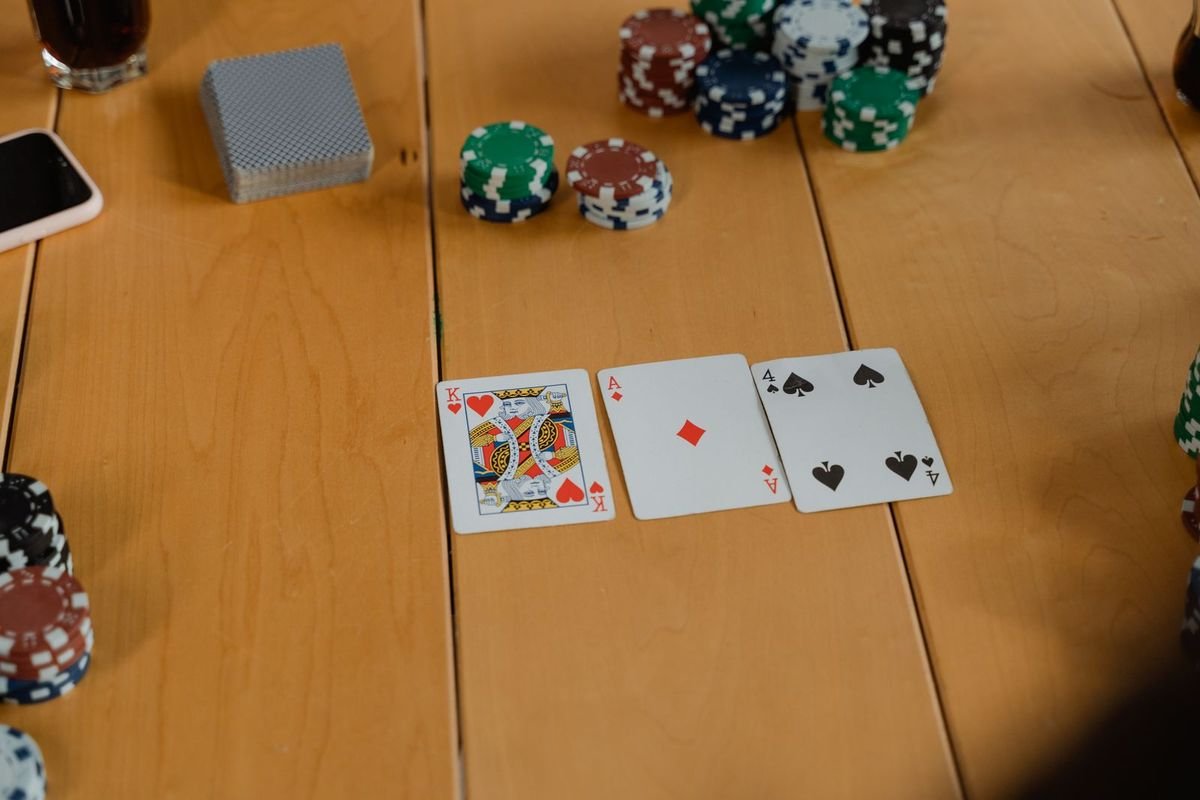
I’ll be honest with you: the first time I sat down at a Red Dog table, I thought someone was playing a joke on me. Two cards, one decision, and a third card that either lands between them or it doesn’t. That was the whole game. No hand rankings to memorise, no bluffing, no dealer hand to beat. I had spent years learning games that demand charts and counting, and here was a casino game you could understand in about ninety seconds — yet nearly an hour later, I was still sitting there.
If you want to learn how to play red dog casino game from scratch, you are in the right place. In this guide I will walk you through the rules exactly as they work at a real table, explain the spread and the payout table in plain English, show you the one strategy rule that actually matters, and tell you where you can still find the game today. No jargon, no maths degree, and no pretending this is a game you can beat long term. Just the honest version, the way I wish someone had explained it to me before my first hand.
Table of Contents
How to Play Red Dog Casino Game: The Simple Answer
Here is the whole game in one paragraph. You place an ante bet. The dealer turns over two cards face up. If those two cards are consecutive in rank — say a 7 and an 8 — the hand is a push and your bet comes straight back. If the two cards are a pair, a third card is dealt automatically: if it matches the pair, you win 11 to 1; if it doesn’t, the hand is a push.
If the two cards are neither a pair nor consecutive, the dealer announces the “spread” — the number of card ranks sitting between them — and you decide whether to raise by up to the size of your original bet. Then a third card is dealt. If it lands strictly between your two cards, you win according to the payout table. If it matches one of your cards or falls outside them, you lose.
That is genuinely all of it. The rest of this guide is detail: the payouts, the pair rules, the strategy, and the mistakes that cost beginners money.
What Is Red Dog? The Game in One Minute
Red Dog is one of the oldest simple gambling games around. Long before it reached a casino floor, people played it at kitchen tables under the name Acey-Deucey, or simply “In-Between” — and that second name tells you everything. The whole game is a bet on whether a third card will fall in between two cards you can already see.
The casino version keeps the bones of that home game and adds a formal betting structure: an ante to get in, the option to raise once you have seen the spread, and a fixed payout table instead of even-money bets. It is also sometimes called Red Dog Poker, although that name is a little misleading. There is no poker hand involved, no bluffing, and no opponent. You are betting against the cards themselves.
These days, Red Dog is fading from land-based casinos. The Wizard of Odds notes that the game is falling in popularity on physical casino floors, though many internet casinos still offer it, and a handful of US properties — Turning Stone Casino and Resort in Verona, New York is one named example — still spread it, sometimes under the Acey-Deucey name. For most players, learning how to play red dog casino game today means learning it online, and honestly that suits it: it plays fast, the rounds are short, and it works beautifully on a phone screen.
The Cards and the Table: What You Need Before You Bet
Red Dog is played with a standard 52-card deck, although online versions and some casino tables use several decks shuffled together. The number of decks matters a little to the house edge — I will come back to that — but it changes nothing about how you play a hand. Suits are completely irrelevant. A red 9 and a black 9 are the same card for every purpose in this game.
Card ranks follow the standard poker order, with aces always high: 2, 3, 4, 5, 6, 7, 8, 9, 10, Jack, Queen, King, Ace. That ranking is the only thing you need to know to work out a spread, and it is worth fixing in your head before you sit down, because the whole game runs on the gaps between ranks.
The table itself is simple. You will see a betting circle for your ante, and usually a second area marked for the raise bet. Some tables print the payout table right on the felt — read it before your first hand, because payout tables can vary slightly from one casino to another. Online, the same information sits in the game’s help or paytable screen. There are no side bets in the classic version, and no insurance, doubling down or splitting. Your decisions are just two: how much to ante, and whether to raise. Minimums are usually friendly, which makes Red Dog a good first table game if you are new to casinos.
Step by Step: A Hand of Red Dog From Ante to Payout
If you want to understand how to play red dog casino game in practice, follow one hand from start to finish — because once you have seen one hand, you have seen them all.
First, you place your ante bet in the betting circle. This is the stake that gets the hand started, and the only compulsory bet in the game. Second, the dealer deals two cards face up. Both cards are visible to everyone: no hole card, no dealer hand, no secret. Third, the dealer reads the two cards. If they are consecutive, the hand ends immediately as a push and your ante is returned. If they are a pair, a third card is dealt automatically and the pair rules kick in. If they are neither, the dealer announces the spread, and the decision passes to you.
Fourth, on a spread hand, you choose whether to raise — by any amount up to your original ante, never more — or to play on with just your ante at stake. This is the single strategic decision in the game, and the correct play depends entirely on the size of the spread.
Fifth, the dealer deals a third card face up. If it falls strictly between your two cards, you win, and your ante and raise are paid according to the payout table. If it matches either of your cards or lands outside the range between them, you lose both bets. Then the cards are swept away, you place a new ante, and it starts again. A hand takes about twenty seconds, and that speed is part of the appeal — and, if you are not careful with your bankroll, part of the danger too.
The Spread Explained: The Number That Runs the Game
If Red Dog has a main character, it is the spread. Everything in the game — the payout, the strategy, the tension — flows from this one number, and understanding it is the heart of learning how to play red dog casino game well.
The spread is the count of card ranks sitting strictly between your two cards. It is not the difference between the numbers on the cards, and that trips people up. Take a 5 and a 10: the ranks between them are 6, 7, 8 and 9 — four ranks — so the spread is 4. Take a 3 and a Queen: the ranks in between are 4, 5, 6, 7, 8, 9, 10 and Jack — eight ranks — so the spread is 8. A 2 and an Ace gives you the widest possible spread, 11, since every rank from 3 to King sits between them.
Here is a quick mental shortcut: the spread is the difference between the two ranks, minus one. A 5 and a 10 differ by 5, minus 1 gives a spread of 4. Once that clicks, you can read a spread the instant the cards land.
Why does it matter so much? Because the spread is your win probability, right there on the table. A spread of 1 means only one rank wins for you — one card rank out of thirteen — so you are a heavy underdog. A spread of 11 means eleven out of thirteen ranks win, and you are a strong favourite. The game pays you more when the spread is small precisely because winning is harder, and a big spread pays even money because it is supposed to win most of the time. The spread is the odds, the payout, and the strategy, all in one number.
The Payout Table: What Each Spread Pays
The payout table is the first thing to check when learning how to play red dog casino game at a new casino, because it is where casinos differ. The standard table — the one published by the Wizard of Odds and used in most versions of the game — works like this:
- A spread of 1 pays 5 to 1. Only one rank can save you, so the reward is the biggest.
- A spread of 2 pays 4 to 1.
- A spread of 3 pays 2 to 1.
- A spread of 4 or more pays even money, 1 to 1. That covers spreads from 4 all the way up to 11.
Notice something important: the payout stops growing once the spread reaches 4. A spread of 11 wins far more often than a spread of 4, but both pay the same even money. That is not an accident — it is the heart of the strategy, and I will come back to it below.
There is one more payout, and it is the biggest one on the table: when your first two cards are a pair and the third card matches them, you are paid 11 to 1. Two honest warnings: some casinos pay less on the small spreads, which quietly pushes the house edge up, so always read the paytable before your first bet. And if a table pays less than 5 to 1 on a spread of 1, you are playing a worse version of the game — find another table. These payouts apply to both your ante and your raise when you win; when you lose, you lose both.
What Happens When the First Two Cards Are a Pair?
Pairs are the most misunderstood moment in Red Dog, so let me spell it out slowly, because beginners get this wrong constantly.
When the dealer turns over two cards of the same rank — two 8s, two Kings — you do not get a raise decision. There is no spread to announce, because there is no gap between two identical cards. Instead, a third card is dealt automatically, and the outcome depends entirely on that one card. If the third card matches the pair, you win 11 to 1 on your ante — the biggest payout in the game. If the third card is anything else, the hand is a push: you get your ante back, no win, no loss, and the hand is over.
Think about what that means. On a pair, you can never lose your ante. The worst possible outcome is getting your money back. That makes pairs a free shot at an 11 to 1 payout, which is a lovely spot to be in — and it is why the payout is so generous. The chance of that third card matching is low, roughly one rank in thirteen, so the casino can afford to pay 11 to 1 and still come out ahead over time.
One practical note: in some house rules and online versions, a non-matching third card loses instead of pushing, in rare variants. The push-on-a-miss version is the standard rule published by the Wizard of Odds and the one you will meet almost everywhere. Still, it takes five seconds to check the rules screen, and five seconds is cheap insurance against an unpleasant surprise.
What Happens When the First Two Cards Are Consecutive?
Consecutive cards are the quietest outcome in the game, and the easiest to understand. If the dealer turns over, say, a 7 and an 8, or a Queen and a King, the two cards sit right next to each other in rank. There is no room between them for a third card to land, so there is nothing to bet on. The hand is declared a push, your ante is returned in full, and you move on to the next hand.
No third card is dealt. No raise is offered. Nothing is won and nothing is lost. It is the game’s way of saying “no contest,” and it happens more often than you might expect, since consecutive ranks are common in a shuffled deck.
Beginners sometimes find this frustrating — you placed a bet, you were ready for the drama, and the hand just evaporates. My advice is to enjoy it. A push is a free hand: you risked nothing, you lost nothing, and you got to stay at the table. In a game where the house has an edge on every hand you actually play, a hand that costs you nothing is a small gift.
The House Edge in Red Dog (and Why It Matters)
Let us talk honestly about the house edge, because anyone teaching you how to play red dog casino game owes you the truth about the price of playing.
In a standard six-deck game using the payout table above, the house edge in Red Dog is about 2.8%. In a single-deck game it is a little higher, around 3.16%, and with eight decks it drops slightly to roughly 2.75%. Those figures come from the Wizard of Odds, which has published the full return tables for the game, and they assume you are playing the raise decision correctly.
What does 2.8% mean in real life? Over a long stretch of play, the casino expects to keep about $2.80 of every $100 you wager. That is not a terrible price for a casino game — it sits in the same neighbourhood as many popular table games, and it is far better than most slot machines — but it is a real cost, and it is why no betting system can turn Red Dog into a long-term money-maker. The edge is baked into the payout table itself: the payouts are always slightly less than the true odds of winning.
Two things move the edge. The first is the payout table: a table that pays less on small spreads raises the edge, sometimes sharply. The second is your own raise decisions. Raising on small spreads is the classic way beginners hand extra money to the house, because you are doubling your stake on a hand you are likely to lose. Play the raise correctly and you pay the standard edge. Play it wrong and you pay more.
Red Dog Strategy: When to Raise and When to Sit Tight
Here is the beautiful thing about Red Dog strategy: it fits in one sentence. Raise only on a spread of 7 or more. Never raise on a spread of 6 or less. That one sentence is the whole strategy of how to play red dog casino game well, and it comes straight from the maths published by the Wizard of Odds.
For every spread from 1 to 6, the expected return on a raise is negative — you lose money on average by putting more chips on the hand. For every spread from 7 to 11, the expected return turns positive. At a spread of 7 the edge on the raise is small but real; at a spread of 11 it is large. The line sits exactly at 7, and it holds regardless of how many decks are in play.
Let me make that concrete. Say you ante $10 and the dealer shows a 4 and a Queen — a spread of 7. The raise is a good bet, so put the extra $10 out there. Say instead the dealer shows a 6 and a 9 — a spread of 2. You are looking at a hand that wins roughly two times in thirteen. Raising there means doubling your stake on a long shot, and the 4 to 1 payout does not make up for it. Sit tight, let the hand ride on your ante alone, and wait for a better spot.
A few extra notes from my own sessions. When you do raise, raise the full amount — up to your original ante — because the raise on a wide spread is a genuinely favourable bet, and betting less on a good bet is leaving money on the table. Do not let a run of bad luck tempt you into raising on small spreads to “win it back.” And remember that the strategy assumes the standard payout table — yet another reason to read the paytable first.
Bankroll Tips: How to Play Red Dog Casino Game Without Burning Through Your Money
Red Dog is a fast game, and fast games are dangerous for bankrolls in a way that has nothing to do with the house edge. A hand takes twenty seconds, so you can play a hundred hands in half an hour without noticing — and a hundred hands at a $10 ante is $1,000 of total action even if your wins and losses mostly cancel out. The game does not need a big edge to wear you down. It just needs speed.
So before you play, set a session budget — a fixed amount you are comfortable losing, full stop — and treat it as a hard line, not a suggestion. I play Red Dog with small antes relative to my budget: if I have $100 for the session, my ante is $5, not $25. That gives me room for the losing streaks that are completely normal in this game, including the painful stretches where the third card lands outside the spread again and again.
Keep your raises disciplined too. The raise doubles your money at risk on a hand, which is fine on a spread of 8 or 9, but it doubles your losses as well when the card misses. A good habit is to think of the raise as part of your ante, not as extra money you found. Finally, decide your walk-away point before you start, for wins and for losses. If you double your session budget, consider banking the profit. If you lose the budget, stop. Chasing losses in a game this fast is how a fun twenty minutes turns into a story you regret telling.
Where to Play Red Dog: Online Casinos and Land-Based Tables
For most players today, the honest answer to “where can I play Red Dog?” is: online. The game has quietly disappeared from most land-based casino floors, and the few properties that still spread it tend to be regional casinos rather than the big Las Vegas strip resorts. The Wizard of Odds names Turning Stone Casino and Resort in Verona, New York as one place the game has been reported, sometimes under its Acey-Deucey name, and there are unconfirmed reports of it at Foxwoods. If you are visiting a casino specifically hoping to find Red Dog, call ahead and ask — don’t just turn up and hope.
Online is a different story, and it is where most people who learn how to play red dog casino game will actually end up playing it. Most online casinos with a decent table-games section carry a version of Red Dog, usually as a software-based game rather than a live-dealer one. That is good news for a beginner: the online versions let you play at your own pace, the spread and payout are displayed on screen, and many casinos offer a free-play or demo mode where you can run through hands with play money before you risk a cent. Twenty minutes in demo mode will teach you the rhythm of the game far better than any article can, including this one.
When you choose somewhere to play for real money, check three things. First, the payout table: confirm the standard table of 5 to 1, 4 to 1, 2 to 1 and even money, with 11 to 1 on a matching pair. Second, the licensing and reputation of the casino itself — a proper licence, clear terms, and a track record of paying winners. Third, the table limits: make sure the minimum ante fits your bankroll. A game with a $1 or $5 minimum is a friendly place to learn; a $25 minimum is not.
Red Dog vs Casino War, Blackjack and Other Simple Games
Once you know how to play red dog casino game, it helps to see how it stacks up against the other simple games on the casino floor — people usually find Red Dog because they like simple games.
Casino War is the closest cousin. Like Red Dog, it is a high-card game with one decision and no skill in the traditional sense: you and the dealer each get a card, high card wins, and ties give you the option to go to war.
The difference is the shape of the drama. In Casino War, the tension is a single comparison — your card against the dealer’s. In Red Dog, the tension is the spread, and a payout that grows as the gap shrinks. I think Red Dog is the more interesting game of the two, because the raise decision gives you something real to think about, where Casino War’s only decision is whether to surrender or go to war on a tie.
Blackjack is the opposite end of the spectrum. It rewards study, memory, and discipline, and played with perfect basic strategy its house edge can dip under 1%. Red Dog asks almost nothing of you by comparison — one rule, one decision — and charges about 2.8% for the privilege. That is a fair trade if what you want is a relaxing game rather than a mental workout. If you enjoy the simplicity of games like this, my guide to the best casino games for beginners rounds up the easiest games to learn first, so you can pick your next table with confidence.
Baccarat sits somewhere in between. Like Red Dog, it is a game where you mostly watch the cards and make one simple bet. Unlike Red Dog, the banker bet in baccarat carries a house edge of just over 1%, which makes it a better-value game on paper. What baccarat doesn’t give you is the raise decision, the spread, or the 11 to 1 pair payout. Games are not only about the edge, and the right game is the one you actually enjoy playing. My honest ranking for a casual evening: if you want the lowest edge, play blackjack or baccarat. If you want the simplest possible game with a bit of drama, play Red Dog.
Common Beginner Mistakes to Avoid
I made most of these mistakes myself when I was learning how to play red dog casino game, so I can list them with confidence.
The first mistake is raising on small spreads. It is the single most expensive error in the game, because it doubles your stake on hands you are likely to lose. The temptation is real — a spread of 2 pays 4 to 1, and 4 to 1 sounds exciting — but the maths says no. Spread of 7 or more, raise. Spread of 6 or less, don’t.
The second mistake is misunderstanding the pair rule. Beginners sometimes think a pair is a bad hand because the spread is zero. It is the opposite: a pair is a free shot at 11 to 1 with no possible loss. Never grumble when the dealer turns over a pair.
The third mistake is not reading the payout table. Payout tables vary, and a table that pays less on small spreads is a worse game wearing the same name. Check before you bet, every time, at every new casino.
The fourth mistake is betting too big for your bankroll. Red Dog hands fly by, and a $25 ante becomes $2,500 of action in a hundred hands. Small antes, long sessions, more fun.
The fifth mistake is chasing losses by raising the ante after a bad run. Red Dog has no memory. The cards do not owe you a win, the spread does not get “due,” and doubling your bet after three losses in a row is just a faster way to lose. If the session is going badly, step away. The game will still be there when you come back with a clear head.
Frequently Asked Questions
Is Red Dog the same as Acey-Deucey?
Yes, Red Dog is the casino version of the old card game Acey-Deucey, also known as In-Between. The home game and the casino game share the same core idea — a third card must land between two visible cards — but the casino version adds a formal ante, a raise option and a fixed payout table. If you grew up playing Acey-Deucey at a kitchen table, you already know how to play red dog casino game.
What is the best hand in Red Dog?
The best outcome is a pair followed by a matching third card, which pays 11 to 1 — the biggest payout on the table. After that, the best situation is a wide spread of 10 or 11, where the third card lands between your cards most of the time, although those hands only pay even money. The biggest payout and the most likely win are different things in this game, and that tension is what makes it interesting.
Can you win at Red Dog in the long term?
No — not in the long term, and any honest guide should say so plainly. The house edge is about 2.8% with correct play, which means the casino expects to keep a small slice of every dollar wagered over time. You can absolutely have winning sessions, sometimes big ones, because the short term is noisy and lucky. But no strategy changes the long-term maths, so treat Red Dog as entertainment and never as a way to make money.
What does a pair pay in Red Dog?
When your first two cards are a pair and the third card matches them, you win 11 to 1 on your ante. If the third card does not match, the hand is a push and your ante is returned in full. You can never lose your ante on a pair, which makes it the safest and most exciting position in the game.
Is Red Dog available at online casinos?
Yes — online casinos are the easiest place to find Red Dog today, since the game has become rare on land-based casino floors. Most online casinos with a solid table-games section offer it, usually as a software game, and many offer a free-play demo mode. For the full rules and payout tables from an authoritative source, the Wizard of Odds Red Dog page is the clearest reference I have found.
Conclusion: A Simple Game, Played Properly
Red Dog is not a game that will make you rich, and it is not a game that will make you look clever. It is a game that asks one small question, over and over: will the next card fall in between? Everything else — the spread, the payout table, the raise — is just decoration around that question, and that is precisely its charm.
If you take nothing else from this guide, take the two rules that matter. Read the payout table before you play, because a bad table is a bad game. And raise only on a spread of 7 or more, because that single habit is the difference between paying the standard house edge and paying extra for the privilege of losing faster.
Get those two things right, keep your antes small, and Red Dog will give you what it is good at: fast, simple, honest fun with a genuine 11 to 1 thrill waiting on every pair. That is the whole secret of how to play red dog casino game well — one rule, one decision, and the discipline to respect both.
Start in demo mode, get comfortable with the rhythm of the hands, and when you switch to real money, do it with a budget you can afford to lose and a walk-away point you actually respect. The game is simple. Keeping it fun is the part that takes discipline — and that part is entirely up to you.
Gamble responsibly. 18+ only.