
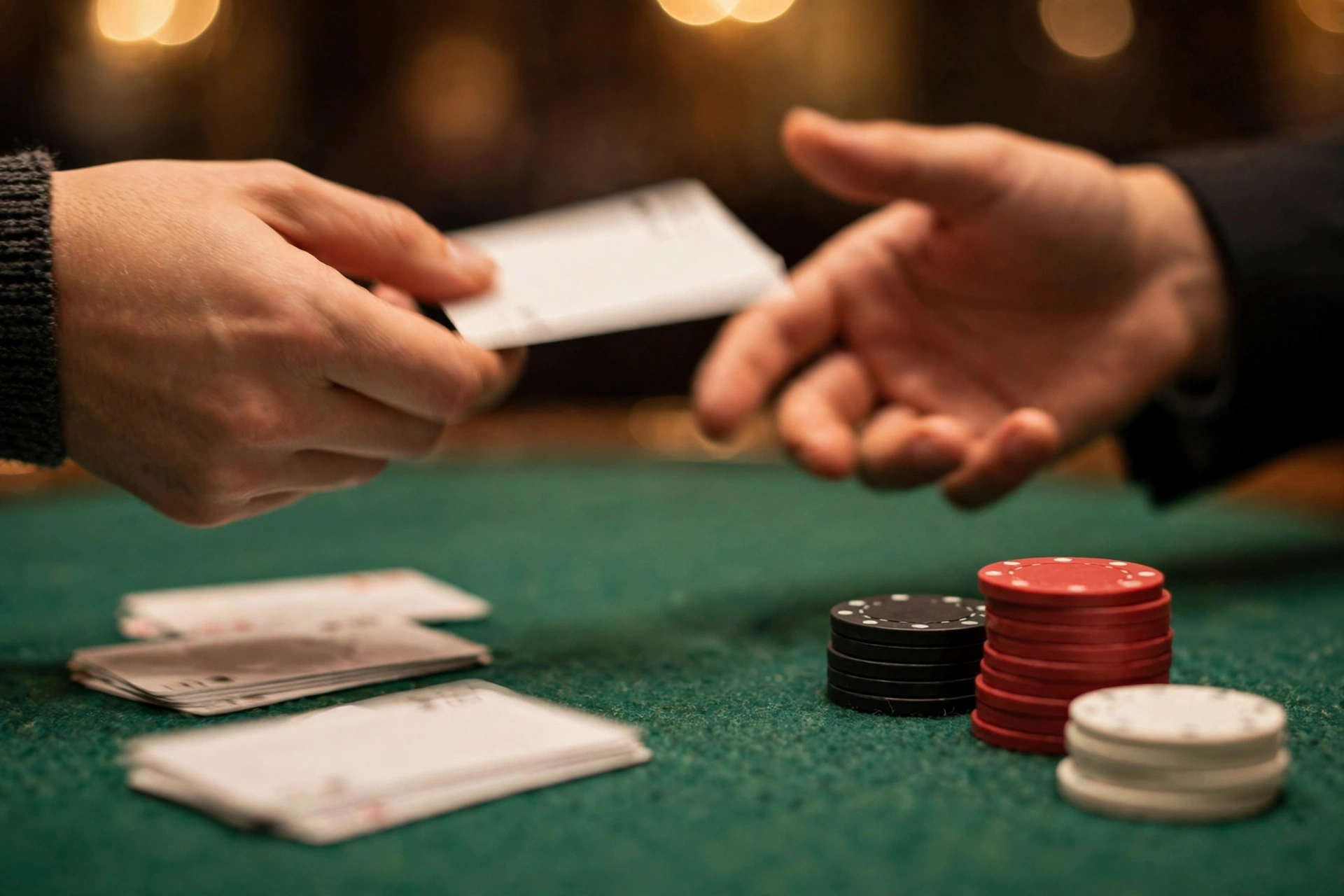
I’ll be honest with you — the first time I ever walked past a blackjack switch table in a casino, I thought someone had set the game up wrong. There were two betting circles in front of every seat, every player had two hands of cards fanned out in front of them, and the dealer kept sliding people’s top cards back and forth between their own two hands like some kind of card trick. I stood there watching for a solid ten minutes before I understood what was going on, and when it clicked, I couldn’t believe nobody had told me about this game sooner.
So here’s the thing about blackjack switch that nobody explains well: it looks complicated, but it’s actually one of the most intuitive twists on the classic game you’ll ever play. You get dealt two hands instead of one, and after seeing all four of your cards, you’re allowed to swap the top cards between your two hands. That one little power — rearranging your own cards — changes everything about how the game feels. In this guide I’m going to walk you through exactly how it works, the two sneaky rule changes that keep the casino in business, how to make good switch decisions, and whether it’s actually worth your money. Let’s get into it.
Table of Contents
What Is Blackjack Switch, Anyway?
At its core, blackjack switch is exactly what it sounds like: a version of blackjack where you play two hands at the same time and you’re allowed to switch the second card of each hand. The game was invented by Geoff Hall, a well-known card counter who came up with the idea back in 2009. Hall had spent years beating casinos at their own game, so he understood blackjack math better than almost anyone alive — and he designed this variant around one delicious idea: what if players could fix their bad hands by rearranging their cards?
Here’s how the basic concept works. You sit down, you place two equal bets (one for each hand), and the dealer deals you two separate hands face up, just like normal blackjack. Then — and this is the fun part — before you play either hand, you can choose to swap the top cards between your two hands. So if you’re dealt a 10 and a 6 on one hand and a 5 and a 10 on the other, you can switch the 6 and the 5 to suddenly be looking at 20 and 11 instead of 16 and 15. It feels like cheating. It isn’t.
Now, casinos aren’t charities, so obviously there had to be a trade-off. The game balances this player-friendly power with two rule changes that favor the house, which I’ll break down in detail below. But conceptually, that’s the whole pitch of blackjack switch: two hands, one swap, and a fresh layer of decisions that regular blackjack just doesn’t give you.
How a Round of Blackjack Switch Actually Plays Out
Let me walk you through a full round step by step, because once you’ve seen it once, the whole thing clicks.
First, you place two bets of equal size — one on each betting circle. You can’t bet different amounts on the two hands; the rules require them to match. This matters because the casino needs both hands to carry the same weight for the math to work out.
Next, the dealer deals you two hands face up, two cards each, and deals themselves one card face up and one face down, exactly like a normal game. So now you’re staring at four of your own cards arranged as two hands, plus one dealer upcard.
Now comes the decision phase, and it’s the part that makes the game special. You look at your two hands and decide: do I keep them as dealt, or do I swap the top cards? You only get to swap the second card dealt to each hand — the top cards, in other words. You can’t rearrange all four cards however you like, and you obviously can’t touch the dealer’s cards. It’s one swap, top cards only, take it or leave it. Unlike regular blackjack, in blackjack switch you get a few seconds of genuine puzzle-solving here, and I love that.
Once you’ve made your switch decision (or decided to stand pat), you play out each hand one at a time, exactly like classic blackjack. You can hit, stand, double down, and split, with the same basic options you’d have in a normal game. There are a few strategy differences, which I’ll get to, but the mechanics of hitting and standing are identical.
Finally, after you’ve finished both hands, the dealer plays out their hand according to the house rules (usually hitting soft 17), and then comes the payout — where those two rule catches I mentioned come into play. If you didn’t bust and you beat the dealer, you get paid. But the payout structure has some quirks, so let’s talk about those next.
The Switch Decision: When Swapping Actually Helps
This is the skill part of the game, and honestly it’s the reason I keep coming back to it. Making a good switch isn’t about gut feelings — it’s about simple patterns you can learn in an afternoon.
The basic principle is this: you want to turn two mediocre hands into one strong hand and one playable hand, or occasionally into one monster and one sacrifice. Let me give you the classic example. You’re dealt 10-6 on one hand (that’s 16, the worst hand in blackjack) and 5-10 on the other (15, also terrible). If you swap the top cards — the 6 and the 5 — hand one becomes 10 + 10 = 20, and hand two becomes 5 + 6 = 11. You turned two garbage hands into a 20 and an 11 you can double down on. That’s the magic.
The general rule I follow: switch when it clearly improves your combined position. A 20 and anything is better than two stiff hands. Turning a bust-risky 16 into a pat 18 or better is almost always worth it. And sometimes the right move is defensive — switching to avoid having two hands that both lose to the dealer’s upcard.
When should you NOT switch? Plenty of times. If both hands are already decent (say 19 and 18), leave them alone — don’t get clever and break a good thing. If you have two naturals, obviously don’t touch anything. And be careful about switches that create two weak hands out of one decent one; I see beginners do this all the time, getting excited about the swap and shuffling cards around just because they can. The swap is a tool, not a toy. If the switch doesn’t clearly make things better, keep your hands as dealt.
The Two Rule Catches (Nothing This Fun Comes Free)
Okay, here’s the part where the casino gets its cut, and you need to understand both of these before you play for real money.
Catch number one: blackjack pays even money. In classic blackjack, a natural 21 pays 3 to 2 — bet $10, win $15. In this game, a blackjack pays just 1 to 1. Bet $10, win $10. That’s a meaningful haircut, and it’s the single biggest reason the house can afford to let you rearrange your cards. It stings the first few times it happens, I won’t lie. You get that beautiful ace-king and the payout is… the same as any other winning hand. Over hundreds of hands, this rule costs you real money, and it’s doing a lot of the heavy lifting that keeps the game profitable for the casino.
Catch number two: the dealer pushes on 22. In normal blackjack, when the dealer busts, every player hand that’s still standing wins. Not here. If the dealer ends up with 22, it’s a push — your bet is returned, but you don’t win — for every player hand that didn’t already bust. (If you busted during your own play, you still lose, same as always.) Think about how often the dealer busts in regular blackjack and you’ll realize how much value this rule takes off the table. A dealer 22 is one of the most common bust outcomes, and instead of getting paid, you just get your money back.
These two rules working together are what fund your switch privilege. Once you internalize them, the game makes total sense: you get a powerful new decision, and the house gets two quiet edges to balance it. Neither side is getting a steal here — it’s a fair trade, as casino games go.
Blackjack Switch Basic Strategy vs Classic Blackjack
If you’ve already learned basic strategy for the regular game — and if you haven’t, check out my beginner’s walkthrough of classic blackjack first, since the fundamentals carry over — you’ll be happy to know that most of your instincts still apply. Hitting, standing, doubling, and splitting work the same way once your hands are set. The differences are all about the switch and how the two rule changes warp a few decisions.
The biggest strategic shift is around doubling down. Because the dealer pushes on 22 instead of busting, doubling becomes slightly less attractive in some borderline spots — the dealer bust-outs that used to pay you double now just push. But on the flip side, the switch often hands you beautiful doubling opportunities (like that 11 from my earlier example), so you’ll actually double more often in practice. Net effect: you double aggressively when the switch gives you 10 or 11, and you’re a touch more conservative with marginal doubles against strong dealer upcards.
Splitting strategy is mostly familiar, but there’s one fun wrinkle: after you split, you obviously can’t switch anymore, so the switch decision always comes first. And here’s a neat trick the strategy charts teach you — sometimes you switch specifically to CREATE a splitting opportunity. Dealt two eights as your top cards across the two hands? Swap them together onto one hand and split the pair.
The most important strategy difference, though, is simply that the switch decision comes before everything else and it dominates your results. Studies of optimal play show that the switch decision is worth far more than perfect hit/stand play. So if you learn one thing, learn the switching chart. The folks behind Wizard of Odds’ blackjack guides have published full strategy tables for the game, and I’d genuinely recommend studying those before playing for real money.
Common Beginner Mistakes I See All the Time
I’ve watched a lot of new players sit down at this game, and the same errors come up again and again. Let me save you some money.
Mistake number one is switching just because you can. I mentioned this earlier but it deserves repeating, because it’s the most expensive habit in the game. New players treat the swap like a free bonus round and shuffle their cards into worse positions. If both your hands are fine, hands off. The swap is powerful precisely because it’s optional.
Mistake number two is forgetting the dealer pushes on 22. I can’t tell you how many times I’ve seen someone stand on 17 against a weak dealer upcard, watch the dealer flip over a 22, and celebrate — only to realize it’s a push, not a win. Drill this into your head before you play: dealer 22 is not a bust. It changes how you feel about standing on stiff hands, and it should change a few of your close decisions.
Mistake number three is mismanaging the double bet. Remember, you’re betting twice as much per round as a single-hand game — two equal bets every time. Your bankroll swings are bigger, and a bad run hurts twice as fast. Bet smaller per circle than you would on a single blackjack hand. I usually halve my normal unit size.
Mistake number four is playing the Super Match side bet without understanding it. Most tables offer this side bet, which pays if your first four cards contain a pair (and pays big for two pairs or four of a kind). It’s fun, it’s tempting, and it carries a much bigger house edge than the main game. If you want to throw a dollar on it for entertainment, fine — but don’t kid yourself that it’s a smart bet.
Where to Find Blackjack Switch: Online vs Land-Based Casinos
Geoff Hall first pitched the game in London, so the UK was its natural early home, and you’ll still find it in plenty of British casinos. In the US, it’s spottier — a handful of Las Vegas casinos have offered it over the years, and it pops up in other markets from time to time, but it’s not a guaranteed find on every casino floor. If you’re planning a trip specifically to play it, call ahead. Seriously. There’s nothing worse than traveling somewhere for a game that got pulled last month.
These days, the easiest way to try blackjack switch is online. Most major online casinos that carry a decent table-game library offer it, either as an RNG (random number generator) digital version or at a live-dealer table where a real human deals physical cards over video stream. The live-dealer versions are my personal favorite — you get the social feel and the visible cards, and the switch decision feels properly dramatic with a real dealer waiting on you.
One warning: rules vary between providers. Some online versions tweak the details — when the dealer hits or stands on soft 17, whether you can double after splitting, how the Super Match side bet pays. Always check the specific rules at your table before you sit down. The core mechanics (two hands, one swap, even-money naturals, dealer pushes 22) are standard, but the small print moves around, and the small print is where your edge lives or dies.
House Edge Talk: Is It Actually Worth Playing?
Let’s talk numbers, because I know some of you are wondering whether this game is a sucker bet dressed up in fun packaging.
With perfect switching strategy and solid basic strategy on the resulting hands, the house edge on the main game sits around 0.58%. To put that in perspective, that’s roughly comparable to a decent standard blackjack game — slightly worse than the very best single-deck games with liberal rules, but better than plenty of the 6:5 blackjack tables you’ll find on casino floors these days. It’s a genuinely fair game by casino standards.
But — and this is a big but — that 0.58% assumes you’re switching correctly. If you’re swapping randomly or going with your gut, the edge climbs fast. Sloppy switching can easily push the house edge past 1%, at which point you’d have been better off at a regular table. The switch decision is the whole game, strategically speaking. Learn the chart, or at least learn the common patterns, before you play for meaningful stakes.
The Super Match side bet, meanwhile, carries a house edge in the 2-3% range depending on the paytable — sometimes worse. That’s the casino’s real moneymaker on this table. Play it for fun if you enjoy it, but understand you’re paying for the entertainment.
My bottom line on the math: played well, this is one of the fairest carnival-style variants in the casino. Played badly, it’s an expensive lesson. The good news is that “played well” is very achievable — the switching logic is simpler than full blackjack basic strategy.
My Honest Take After Playing It for Years
I’ve played a lot of blackjack variants over the years — Spanish 21, Double Exposure, Free Bet Blackjack, all of them — and I keep coming back to this one. There’s something about the switch decision that keeps your brain engaged in a way regular blackjack doesn’t. Classic blackjack can go on autopilot; you’re just following a chart. But here, every single round starts with a little puzzle, and I find that genuinely fun in a way few table games manage.
Is it the most profitable game in the casino? No. A skilled player at a great traditional blackjack table will do slightly better on paper. But most of us aren’t grinding out a living at the tables — we’re there for a good time with a fair shake, and this game delivers both. The even-money natural payouts sting at first, but you stop noticing once you’re absorbed in the switching decisions.
Would I recommend it to a beginner? Actually, yes — with one caveat. Learn regular blackjack first (the fundamentals really do matter), then graduate to this. It’s the perfect “second game” for someone who understands the basics and wants more decisions per hour. Just remember the two rule catches, bet half your normal unit, and leave the side bet alone unless you’re feeling lucky.
Frequently Asked Questions
Is this variant better than regular blackjack?
It’s different rather than strictly better. With perfect play the house edge is around 0.58%, which is competitive with good standard blackjack games, but the even-money payouts and dealer-22 pushes mean it plays very differently. I’d say blackjack switch is more fun per hour for most players, while classic blackjack rewards purists slightly better on paper.
Does the dealer really push on 22 instead of busting?
Yes, and it’s the rule that surprises new players most. When the dealer finishes with 22, every player hand that hasn’t busted pushes — you get your bet back but win nothing. Only hands that busted during play actually lose. Always factor this in before celebrating a dealer “bust.”
Can I count cards at this game?
Technically yes, but it’s much harder than it sounds. You’re tracking two hands at once, the even-money natural payouts reduce the value of a high count, and the dealer-22 push eats into your big-bet wins. Geoff Hall himself was a card counter, and he designed the game knowing counters would try — the rules blunt most of their edge. I wouldn’t bother.
What is the Super Match side bet?
It’s an optional side bet based on your first four cards. If they contain at least one pair, it pays out — with bigger payouts for two pairs, three of a kind, or four of a kind. It’s entertaining and the payouts look juicy, but the house edge is several times higher than the main game, so treat it as entertainment money only.
Where can I play it?
Your best bet is online — most major online casinos offer it as an RNG or live-dealer game, and the rules are clearly posted. Land-based availability varies: it’s common in the UK, appears sporadically in Las Vegas and other US markets, and may not be on every floor. Call ahead if you’re traveling specifically to play it.
Final Thoughts
So that’s blackjack switch in a nutshell: two hands, one swap, and two rule tweaks that keep the whole thing balanced. It’s the rare casino variant that gives you a genuinely new decision to master instead of just a new coat of paint, and the switching puzzle is fun enough that I’ve seen lifelong blackjack players convert after a single session. Learn the two catches, study the switching basics, size your bets sensibly, and you’ll have a great time at a game that treats you fairly. Just promise me one thing — no celebrating when the dealer makes 22.
Gamble responsibly. 18+ only.