
I’ll be honest with you: the first time I walked onto a casino slot floor, I had no idea what I was doing. The room was enormous, every machine was flashing and chiming at once, and I stood there clutching a twenty-dollar bill like it was a hall pass. Nobody hands you an instruction manual when you walk into a casino, so I learned how to play slots at a casino the slow way — by watching other people and making a few embarrassing mistakes.
This guide is the manual I wish someone had handed me that first night. It covers everything between walking in the door and walking out with a ticket worth cashing in: finding a machine, putting money in, understanding what you’re betting, using a players card, knowing what happens when you win, and getting your money back out again.
Table of Contents
How to Play Slots at a Casino: Your First Ten Minutes on the Floor
Here’s the short version. When you’re learning how to play slots at a casino for the first time, the whole process is just five moves: find a machine you like, put cash or a ticket into it, check the paytable so you know what the symbols pay, choose your bet size, and press spin. When you’re done, press the cash-out button, take the printed ticket, and redeem it at a kiosk or the cashier’s cage. That’s the whole game.
Your first ten minutes should be slow on purpose: walk a lap, look around, and watch how other players do it for a minute or two. Before you sit down anywhere, decide on your budget and treat it like the price of a night out, not an investment. Sometimes you walk out ahead — that’s the fun part — but never sit down expecting to.
Walking the Slot Floor Without Looking Lost
A big casino floor can feel like a maze, but it has a logic to it. The machines near the entrance tend to be the flashy, loud, popular ones, and the quieter banks are usually deeper into the room.
Look up as you walk. Almost every bank has a sign telling you the denomination — penny, nickel, quarter, dollar, or higher — and that sign is the single most important thing on the floor, because it tells you what each credit is worth. A penny machine sounds cheap, but many penny machines let you bet fifty or a hundred credits per spin, so a “penny” spin can easily cost a dollar or more. The denomination is the value of one credit, not the cost of one spin, and that distinction trips up almost every first-timer. You’ll also notice some machines are dark, or have a jacket on the chair. Those are claimed — someone is playing that machine and has stepped away. An empty chair with nothing on it is free; anything else means someone is coming back.
Picking a Machine: Denominations, Themes, and What the Signs Mean
Once you know what the denominations mean, picking a machine gets much simpler. A penny machine lets you bet in small steps and usually has lots of paylines and bonus features, which makes it entertaining and gentle on a small budget. A quarter or dollar machine costs more per spin, but pays out in bigger chunks when you hit something. Neither is better — they just fit different budgets. If you’re starting with forty or fifty dollars for the evening, a penny or nickel machine is the sensible place to begin, because your money will last long enough for you to actually enjoy yourself.
The theme is the fun part, and there’s genuinely a machine for everything now: ancient Egypt, fishing, cooking shows, classic fruit symbols, blockbuster movies, and games built around singers and TV shows you’ve heard of. Pick a theme you like, because the sounds and animations are half the experience. Every machine also shows a progressive jackpot amount on a small display — a prize that grows a little every time anyone plays that machine or bank of machines. If you want to think about which game suits you before you go, I put together a guide to the best slot machine to play that walks through the different types in more detail. It answers the “which game” question while this guide answers the “how do I actually do it” question — a solid grounding in how to play slots at a casino before you’ve spent a single dollar.
Cash, Tickets, and the Ticket-In/Ticket-Out System
Here’s the part that surprises most first-timers: you don’t put coins into modern slot machines, and you don’t get a shower of coins back when you win. Almost every casino now uses a system called ticket-in/ticket-out, usually shortened to TITO. Instead of coins, the machine takes paper money and printed tickets, and when you cash out, it prints a paper ticket showing your balance. You redeem that ticket at a kiosk or the cashier’s cage.
When you sit down, you’ll see a bill acceptor — a slot near the front of the machine, usually with a small light next to it. Feed your bills in one at a time, flat and facing the right way, and the machine adds the amount to your credit balance on screen. The ticket slot works the same way: feed in a ticket from another machine and its value transfers onto the new machine as credits, so you can move from machine to machine without visiting the cashier in between. Just remember that a ticket is a bearer instrument — whoever holds it owns it. Treat it like cash, don’t leave it sitting on a machine, and check the expiration date printed on it, because tickets do expire. This little paper ticket is the detail most people get wrong the first time they learn how to play slots at a casino, and it’s the one that costs real money if you forget it.
Reading the Paytable Before You Press Anything
Before you bet a single credit, spend thirty seconds looking at the paytable. Every machine has one, usually behind a button labeled “Paytable,” “Info,” “Help,” or a little “i” icon, and it tells you three things that matter: what each symbol combination pays, which symbols trigger bonus rounds or free spins, and how the paylines work. Skipping it is the most common rookie mistake there is.
The paytable shows the symbols in order of value — cherries, bars, and sevens on a classic game, or themed icons on a video slot — and the payout for three, four, or five of a kind. It also shows whether the game pays left to right only or both ways, and how many paylines are active. A payline is simply a pattern across the reels that counts as a win, and modern video slots can have twenty, fifty, or even hundreds of them. Two symbols deserve special attention: wilds substitute for other symbols to complete winning combinations, like a joker in a card game, and scatters usually trigger free spins or bonus rounds no matter where they land. The paytable also states the minimum and maximum bet, and whether betting more unlocks extra features or the top jackpot. Checking it first is one of those small habits that separates someone who knows how to play slots at a casino from someone who’s just pressing buttons and hoping.
The Bet Buttons, the Spin Button, and What Max Bet Really Does
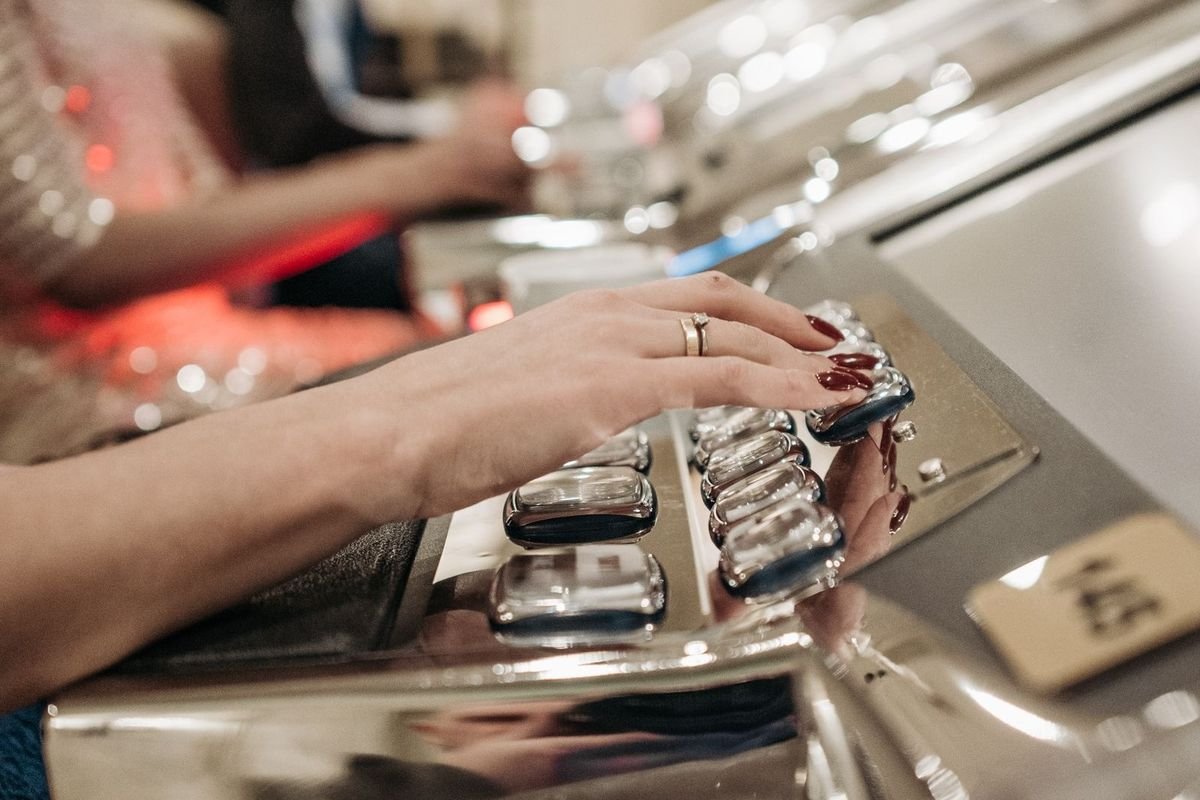
Now for the part your fingers will actually be doing. Once your money is in and you’ve glanced at the paytable, you’ll see a small cluster of buttons at the bottom of the screen: a button to lower or raise your bet, a spin button, and a max bet button. Some machines also have a physical spin button or a handle on the side.
The bet buttons let you choose how much each spin costs. You might see a “Bet” display with plus and minus arrows, or preset amounts you can tap. Each tap changes your total bet per spin, and the machine shows the cost clearly on screen before you spin. Take a second to confirm the number matches what you intended: on a penny machine with fifty lines, a fifty-credit bet costs fifty cents, not a penny, and that difference adds up fast if you spin a hundred times without looking. The spin button is exactly what it sounds like — press it, the reels spin, and the result appears in a second or two. The max bet button is the one to be careful with: it jumps your bet straight to the highest amount the machine allows, in a single press, and people hit it by accident all the time because they’re reaching for the spin button. There’s nothing wrong with betting max when you mean to — on some games it unlocks the biggest jackpot — but it should always be a choice, not an accident.
Your Players Club Card: The Free Plastic That Pays You Back
Before you put a single dollar into a machine, walk over to the players club desk — usually near the entrance or the cashier’s cage — and get a players club card. It’s free, it takes about two minutes, and it’s the single best thing a first-timer can do in a casino. When you’re learning how to play slots at a casino, the players card is the one piece of the puzzle that actually puts something back in your pocket.
The card works like a loyalty card at a coffee shop. You slide it into the card reader on the machine before you start playing, and the machine tracks your play. The casino gives you points based on how much you play, and those points turn into free meals, free rooms, free play credits, and show tickets. The rate is modest, but on a normal evening you might earn a free buffet or a few dollars of free slot play. Signing up is simple: show your ID, they take your details, and they hand you a card. Insert your card before your money when you sit down, and when you’re done, make taking it out part of your leaving ritual: cash out, take the ticket, take the card, then stand up.
The Random Number Generator and RTP, in Plain English
I promised to keep the mechanics short, so here it is: every modern slot machine is run by a computer program called a random number generator, or RNG. The RNG produces random numbers thousands of times every second, even when nobody is playing. The moment you press spin, the machine turns the RNG’s current number into a result on the reels. There is no hot machine, no cold machine, and no machine that is “due” to pay out. Every spin is independent, and the machine has no memory of the spin before it.
The other term you’ll hear is RTP, or return to player: the percentage a machine pays back over a very long period — millions of spins. A machine with 95% RTP is designed to return about $95 for every $100 wagered over that enormous stretch. In a single evening, though, your results will swing wildly around that average, and that’s completely normal. This matters because it kills the two most expensive myths on the floor: that you can feel a machine warming up, and that a machine that just paid a jackpot is now empty. Neither is true. If you want the maths behind it, the Wizard of Odds slot machine pages explain the odds clearly, written by a mathematician rather than a casino marketing department.
What Happens When You Win: Hand Pays, Attendants, and Tax Forms
Winning is mostly straightforward: the machine adds credits to your balance, you keep playing or cash out, and that’s the end of it. But there’s a threshold where things change. When a win crosses a certain amount, the machine locks up, a light on top starts flashing, and a message asks you to wait for an attendant. This is called a hand pay. In the United States, the well-known threshold is $1,200 on a single slot win — hit that or more in one spin, and the machine locks while the casino prepares tax paperwork. The exact threshold can vary by jurisdiction, but the experience is the same everywhere: sit tight, don’t touch anything, and wait.
That tax paperwork, in the US, is a form called a W-2G. The attendant will ask for your ID, and often your Social Security number, so the casino can record the win. If you’re visiting from another country, bring your passport. A few practical points: stay at the machine while it’s locked, don’t let a friend sit down and touch buttons, and decide in advance what you’ll do with a big win. The most common regret after a hand pay isn’t the tax form — it’s feeding the whole win straight back into the machines within the hour. Knowing the routine in advance is part of knowing how to play slots at a casino without freezing up when the lights start flashing.
Cashing Out: The Ticket, the Kiosk, and the Cage
When you’re ready to stop, cashing out takes about ten seconds, and it’s the one step you should never skip. Press the button labeled “Cash Out,” “Collect,” or “Cashout,” usually near the spin button. The machine prints a ticket showing your remaining credits, and your balance drops to zero. Take the ticket, check the amount, and put it somewhere safe — that’s your money now, in paper form.
To turn the ticket into cash, use a redemption kiosk — a self-service machine near the exits — or the staffed cashier’s cage. Feed the ticket into a kiosk and it gives you cash in return; use the cage for larger amounts or tickets a kiosk won’t accept. Tickets expire, so cash yours out before you leave the building. And decide on a walk-away number before you sit down — a loss limit and a win amount where you stop. The ticket in your pocket is real money the moment you press cash out, and standing up at the right time is the final lesson in how to play slots at a casino and actually leave with money in your pocket.
Slot Floor Etiquette: Saving Machines, Tipping, and Busy Times
Slot machines are a solo game, but the floor is a shared space. If you step away for a few minutes, you can leave something on the chair — a jacket or a drink — to signal you’ll be back. Most casinos allow a brief absence of around fifteen minutes, though the exact limit varies. What you can’t do is claim a machine for an hour while you’re at dinner. And if you see a chair with a jacket on it, don’t sit down and don’t touch the machine — that player is coming back.
Tipping is almost entirely optional: a dollar or two for a drink from a cocktail server, or a small tip to the attendant who processes a hand pay. On busy weekend evenings, be patient — don’t hog a machine you’re barely playing while someone waits, keep your belongings contained, and don’t watch someone else’s screen over their shoulder. When you know how to play slots at a casino, you also know how to share the floor.
Frequently Asked Questions
Do I need to know anything before I play a slot machine for the first time?
No. You pick a machine, put money or a ticket in, check the paytable, choose your bet, and press spin. The only things worth learning in advance are how tickets work and how to cash out.
How much money should I bring for my first time playing slots?
Bring only what you’re comfortable spending on a night out, and decide the number before you arrive. Fifty dollars is plenty on penny or nickel machines if you bet modestly. Never bring money you need for bills or rent.
Can I use my phone or take photos while I’m playing?
Most casinos are relaxed about phones at slot machines, and plenty of people take a quick photo of a big win. Some properties restrict photography, so check the signs first.
What should I do if a machine takes my money but doesn’t give me credits?
Stay calm and don’t press anything else. Note the machine number, printed on a small plate on the machine, and press the service button or flag down an attendant. The casino can check the machine’s records and resolve it quickly.
Is it better to play one machine for a long time or move around?
It’s personal preference, and neither approach changes your odds. What matters is the practical side: whenever you leave a machine, press cash out first, take your ticket and your players card, and don’t leave credits sitting on a screen you’ll never come back to. That habit is part of knowing how to play slots at a casino like someone who has done it before.
Playing slots for the first time doesn’t need to be intimidating — it just needs a little preparation, and now you’ve got it. You know how to walk the floor, read a denomination sign, check the paytable, set your bet, and press spin. Next time you’re standing on the slot floor with a twenty in your hand, you’ll pick a machine you actually like, sit down with a budget you’ve already decided, and enjoy yourself. Learning how to play slots at a casino is a one-evening education, and the second visit is always easier than the first.
Gamble responsibly. 18+ only.