
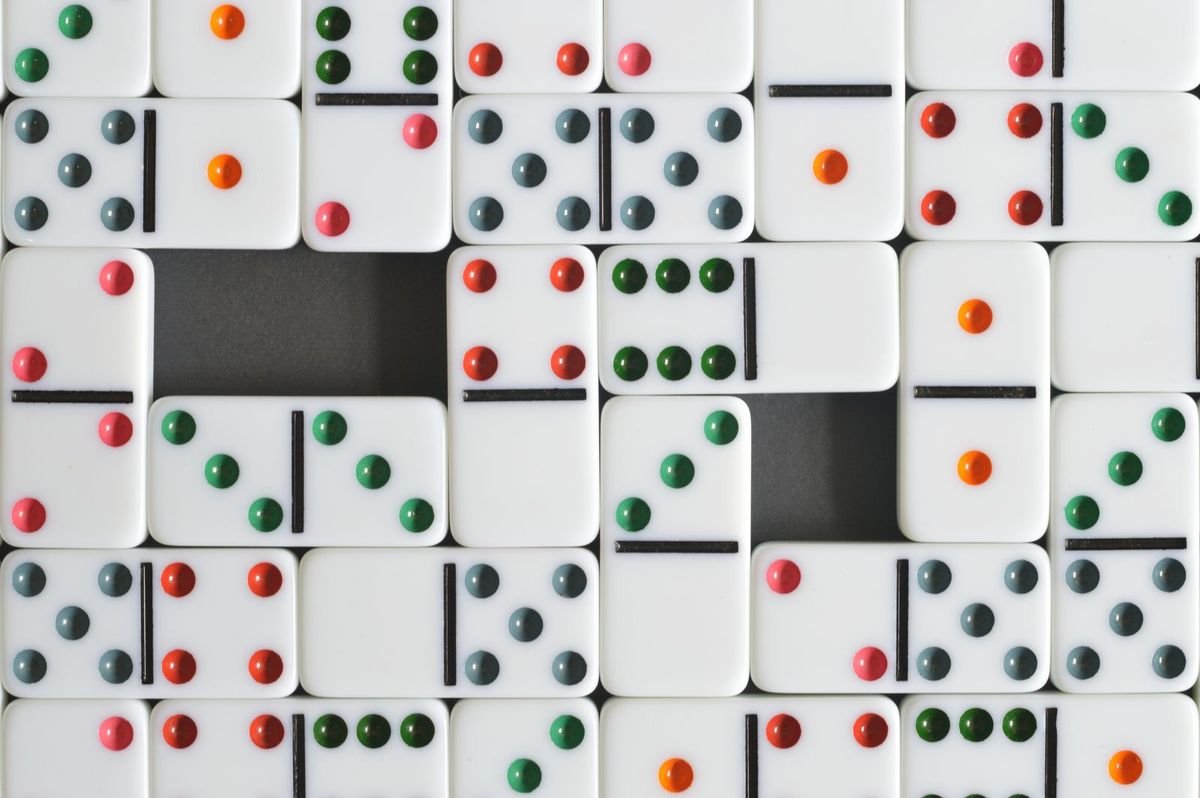
The first time someone tried to explain pai gow tiles to me, I nodded along like I understood and understood absolutely nothing. I was standing behind a half-empty table in the corner of a casino, watching four people stare at little ivory rectangles like they were reading tea leaves. Nobody was cheering. Nobody was groaning. The dealer moved at the pace of a man with nowhere to be.
That table was hosting one of the oldest gambling games on the planet — and one of the least understood by casual casino visitors. If you have ever walked past that quiet corner table covered in dominoes and wondered what was happening, this guide is for you: what the tiles mean, how a hand works, why the game moves so slowly, and how to sit down without embarrassing yourself.
Table of Contents
Pai Gow Tiles: What This Domino Game Actually Is
Let us clear up the biggest confusion first: pai gow tiles is played with 32 Chinese dominoes — not cards. If you sit down expecting to be dealt cards, you are at the wrong table.
The confusion exists because of a second, more famous game called Pai Gow Poker: a standard 52-card deck plus a joker, invented in a California card room in the 1980s. The two share a name root — “pai gow” loosely translates to “make nine” — and the same split-into-two-hands concept. But they are different games with different equipment, rankings, and feel. This article is about the original: the domino game.
A Thousand Years Old and Still Dealing
Pai gow tiles is often traced back to Song-dynasty China, which puts its origins somewhere around a thousand years ago — it was being played in Chinese gambling halls centuries before anyone in Europe had heard of a roulette wheel.
Chinese immigrants carried the game with them, and it eventually reached the casinos of Macau, Las Vegas, and Atlantic City. For a long time it stayed mostly within Chinese gambling communities, which is why the average Western visitor has never tried it. In recent decades, more casinos have started promoting it to general audiences, and curious players like me have started wandering over to see what the calmest table in the building is all about.
How a Round Actually Works
In a standard round of pai gow tiles, the dealer shuffles the 32 dominoes face down and stacks them into eight piles of four. The banker — more on that role in a minute — shakes a cup with three dice, and the total determines which seat gets the first stack. Every player ends up with four tiles. That is your whole hand, and everything that follows is about how cleverly you arrange those four dominoes.
Your job is to split them into two hands of two tiles each: a HIGH hand and a LOW hand. There is one iron rule: your high hand must outrank your low hand. Set them backwards and your hand is “fouled” — you lose automatically, no matter how good the tiles were. Dealers see beginners foul their hands all the time, and it is a painful way to lose a bet you might otherwise have won.
Once hands are set, each player’s high hand is compared against the banker’s high hand, and each low hand against the banker’s low hand. Win both and you win the bet; lose both and you lose; split them and it is a push — your bet is returned. If a hand ties exactly, the banker wins the tie. That last detail matters more than it sounds.
The 32 Tiles on the Table
A set of pai gow tiles consists of 32 Chinese dominoes, each a small ivory-colored rectangle divided into two halves, with black and red pips marking the values. If you have ever played Western dominoes, the look will feel familiar, though the markings follow the Chinese tradition.
The part that surprises newcomers: the set is not 32 unique tiles. Eleven tiles appear as identical matched pairs — the “civil” series — while the rest are singles. This pairing structure is the foundation of the game’s ranking system: pairs beat everything, and among pairs there is a strict traditional pecking order. You do not need to memorize it on day one, but understanding the principle is the core knowledge that separates beginners from competent players.
Gee Joon, Teen, and Day: The Pairs That Run the Table
At the very top of the ranking sits the supreme pair, called Gee Joon: the [1-2] tile paired with the [2-4] tile. Nothing beats Gee Joon — if you are ever dealt those two together, your high hand is essentially unbeatable.
Below Gee Joon comes the traditional ordering of matched pairs, headed by the pair of [6-6] tiles, known as Teen, and the pair of [1-1] tiles, known as Day. The ranking runs down through the remaining matched pairs in a fixed traditional order that casinos print on their “house way” cards. You do not need to memorize the full ladder before your first session, but know that Teen and Day are the big ones everyone hopes to see.
One more quirk: the two Gee Joon tiles are shape-shifters. When not paired together, each can count as either 3 pips or 6 pips, whichever helps your hand more — a small flexibility that occasionally turns a mediocre hand into a respectable one.
Wong and Gong: The Next Best Thing
Not every good hand is a pair. The game has two famous named combinations sitting just below the pairs in strength, and you will hear their names at the table constantly.
A Wong is a Teen ([6-6]) or Day ([1-1]) pair combined with any tile totaling 9 pips. A Gong is the same idea one step down: a Teen or Day pair with a tile totaling 8 pips. Hold the two [6-6] tiles plus a 9-pip tile and you have a Wong — a genuinely strong hand beaten only by a higher pair.
Wong and Gong force real decisions during your split: that Teen pair could anchor your high hand as a Wong, or you could break things up differently. These judgment calls are the most skill-based part of the game — and exactly when beginners should ask the dealer for guidance.
When You Don’t Have a Pair: How Single Tiles Score
Most hands will not contain a pair at all. When your two tiles form no pair, Wong, or Gong, they are scored the simple way: add up all the pips and drop the tens digit — the total modulo 10.
Nineteen pips scores as 9; eighteen scores as 8. A total of 20 — or 10, or 30 — scores as 0, the worst possible hand, with the gloriously bleak name “gung,” meaning worthless. Nine is the best score you can make without a pair, which is why the game’s name nods at “make nine.”
A quick example: tiles showing [6-4] (10 pips) and [5-3] (8 pips) total 18, so the hand scores an 8 — solid and respectable. Tiles totaling 23 pips score a 3, weak enough that you would rather have it as your low hand. Once you internalize this arithmetic, reading your tiles becomes second nature.
The High/Low Split and the House Way
The split is where the game is won and lost. With four tiles you are always balancing: the strongest possible high hand usually leaves the weakest low hand, and vice versa. The art is finding the split most likely to win both comparisons against the banker — or at least push instead of losing both.
Remember the iron rule: the high hand must outrank the low hand or the hand is fouled. Beyond that, every casino publishes a “house way” — the house’s prescribed method for arranging tiles, designed to be mathematically sensible. It is your best friend as a beginner: just ask the dealer to set your hand the house way and watch. I did this for my first several sessions, and you will absorb the logic far faster by watching correct sets than by agonizing over tiles yourself.
One tactical note: because the banker wins all exact ties, borderline hands resolve in the banker’s favor slightly more often than your gut expects. Keep that in mind when choosing between an aggressive split and a conservative one.
Banking: The Best Seat You Can Take
One of the smartest quirks of the game is that the banker does not have to be the casino. In most casinos the banking privilege rotates, and any player with a sufficient bankroll can take a turn. When you bank, you play the house’s role: every player’s hands are compared against yours, you win all the ties, and you collect from everyone you beat on both hands.
The catch is the commission: the casino takes a cut, typically around 5%, of the banker’s net winnings. Even so, banking is widely considered the best-value seat at the table, because winning the ties is such a meaningful edge — and the commission guarantees the casino its cut regardless of who banks.
Should you bank as a beginner? If your bankroll allows it, yes — but keep it short. Banking means covering everyone else’s bets, so your exposure and swings are bigger. A sensible approach is to bank for a short, defined stretch rather than camping in the seat all night.
Why This Is the Slowest Table on the Floor
Pace is the game’s defining characteristic. A hand of pai gow tiles takes a while: the shuffle, the dice cup, the deal, then every player studying four tiles and arranging two hands, then the comparisons and payouts. You might play 30 or so hands per hour, compared to 60-plus at blackjack.
And a huge share of those hands go nowhere. Since you must beat the banker on both hands to win, stalemates are extremely common and your bankroll barely moves for long stretches. Nobody is riding a roller coaster — the game is engineered for gentle drift rather than violent swings.
That low volatility is either the game’s greatest strength or its fatal flaw, depending on your temperament. If you want adrenaline, the craps table is screaming your name. But if you want a social, unhurried evening where a modest bankroll lasts for hours, there is nothing better on the casino floor. If you enjoy that relaxed, communal atmosphere, you might also like our guide on how to play sic bo, another Asian casino classic with its own distinctive rhythm.
Beginner Strategy: How to Sit Down Without Looking Lost
The best beginner strategy for pai gow tiles has almost nothing to do with memorizing tile rankings. First, watch a few hands before you buy in. Ten minutes of observation — how players arrange tiles, the dealer’s rhythm — will teach you more than an hour of reading.
Second, use the house way without embarrassment. Tell the dealer you are new and ask them to set your hands; every dealer I have met would rather set your hand correctly than watch you foul a winner.
Third, bank when offered and your bankroll allows it, but keep banking turns short. Fourth, size your bets for a long session, not a quick score — the entertainment value here comes from duration. Finally, mind the etiquette: keep tiles on the table where cameras can see them, do not show your hand mid-round, and once hands are set, leave them alone.
To verify any ranking against an authoritative source rather than taking my word for it, the Wizard of Odds page on the game lays out the complete tile rankings clearly. Cross-checking the fundamentals is never a bad idea before real money is involved.
Frequently Asked Questions
Is pai gow tiles the same as Pai Gow Poker?
No — pai gow tiles is the original domino game, roughly a thousand years old and played with 32 Chinese dominoes. Pai Gow Poker is a card-game adaptation invented in the 1980s that borrows the name and the split-into-two-hands concept but uses a 52-card deck plus a joker. They are entirely different games that happen to share a name root.
Is pai gow tiles hard to learn?
It looks intimidating because the tiles are unfamiliar, but the basics are genuinely simple: you get four tiles, you make two hands of two, high must beat low. Most beginners are setting hands competently within a single session, especially if they ask the dealer to use the house way while they learn the tile rankings.
Can a complete beginner sit down at a real table?
Absolutely. The pace is slow, the minimums are often modest, and dealers are accustomed to guiding newcomers — it is one of the most beginner-friendly table games in the casino. Watch a few hands first, buy in for a small amount, and let the dealer set your hands the house way until you find your footing.
What does the banker actually do?
The banker covers all the action: every player’s two hands are compared against the banker’s two hands, the banker wins all exact ties, and the casino collects a commission of around 5% on the banker’s net winnings. The banking privilege usually rotates among players, and taking a turn as banker is considered the best-value seat at the table.
Is it a good game for a small bankroll?
It is one of the best. The slow pace means fewer bets per hour, and the constant pushes mean your money drains very slowly compared to faster games. A modest buy-in can realistically last an entire evening. That said, the house still holds an edge, so treat it as paid entertainment, not as an income strategy.
If you ever walk past that quiet corner table and feel curious, do what I did: stop, watch a few hands, and then take the empty seat. The tiles will feel strange in your hands for about ten minutes, and then something clicks. A thousand years of gamblers cannot be wrong about a good way to spend an evening.
Gamble responsibly. 18+ only.