
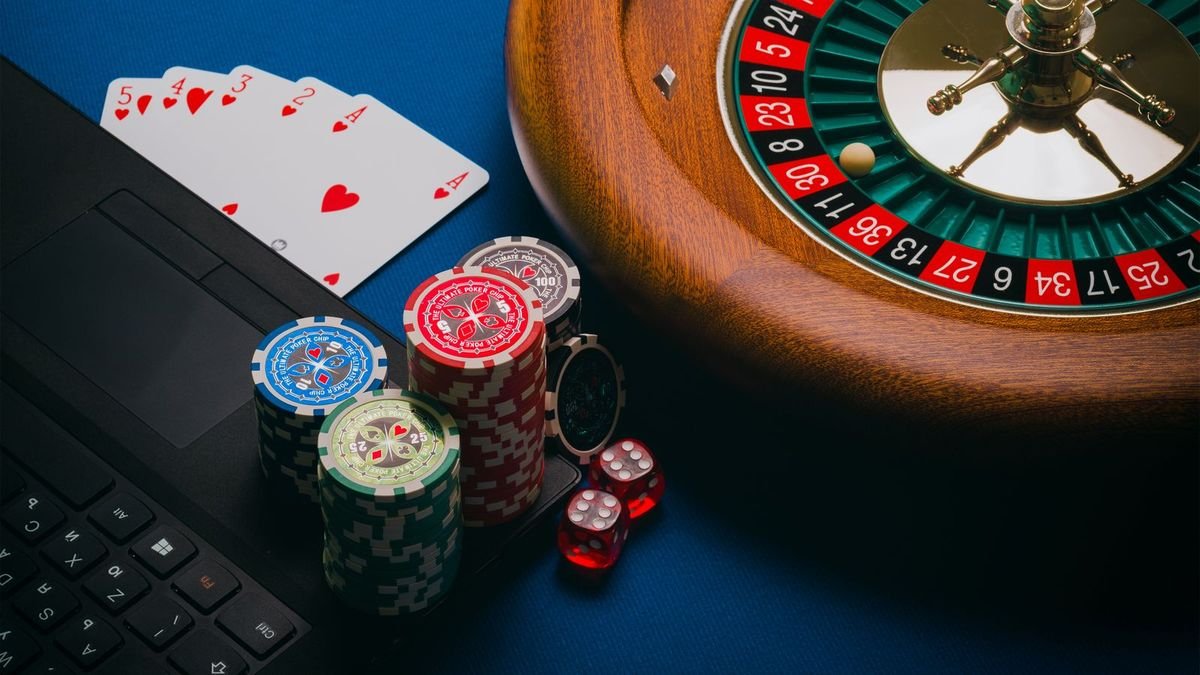
Learning how to play poker online can feel a bit overwhelming at first. There are lobbies full of strange terms, tables that move fast, and players who seem to know exactly what they are doing. I remember sitting at my first virtual table, staring at buttons I did not understand, and wondering whether I had just made a terrible mistake.
The good news is that online poker is not nearly as complicated as it looks. Once you understand the basics — how to pick a safe site, how a hand actually works on screen, and how to manage your money — the rest starts to fall into place. This guide walks you through all of it, step by step, in plain language.
Table of Contents
What Online Poker Actually Is (and How It’s Different From Live Poker)
Online poker is the same card game you would play at a casino table or a kitchen table with friends, just played through software on your computer or phone. The cards are dealt by a random number generator instead of a human dealer, the chips are digital, and the other players are real people sitting behind their own screens somewhere in the world.
The biggest difference is speed. A live poker game might deal 25 to 30 hands per hour. Online, you can easily see 60 to 90 hands per hour at a single table, and many players sit at several tables at once. That speed is a double-edged sword: you learn faster because you see more situations, but you can also lose money faster if you are not careful.
Another big difference is the lack of physical tells. You cannot see anyone’s face, watch their hands shake, or hear their voice crack. Instead, you have to read betting patterns and timing. We will get into that later, because it is one of the most interesting parts of the online game.
The stakes online are also much lower than most people expect. While a casino might require a $100 or $200 buy-in at its cheapest table, online you can find games where you can sit down with a single dollar. That makes the internet the best place in the world to learn the game cheaply — as long as you treat those small stakes seriously and build good habits from day one.
Choosing a Safe, Licensed Poker Site
Before you deposit a single dollar, you need to pick a site you can trust. This is the most important decision you will make when you are learning how to play poker online, and it is worth taking your time over. A bad site can freeze your money, rig the experience with poor software, or simply disappear overnight.
The first thing I check is licensing. A legitimate poker site is licensed and regulated by a recognised authority, and it will say so clearly at the bottom of its homepage. You can confirm a site’s licence by checking the regulator’s own website — for example, the UK Gambling Commission publishes a public register of licensed operators, which is a good place to verify any site that claims to be regulated there.
Beyond licensing, look at the site’s reputation. Search for recent player reviews, check poker forums, and pay attention to complaints about slow withdrawals. A site that pays out quickly and answers support tickets is worth far more than a site offering a flashy bonus. Also check that the site uses encryption — the web address should start with https — and that it publishes information about its random number generator being independently tested.
Finally, think about the player pool and the software. A bigger site usually means more tables running around the clock and softer competition at the lowest stakes. The software should feel smooth and clear: you want readable cards, obvious buttons, and a lobby you can navigate without a manual. Most major sites let you play free “play money” games before depositing, which is a great way to test the software with zero risk.
Creating Your Account and Verifying Your Identity
Signing up for an online poker site takes about five minutes, but the verification step surprises a lot of beginners who are just learning how to play poker online. Here is how it usually goes.
You start by choosing a username and password, then you enter your name, date of birth, address, and email. Use your real details — the site will check them, and using false information will get your account closed and your money frozen. Your screen name is what other players see, so pick something you are comfortable being known by at the tables.
Then comes identity verification, often called KYC (Know Your Customer). The site may ask for a photo of your ID and a proof of address, like a utility bill or bank statement. This is normal and it is actually a good sign: regulated sites are required to verify who you are, and it protects you from someone else opening an account in your name. Verification usually takes a few hours to a couple of days, and you can often play with small deposits while it is pending, though you may not be able to withdraw until it is complete.
One tip: set up two-factor authentication the moment your account is created. Poker accounts hold real money, and they are a target for hackers. A second factor on your login is the cheapest insurance you will ever buy.
Deposits and Withdrawals: Getting Money In and Out
Depositing on a poker site is straightforward, and it is one of the first practical steps in learning how to play poker online. Most sites accept debit and credit cards, bank transfers, and e-wallets such as PayPal, Skrill, or Neteller. Some also accept prepaid cards or cryptocurrencies, depending on where you live. Minimum deposits are usually low — often $10 or $20 — which is plenty to start learning the game.
My advice is to start small. Deposit an amount you are completely comfortable losing, because in the beginning you are paying for lessons as much as you are playing for profit. Think of your first deposit as the price of a hobby, not an investment. If losing that money would bother you, deposit less.
Withdrawals deserve just as much attention as deposits, and this is where many beginners get frustrated. Before you deposit, check the site’s withdrawal options, processing times, and fees. Some sites process e-wallet withdrawals within hours; bank transfers can take several days. There may also be a rule that you must withdraw to the same method you deposited with, at least for the amount you deposited. Read those terms once, before you deposit, and you will never be surprised later.
Keep a simple record of your deposits and withdrawals, too. A notebook or a spreadsheet works fine. Knowing exactly how much money you have put in and taken out keeps the game honest with yourself, and it makes bankroll management — which we will cover in a moment — much easier.
The Lobby Explained: Cash Games, Tournaments, and Sit-and-Gos
The first time you open a poker site’s lobby, it can look like an airport departures board. Do not panic. There are really only three types of game you need to understand when you are figuring out how to play poker online.
Cash games are the simplest. You buy in for a set amount, the blinds stay the same, and you can leave whenever you like. If you lose your chips, you can buy more. Your chips are worth real money, dollar for dollar. Cash games are great for learning because every hand is independent — you can sit down, play for twenty minutes, and leave.
Tournaments are different. You pay a fixed buy-in and receive a stack of tournament chips that have no cash value. The blinds rise on a schedule, players are eliminated, and the last players standing share the prize pool. Tournaments can last hours, and the money is very top-heavy: a small number of finishers win most of the prize money. They are exciting, but they need patience and a different strategy from cash games.
Sit-and-gos sit in between. These are small tournaments, usually with 6 or 9 players, that start as soon as enough people register. They typically take 30 to 60 minutes. For a beginner, single-table sit-and-gos are one of the best formats to learn in, because the structure is simple, the time commitment is short, and you get constant practice at the short-handed and bubble stages of a tournament.
When you are starting out, my recommendation is simple: play low-stakes cash games or single-table sit-and-gos. Leave the big multi-table tournaments for later, once you are comfortable with the mechanics.
How a Hand Works Online: Buttons, Timers, and the Bet Slider
The mechanics of how to play poker online are simple once you have done it a few times, but the first few hands can feel rushed. Here is what to expect.
When it is your turn, the software highlights your seat and shows you buttons: usually Fold, Check (or Call), and Raise. There is also a bet slider and a box where you can type an exact amount. You can often tick a box in advance — like “check/fold” — so the software acts for you automatically if the action reaches you in a certain way. These pre-action buttons are a gift: use them to keep the game moving and to avoid timing out.
You also have a timer. Online poker gives you a limited number of seconds to act — usually 15 to 30 seconds, plus a small reserve called a “time bank” that you can use for tricky decisions. When your time runs out, your hand is usually folded automatically. That sounds harsh, but it keeps games moving. If you need more time on a big decision, click the time bank button early, before the regular timer runs out.
One habit to build early: always look at your position, the pot size, and the action before you before clicking anything. The software makes it easy to click fast, and clicking fast without thinking is the number one source of beginner mistakes. Take a breath, read the situation, and then act. Nobody at a low-stakes table will mind if you use a few seconds.
Also worth knowing: the software tracks everything. Your hand history is saved, and you can review every hand you played later. That is an incredible learning tool that live poker simply cannot offer. After each session, look back at a few hands where you lost a big pot and ask yourself whether you would play them the same way again.
Texas Hold’em Basics for Online Play
Texas Hold’em is the game you will play most often online, so if you want to know how to play poker online well, this is where to start. Let us cover the essentials.
Each player gets two private cards, called hole cards. Five community cards are dealt face up in stages — the flop (three cards), the turn (one card), and the river (one card) — with a round of betting after each stage. Your best five-card hand, using any combination of your hole cards and the community cards, wins the pot.
Position is the most important concept in Hold’em, and it matters even more online where the action is fast. Position means where you sit relative to the dealer button. Players who act later in a hand have more information, because they have seen what everyone else did first. That is why you should play many more hands from late position (near the button) and far fewer from early position (under the gun and the blinds).
Starting hands are the second pillar. As a beginner, play tight: strong pairs (aces through tens), strong aces (ace-king, ace-queen), and strong broadway hands (king-queen, king-jack) are your bread and butter. Fold the rest, especially from early position. It feels boring, and that is exactly the point — boring, patient play wins money at low stakes, while loose, splashy play donates it. If you want a deeper look at which hands to play from each seat, this guide to Texas Holdem starting hands breaks it down position by position.
The betting rounds follow a fixed pattern: pre-flop, flop, turn, river. In no-limit Hold’em — the format you will see most — you can bet any amount up to your full stack at any point. That freedom is powerful and dangerous in equal measure, which is why bankroll management and discipline matter so much.
Reading the Table When You Can’t See Anyone’s Face
One of the first questions beginners ask me is how you can possibly read opponents when you are learning how to play poker online and cannot see anyone’s face. The answer is that you read their actions instead of their faces — and actions are often more honest than faces anyway.
Betting patterns are your main source of information. Does a player raise every time they enter a pot, or do they only limp in? Do they bet big on the flop but check the turn? Over a dozen hands, these patterns start to paint a picture. A player who raises pre-flop and bets every street is usually aggressive; a player who only ever calls is usually passive. Keep simple notes in the software’s player-notes feature — “calls too much, never bluffs” is worth more than a perfect memory of one hand.
Timing tells are the online equivalent of a physical tell. An instant check often means a weak hand or a player who already decided to give up. A long pause followed by a big raise often means strength — or a player pretending to think. These tells are not reliable on their own, so never base a big decision on timing alone, but over time they add useful colour to your reads.
You may also hear about HUDs — heads-up displays that show statistics about your opponents, like how often they raise before the flop. HUDs are powerful tools, but they are not beginner tools. Most sites allow them, some do not, and many serious players argue that relying on one too early stops you from learning to observe for yourself. My honest advice: learn to watch the table with your own eyes first. If you still want a HUD after a few months, you will get far more out of it.
The most important read, honestly, is on yourself. If you catch yourself playing hands out of boredom or chasing losses, that is the most valuable tell in the room — and the one you should act on first.
Bankroll Management for Online Play
Bankroll management sounds dull, and it is the single biggest reason beginners either survive or go broke when they learn how to play poker online. Your bankroll is the total amount of money you have set aside for poker, separate from your rent, bills, and life. The rules are simple, but they require discipline.
First, never play with money you need. Your poker bankroll should be money you can afford to lose completely without it affecting your life. If that amount is $50, then your bankroll is $50, and that is perfectly fine. Plenty of successful players started with less.
Second, play at stakes your bankroll can handle. A common guideline is to have at least 20 to 30 buy-ins for the level you play. So if you play $0.01/$0.02 cash games with a $2 buy-in, a $50 bankroll gives you 25 buy-ins — a reasonable cushion. If you sit at a $1/$2 table with $200, you are one bad session from broke. When your bankroll drops, move down in stakes. When it grows, you can consider moving up. Moving down is not failure; it is the professional thing to do.
Third, set a stop-loss for each session. Decide in advance that if you lose, say, three buy-ins in a session, you stop playing for the day. Tilt — playing badly because you are frustrated — destroys more bankrolls than bad cards ever will. The tables will still be there tomorrow.
Finally, treat wins and losses as part of a long process, not as daily verdicts. Poker is a game of skill with a large amount of short-term luck. A good player can lose for a week; a bad player can win for a night. Judge yourself by your decisions, not by your daily results, and keep a simple record of sessions so you can see the real trend over time.
Bonuses and Rakeback, Explained Honestly
Poker sites love to advertise big welcome bonuses — “100% up to $600!” and similar offers. These can be genuinely valuable, but you need to understand what they actually are.
A deposit bonus is not free money handed to you on day one. It is released in small pieces as you play and pay rake — the small fee the site takes from each pot. A typical $100 bonus might be released in $10 chunks, each requiring you to generate a certain amount of rake first. That means you have to play quite a lot to unlock the full amount, and at low stakes it can take weeks. A bonus is a nice extra on top of play you were going to do anyway; it is not a reason to play more than you planned.
Rakeback is similar but simpler: some sites, or affiliates, return a percentage of the rake you pay, usually weekly. If you play regularly, rakeback can add up to a meaningful amount over months. But beware of offers that sound too good — if a deal promises an enormous rakeback percentage from an unknown site, it is probably not sustainable, and the site may not be trustworthy in the first place.
There is also the question of whether to shop around for bonuses at all when you are learning how to play poker online. My honest answer: for a beginner, the quality of the site, the softness of the games, and the reliability of withdrawals matter far more than a bonus. Pick a good site first, and treat any bonus as a pleasant surprise.
Common Beginner Mistakes (and How to Avoid Them)
Every beginner learning how to play poker online makes the same handful of mistakes, and I made all of them too. Knowing them in advance will save you real money.
The first is playing too many hands. New players want action, so they play weak hands like queen-seven or jack-four because they might hit something. They usually do not, and the chips slowly leak away. The fix is simple: tighten up, fold more, and be patient. Folding is free.
The second is playing too many tables at once. Online poker lets you open four, eight, or even twenty tables, and beginners copy the professionals they see on streams. Do not. One table is plenty until the decisions feel automatic. Two tables are fine once you are comfortable. More than that, too early, is a recipe for misclicks and missed information.
The third is chasing losses. You lose a big pot, you feel angry, and you immediately jump into a bigger game to “win it back.” This is tilt, and it is the fastest way to empty a bankroll. If you feel tilted, close the tables. Go for a walk. The game will wait.
The fourth is ignoring position. Beginners play the same hands from every seat, but a hand that is profitable on the button can be a loser under the gun. Respect position and your win rate will improve almost immediately.
The fifth is never reviewing your play. Online poker gives you a full history of every hand, and most beginners never look at it. Spend fifteen minutes after a session reviewing two or three big pots. Ask yourself what you knew, what you assumed, and what you would do differently. That habit alone will make you better faster than any book.
Staying Safe and Playing Responsibly
Poker should be fun, and for most people it is. But it is a real-money game, and it deserves the same respect you would give any form of gambling. A few habits will keep it in the fun category.
Set limits before you start: a deposit limit, a loss limit, and a time limit. Most regulated sites let you set these in your account settings — use them. Decide how long you will play before you sit down, and stop when the time is up, whether you are winning or losing.
Never play when you are drunk, tired, upset, or trying to escape a bad day. Poker rewards clear thinking, and emotional play is losing play. If you notice you are playing to chase losses or to avoid something else, that is a signal to step away.
Watch for the warning signs in yourself: hiding your play from people close to you, borrowing money to play, or feeling anxious when you are not playing. If any of those sound familiar, use the site’s self-exclusion tools and speak to a support organisation. There is no shame in it — it is the smart, strong thing to do.
And remember that poker is a long game. Nobody becomes a winning player in a weekend. The players who last are the ones who protect their bankroll, keep learning, and treat the game as a skill to build rather than a lottery ticket.
Conclusion
Figuring out how to play poker online is really about mastering a handful of fundamentals: pick a licensed, trustworthy site, learn the mechanics of the software, start at stakes you can afford, play tight and patient, manage your bankroll, and review your hands. None of that is glamorous, and all of it works.
Your first few sessions will be messy. You will misclick, you will time out on a hand you wanted to play, and you will lose pots you were sure you would win. That is normal. Every player you will ever sit across from — online or live — went through exactly the same thing.
Start small, stay patient, and keep learning one idea at a time. The tables will be there whenever you are ready, and with the foundations from this guide, you will be ready sooner than you think.
Frequently Asked Questions
Is it legal to play poker online?
It depends on where you live. In many countries and states, online poker is legal and regulated; in others it is restricted or prohibited. Always check the laws in your own jurisdiction and only play on sites that are licensed to operate where you are. If you are unsure, your local gambling regulator’s website is the best place to check.
How much money do I need to start playing poker online?
You can start with as little as $10 or $20 at most sites, which is enough to play the lowest stakes cash games or small sit-and-gos. What matters is not the amount but that it is money you can afford to lose. Start small, learn the game, and only add money when you are comfortable with how it works.
What is the best poker game for a beginner?
Texas Hold’em is the best starting point for almost everyone, because it is the most popular game online, so there are always tables running and plenty of learning material available. Within Hold’em, low-stakes cash games or single-table sit-and-gos are the friendliest formats. Once you are comfortable, you can explore tournaments and other variants.
Can you really win money playing poker online?
Yes, but it takes time and skill, and most beginners lose money at first while they are learning. Poker is a skill game in the long run, which means disciplined, patient players can win over thousands of hands. Treat your early sessions as paid education, focus on making good decisions, and do not expect quick profits.
Do I need special software or a HUD to play poker online?
No. All you need is the poker site’s own software or app, which is free to download. A HUD is an optional statistics tool that some players use, but it is not necessary — especially when you are starting out. Learning to observe betting patterns and timing yourself will teach you far more in your first months than any software add-on.
Gamble responsibly. 18+ only.