
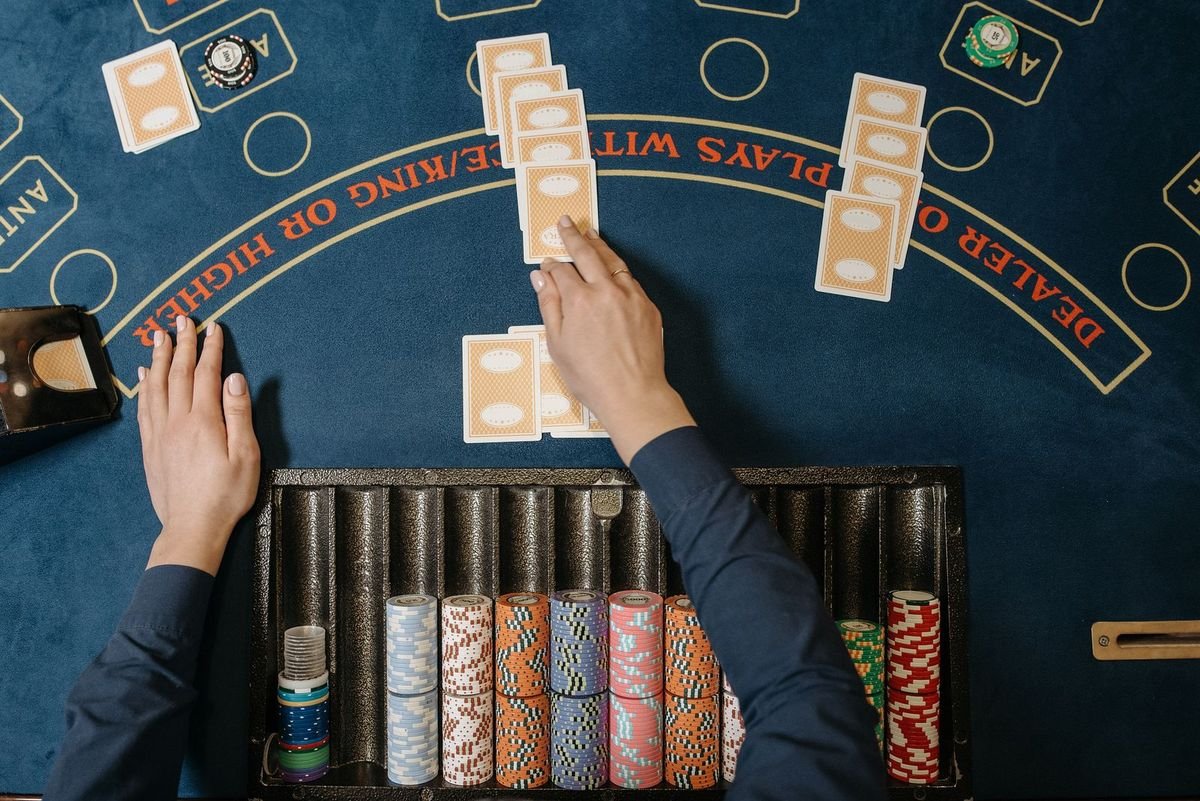
I’ve lost count of how many times I’ve sat at a blackjack table and watched someone’s session die in the little circles next to the main betting spot. You know the ones — they promise payouts like 100-to-1 and make the boring old 3-to-2 blackjack payout look like pocket change. But blackjack side bets are some of the most misunderstood wagers in the entire casino, and if you don’t know exactly what you’re betting on, those shiny circles will drain your chips far faster than a cold deck ever could.
I learned this the expensive way on my first real casino trip. I kept winning my main hands, kept losing my 21+3 bets, and ended the night down even though my actual blackjack play had been fine. That taught me a painful truth: blackjack side bets are a separate game entirely, and the house edge on them is often five to ten times worse than the main game. Below I’ll walk you through how the most common ones work, what they pay, roughly what they cost you long-term, and when — if ever — to touch them.
Before we go further, one piece of advice: learn the base game first. If you can’t play a basic hand without second-guessing yourself, you have no business stacking side wagers on top. My breakdown of blackjack basic strategy covers the charts and decisions that keep the main game’s edge tiny — master that before spending a single chip on anything I describe below.
Table of Contents
Blackjack Side Bets: What They Actually Are
Blackjack side bets are optional wagers placed alongside your main blackjack hand. They don’t touch your main hand at all — you can win your main bet and lose the side bet, or the other way around. They’re decided by the cards dealt (yours, and sometimes the dealer’s), and they pay much bigger than the standard blackjack payout. The catch is that those generous-looking payouts come with house edges that would make a regular blackjack player wince.
Casinos love blackjack side bets because most players never check the math. A main hand played with reasonable strategy carries a house edge under 1%. The side bets below carry edges from roughly 2.5% all the way up to around 24% — the difference between a game you can enjoy for an evening and a wager designed to grind you down.
You’ll also notice the marketing: glowing animations when someone hits a big payout, the dealer announcing “Perfect Pairs pays 30-to-1!” to the whole table — but no sign telling you the edge on that wager is 11%. Nobody posts a highlight reel of the hundreds of side bets they lost in a row, so the social proof is always skewed toward the wins.
21+3: The Poker Hand Inside Your Blackjack Hand
21+3 is one of the most popular blackjack side bets around, and the concept is simple: your two cards plus the dealer’s upcard form a three-card poker hand. If those three cards make a poker combination, you get paid.
| Poker hand | Typical payout |
|---|---|
| Suited trips | 100 to 1 |
| Straight flush | 40 to 1 |
| Three of a kind | 30 to 1 |
| Straight | 10 to 1 |
| Flush | 5 to 1 |
That feels amazing. The problem: the overall house edge on a six-deck game sits around 3.24% — and that’s the better-paying version. Some casinos quietly offer a worse pay table (30-to-1 on the straight flush instead of 40-to-1), which pushes the edge higher. Always glance at the felt before you bet, because the numbers vary more than most players realize. I find 21+3 one of the more entertaining side bets, but compare its roughly 3% edge to the ~0.5% on a well-played main hand and you’re paying about six times more for your entertainment. Small bets only, treated as a bonus thrill — never as strategy.
Perfect Pairs: Same Cards, Different Prices
Perfect Pairs is exactly what it sounds like: you bet that your first two cards will be a pair. The twist is that not all pairs pay the same. A “mixed pair” (same rank, different colors, like 9 of hearts and 9 of clubs) pays 6-to-1 with a house edge of roughly 2.6% on six decks. That’s the lowest edge among the common blackjack side bets — the least-bad option if you’re determined to play one.
A “colored pair” (same rank, same color) pays 12-to-1 with an edge around 6.7%. A “perfect pair” (same rank and suit) pays 25-to-1 with an edge of roughly 11.3%. Here’s what casinos count on you missing: you don’t get to choose between those edges. You place one bet and accept a blended edge across all outcomes — the 2.6% figure describes only the mixed-pair outcome, while most players fixate on the 25-to-1 headline. When it’s a bad idea: when you’re betting because “pairs happen all the time.” They do, but the blended math takes its cut on every wager regardless.
Lucky Ladies: The Infamous Queen-of-Hearts Bet
Lucky Ladies might be the most notorious of all blackjack side bets, and the math explains why. You win when your first two cards total 20: 4-to-1 for any 20, 9-to-1 for a suited 20, 19-to-1 for a matched 20, 125-to-1 for a suited queen pair, and a staggering 1000-to-1 if you and the dealer both hold the queen of hearts.
That jackpot is what makes people play it every hand. But the house edge is around 24% — for every hundred dollars wagered long-term, the expected loss is about twenty-four dollars, the worst wager on this list by a mile. If you want to verify the math yourself, the Wizard of Odds publishes detailed breakdowns of Lucky Ladies and most of the other bets I cover here. When it’s a bad idea: basically always, if you care about your money. Minimum bet, zero expectations, lottery-ticket mindset only.
Insurance: The Side Bet You Didn’t Know You Were Making
Surprise: insurance is technically a blackjack side bet. When the dealer shows an ace and offers insurance at 2-to-1, that’s a separate wager on whether the dealer has blackjack — it has nothing to do with your hand. You can take insurance and lose your main bet, or decline it and win.
Insurance pays 2-to-1 when the dealer has blackjack, but the true odds of a ten-value card under that ace are worse than 2-to-1. On a six-deck game the edge works out to roughly 7.4% — worse than 21+3 and far worse than the main game. “Even money” on your own blackjack is just insurance in disguise, with the same bad math. The one famous exception is card counting in a ten-rich deck, which doesn’t apply to recreational play. When it’s a bad idea: every time you’re not counting. Dealers frame it as protecting your hand, but you’re not protecting anything — you’re making a separate bet with a 7%-plus edge. Decline it and move on.
Royal Match: Crown the King and Queen
Royal Match is a simpler wager you’ll see at some tables, especially in European and UK casinos. Your first two cards being a suited king and queen — the “royal match” — pays 25-to-1, and some versions pay a smaller amount (around 5-to-2) for any suited first two cards, called an “easy match.”
The house edge runs around 3.5% to 4% depending on the pay table and deck count — middle of the pack. The appeal is the theme more than the math: kings, queens, crowns. When it’s a bad idea: when a suited K-Q “feels due.” Cards have no memory — the ~3.5–4% edge applies to every single wager. Fine as a tiny novelty, terrible as a habit.
Bust It and Buster Blackjack: Betting the Dealer Fails
Bust It (also sold as Buster Blackjack) flips the script: instead of betting on your cards, you bet the dealer busts. The more cards it takes the dealer to bust, the more you win — typically 1-to-1 for a three-card bust, scaling up to around 250-to-1 if the dealer needs eight or more cards.
I’ll admit this one is fun to root for — there’s something satisfying about the whole table cheering for a dealer bust. But the house edge generally lands around 6% to 7% depending on the pay table, similar territory to insurance. The big payouts look generous, yet eight-card busts are extraordinarily rare, and the pay table is calibrated so the casino keeps its cut regardless. When it’s a bad idea: when the dealer shows a 5 or 6 and a bust feels “guaranteed.” A dealer 6 busts roughly 42% of the time — great for your main hand, but the side bet only pays real money on rare multi-card busts, and the edge is priced for exactly that.
Hot 3: Chasing the Small-Number Jackpot
Hot 3 pays when your two cards plus the dealer’s upcard total a specific small number — usually 19, 20, or 21 — with the biggest payouts reserved for suited combinations. A typical table pays 1-to-1 for 19, 2-to-1 for 20, and up to 100-to-1 for a suited 7-7-7 jackpot.
The edge generally sits around 4% to 5%. It feels like it should hit constantly — small totals come up all the time — but the payouts on common outcomes are tiny, and the frequent small wins don’t offset the cost of playing every hand. When it’s a bad idea: betting it every hand because “it hits all the time.” Hitting often and profiting are different things — a frequent winner that pays less than it costs on average is still a losing bet, just a sneakier way to lose.
Bet Behind: Riding Someone Else’s Luck
Bet Behind differs from the other blackjack side bets here because you’re not betting on cards — you’re betting on another player. Common at online live-dealer tables, it lets you wager on a seated player’s hand; if they win, you win the same payout (sometimes minus a small commission or a capped blackjack payout).
The edge on Bet Behind is essentially the edge of the player you’re backing — fascinating and dangerous in equal measure. Back a solid basic-strategy player at a good table and your edge is under 1%, better than nearly every side bet on this list. Back a hunch player who hits 16 against a dealer 6, and you’re riding their mistakes downhill. When it’s a bad idea: backing a stranger whose play you’ve never watched. Observe a few hands first and pick your horse carefully — backing the table’s worst player because they’re “due” is superstition with extra steps.
Why Casinos Push These Bets So Hard
By now the pattern should be clear, and it’s worth stating plainly: side bets are high-margin products. Main-game blackjack is one of the few casino games where a skilled player holds the house under half a percent, which makes it a poor moneymaker for the floor space it occupies. Blackjack side bets fix that problem — for the casino.
The single most useful habit you can build is reading a pay table skeptically. Don’t stop at “100-to-1!” Ask what the most common outcome pays, because that’s where most of your results live — not the jackpot that hits once in a blue moon. Compare pay tables between casinos, since they vary wildly (remember 21+3’s 40-to-1 versus 30-to-1 straight flush). And a quick gut check beats precise math: if a bet wins roughly 1 in 20, fair would pay 19-to-1 — if the casino pays 12-to-1, the gap is the house’s cut.
My Honest Take: When (If Ever) to Play Them
I won’t tell you to never touch a side bet — that would make me a hypocrite, since I still occasionally put a dollar on 21+3 during a relaxed session. But I do it with clear eyes: that dollar is entertainment spending, like buying a coffee. It’s not strategy, I never chase losses on it, and I never raise the bet when losing.
If you’re going to play any of these, Perfect Pairs (lowest blended edge) and 21+3 (decent entertainment value at a moderate edge) are the least damaging. Lucky Ladies is a lottery ticket — minimum bet, zero expectations. Insurance gets declined every time unless you’re counting cards, which almost nobody reading this does at a meaningful level.
The golden rule is proportion. A $25 main bet with a $1 side bet barely dents your session math; a $10 main bet with a $10 side bet more than doubles your effective edge. Keep side wagers tiny next to your main bet, set a hard stop, and never try to win back side-bet losses by raising the wager. That’s how a fun $1 flutter becomes a session-killing leak.
Frequently Asked Questions
Are blackjack side bets worth it?
Mathematically, no — every side bet carries an edge several times higher than the main game. They’re only “worth it” as cheap entertainment, the way a lottery ticket is worth the fun of dreaming. If your goal is smart blackjack and a protected bankroll, skip them entirely.
Which blackjack side bet has the lowest house edge?
Perfect Pairs generally has the lowest edge among common side bets, at roughly 2.6% on the mixed-pair outcome in a six-deck game. But that’s the best of a bad bunch — the blended edge across all pair types is higher, and even the best side bet is still several times worse than a well-played main hand.
Can you win long-term playing blackjack side bets?
No. Every side bet in this article has a built-in edge guaranteeing casino profit over time, and none can be softened with strategy the way the main game can. Short-term wins absolutely happen — that’s what keeps people playing — but the long-term expectation is always negative.
Do side bets affect your main blackjack hand?
Not at all. Side bets resolve independently, so you can win one and lose the other in any combination. Taking or skipping one changes nothing about your main-hand odds or decisions — only how much money you risk each round.
Are online blackjack side bets the same as in land-based casinos?
Mostly yes — 21+3, Perfect Pairs, and Bet Behind appear in both, often with identical rules. But always check the pay table, because online versions sometimes use slightly different payouts that shift the edge. Live-dealer games also offer Bet Behind more commonly, since it’s built for crowded virtual tables.
Gamble responsibly. 18+ only.