
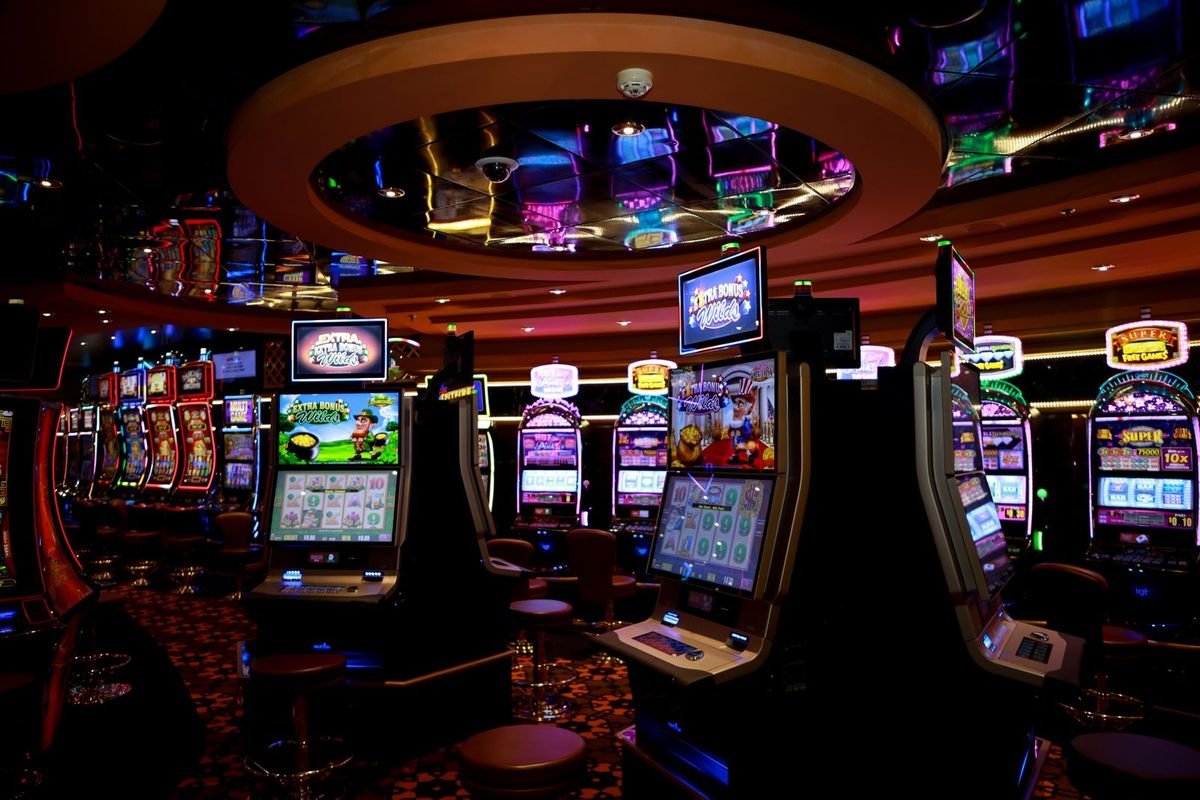
I have stood in front of a slot machine, coins in my hand and hope in my chest, and wondered the same thing every other player wonders. I wanted to know how to tell if a slot machine is about to hit, because if I could spot the signs, I could time my bets perfectly and walk away a winner.
I watched the reels, I listened to the sounds, and I waited for a feeling in my gut to tell me this was the one. Sometimes I was convinced I had cracked it. Most of the time, I was just wrong in a very confident way.
This guide is the honest version I wish someone had handed me years ago. I am going to walk you through what actually decides a spin, why the signals we trust are mostly tricks of the mind, and what is worth paying attention to instead.
Table of Contents
How to Tell If a Slot Machine Is About to Hit — What I Wish Someone Had Told Me First
Let me save you some time and some money right at the start. If you are looking for how to tell if a slot machine is about to hit, the short answer is that there is no reliable sign, no secret timing trick, and no pattern you can learn by watching long enough.
That sounds disappointing, I know. I felt the same way when I first accepted it. Part of the fun of slots is the feeling that you are close to figuring them out, and giving that up feels like giving up an edge.
But here is the thing I learned the hard way. The machines are not hiding clues. They are built to feel like they are giving you clues, while the outcome of every spin is already decided by maths you cannot see, influence, or predict.
Once I understood that, I stopped chasing signals and started playing in a way that actually protected my money. That shift did not make me win more often. It made me lose less stupidly, and that turned out to be worth far more.
How a Random Number Generator Really Decides Every Spin
Every modern slot machine, whether it sits on a casino floor or runs inside an app on your phone, is driven by a random number generator. People call it an RNG, and it is exactly what it sounds like.
The RNG is a piece of software that produces thousands of random numbers every single second, even when nobody is playing. The moment you press spin, the machine grabs the number generated at that exact instant and turns it into a result on the reels.
That is why learning how to tell if a slot machine is about to hit by watching the reels is impossible — the result is fixed before the reels even slow down. That means the outcome is settled in a fraction of a second. The spinning reels, the slowing symbols, and the little drumroll sound are just theatre. They make the result feel dramatic, but they do not change it.
It also means each spin stands completely on its own. The machine does not remember what happened on the last spin, and it does not care how much money you have put in. Your tenth spin has exactly the same odds as your first spin, and your hundredth spin has the same odds again.
I used to think a machine built up toward a payout, like a kettle coming to the boil. It does not. It simply picks a fresh random number every time, and that number either matches a winning combination or it does not.
Why a Machine Is Never “Due” to Pay Out
This is the belief that cost me the most money, so I want to be blunt about it. A slot machine is never due to pay out, no matter how long it has gone without a win.
I have heard players say it a hundred times. The machine has not paid in an hour, so it must be ready to hit. Someone else lost a fortune on it, so the next person must be the lucky one. The logic feels solid, because in everyday life, things do balance out eventually.
Slots do not work like that. This mistake has a name, and it is called the gambler’s fallacy. It is the idea that past results change future odds in a game of pure chance, and in slots, they simply do not.
Think of it like flipping a coin. If you flip heads five times in a row, the next flip is still a fifty-fifty call. The coin has no memory, and neither does a slot machine. A long losing run does not load the next spin with extra luck.
Believing you know how to tell if a slot machine is about to hit because it has gone quiet for an hour is exactly how the gambler’s fallacy keeps you seated. I once sat at a machine for far too long because I was sure it owed me a win. It did not owe me anything. It just kept doing what it always does, which is producing random results, and I kept feeding it money while I waited for a debt that did not exist.
The Near-Miss Effect: Why Your Brain Loves a Losing Spin
Here is the trick that fooled me more than any other. You spin, and two jackpot symbols land on the payline while the third stops just one space above or below it. Your heart jumps. You were so close.
That feeling has a name too. The near-miss effect describes how a loss that looks almost like a win can feel like progress, even though it is still a loss. Your brain treats it as evidence that you are getting warmer, and it urges you to try again.
Game designers know this, and the reels are built to produce near misses often enough to keep you engaged. The symbols are weighted, so the exciting ones appear near the payline more often than pure chance would suggest. It is not a sign that a win is coming. It is a feature that keeps you spinning.
I used to count near misses like they were points on a scoreboard. Three near misses in a row meant the machine was warming up, or so I told myself. In reality, I was just experiencing the same designed effect three times, and each of those spins was as random as the one before it.
If you think you have worked out how to tell if a slot machine is about to hit from a run of near misses, you are reading a designed effect, not a forecast. Once you can name this feeling, it loses some of its power. When my stomach flips at a near miss now, I remind myself that I lost that spin, full stop. The machine did not almost pay me. It did not pay me, and the next spin starts from zero again.
The False Signals I Used to Watch For
I was not a casual believer in slot tells. I had a whole system, and I defended it like it was science. Looking back, it was a collection of coincidences I had dressed up as a strategy.
I watched for machines that had just been vacated by a frustrated player, because I assumed they had warmed it up for me. I listened for machines that sounded busy, as if the noise meant they were paying out nearby. I even paid attention to the time of day, convinced that evenings were luckier than mornings.
None of it held up. A player leaving a machine tells you nothing except that they decided to stop. A noisy machine is just a machine with its volume turned up. And the time on the clock has no connection at all to the random numbers being generated inside the cabinet.
I also watched other players. If someone won big two machines down, I took it as a sign the whole row was hot. If a whole row went quiet, I assumed the machines were cold and moved on. I was reading meaning into random noise, the way you might see shapes in clouds.
Every system I built for how to tell if a slot machine is about to hit fell apart the moment I tested it honestly. The honest test I use now is simple. If a signal cannot be explained by how an RNG works, it is not a signal. It is a story I am telling myself, and stories do not change odds.
Does Time Since the Last Jackpot Mean Anything?
This is one of the most popular theories on any casino floor, and it sounds so reasonable that I believed it for years. If a machine has not paid a jackpot in weeks, surely it must be building toward one.
The problem is that jackpots do not build up inside a single machine like pressure in a pipe. On most machines, the jackpot is simply one very rare combination of symbols, and it can land on any spin, at any time, with the same tiny probability.
A machine that paid a jackpot yesterday can pay another one today, because the RNG does not take a break after a big win. A machine that has not paid a jackpot in a year can go another year without one, because nothing is counting down toward it.
Progressive jackpots are the one partial exception, and even here the timing is not a tell. The prize pool grows as players contribute, so the amount on offer gets bigger, but your chance of hitting it on any single spin stays the same. A bigger prize is not a closer prize.
Anyone who claims they know how to tell if a slot machine is about to hit by counting the days since the last jackpot is selling you a story, not a method. So when I hear someone say a machine is overdue for a jackpot, I now hear the gambler’s fallacy wearing a new outfit. The calendar is not a clue, and waiting for an overdue machine is just waiting for randomness to feel fair.
Hot Machines, Cold Machines, and Other Casino Floor Myths
Walk through any casino and you will hear people talk about hot machines and cold machines as if they were weather. That one over there is hot, they say. This one has gone cold, stay away.
I used to nod along, and I even had my own mental map of the hot corners of the floor. It felt like local knowledge, the kind of thing regulars pass down. In truth, it was just people naming random streaks after the fact.
A machine that has paid out three times in ten minutes looks hot, but those three wins were three independent random results. A machine that has paid nothing in an hour looks cold, but that hour was also just a run of independent random results. Give either machine another hour, and the picture can flip completely.
Then there are the physical myths, and I believed some of these too. I once heard that a warm machine was a machine that had been played hard and was ready to pay. I also heard that a machine that had just been serviced was looser, or tighter, depending on who was telling the story.
The idea that you can learn how to tell if a slot machine is about to hit by feeling the cabinet or watching the row is one of the oldest myths on the floor. Machines do not get warm with luck, and a service visit does not secretly reset the odds in your favour. Regulated machines run on certified software with fixed settings, and no amount of touching the cabinet, tapping the screen, or choosing a lucky seat changes the numbers being generated.
What Actually Matters Instead: RTP
If there is no tell for the next spin, what should you actually look at? The first thing I check now is the return to player percentage, usually shortened to RTP.
RTP is a long-term average. A machine with an RTP of 96% is designed to return about 96 pounds for every 100 pounds wagered over millions of spins. That does not mean you will get 96 back from your 100 tonight. It means the machine is, on average, less hungry than a machine with an RTP of 90%.
RTP will not teach you how to tell if a slot machine is about to hit on your next spin, but it will tell you which game is fairer over the long run. This is the closest thing slots have to useful information, and it is worth using. I would rather play a 96% machine than a 90% machine, because over time the higher figure keeps more of my money in play. It will not tell me when the machine is about to hit, but it tells me which machine treats my bankroll more kindly.
You can often find RTP in the game information or help screen, and reputable online casinos publish it openly. I also stick to licensed, regulated games wherever I play, and I check that the operator is overseen by a recognised authority such as the UK Gambling Commission. That does not improve my odds, but it does mean the game is tested, the RTP is real, and I have somewhere to turn if something goes wrong.
Think of RTP as choosing the better deal, not predicting the next result. It is the difference between picking a shop with fair prices and picking one that overcharges. Neither one tells you what you will find on the shelves today.
Volatility, Bankroll, and Session Limits
The second thing I look at is volatility, which is just a fancy word for how a game pays out. A low-volatility game pays small wins often, so your balance lasts longer. A high-volatility game pays rarely, but when it does pay, it can pay big.
Neither style is better on its own. It depends on what you want from the session and how much money you can afford to risk. I learned this by playing high-volatility games with a small budget and wondering why my money vanished in ten minutes.
Choosing the right volatility will not show you how to tell if a slot machine is about to hit, but it will help your budget survive the dry spells. If I have a modest budget and I want an hour of entertainment, I pick low volatility. If I have a bigger budget and I am happy to accept long dry spells for a shot at a larger win, I might pick high volatility. The choice is about matching the game to my wallet, not about finding a game that is about to pay.
That brings me to the part that matters more than any strategy, which is my bankroll. Before I play, I decide how much I am willing to spend, and I treat that money as the price of the entertainment. When it is gone, I stop. I do not chase it, I do not top it up to win it back, and I do not borrow from tomorrow’s budget.
I also set a time limit and a win limit. If I double my starting money, I walk away with the profit more often than not, because I know the longer I keep playing, the more the maths works against me. These limits are not exciting, and they will never feel as clever as spotting a tell. They are, however, the only tools that have ever actually protected my money.
If There’s No Tell, How Should You Actually Play?
So where does that leave us? If there is no reliable sign, no hot machine, and no perfect moment to press spin, is there any point in playing at all? I think there is, as long as you play with honest expectations.
I play slots for entertainment now, not as a way to make money. I pick a game I enjoy looking at, I check its RTP, I choose a volatility level that suits my budget, and I set a firm spending limit before I start. Then I play until the money runs out or the time runs out, whichever comes first.
I also take breaks, and I pay attention to how I feel. If I notice I am getting frustrated, chasing losses, or telling myself the next spin has to be the one, I stop. Those are the moments when the myths do their damage, because a frustrated player is far more likely to believe in a tell.
I keep my bets small relative to my bankroll, so a losing run does not wipe me out in minutes. I never play with money I need for rent, bills, or food, and I never play to solve a money problem. A slot machine is a terrible financial plan and a perfectly fine way to spend an evening, as long as I am honest about which one it is.
The biggest change for me was emotional. Once I stopped hunting for signs, I stopped feeling cheated when the signs did not work. I could enjoy a win when it came, shrug at a loss, and leave when I had planned to leave.
Frequently Asked Questions
Can you really tell if a slot machine is about to hit?
No, you cannot reliably tell. Every spin is decided by a random number generator, and each result is independent of the one before it, so there is no sign, sound, or pattern that predicts the next win.
Does a machine pay out more after a long losing streak?
No, a losing streak does not change the odds. The machine has no memory of past spins, so a long run without a win does not make the next spin more likely to pay.
Are hot and cold slot machines real?
Not in the way players usually mean it. A machine can have a lucky run or an unlucky run by chance, but those streaks do not predict what will happen next, and the machine does not stay hot or cold.
Do near misses mean a win is coming soon?
No, a near miss is still a loss. It can feel like progress because two symbols land close to the payline, but it does not change the odds of the next spin at all.
Is there any way to improve your chances on slots?
You cannot change the odds of a single spin, but you can choose games with a higher RTP, match the volatility to your budget, and set firm spending and time limits. Those choices protect your money, even though they cannot predict a win.
The Bottom Line
I came to slots looking for a secret, and I stayed long enough to learn that the secret is there is no secret. The reels are random, the tells are stories, and the only honest edge is the way you manage your own money and time.
That might sound like a dull ending, but I found it freeing. I no longer waste evenings chasing a machine I think is due, and I no longer feel foolish when a near miss turns out to be just another loss. I play for fun, I stop when I planned to stop, and I keep the rest of my money for things that actually matter.
If you take one thing from this guide, let it be this. Enjoy the game for what it is, a random flutter with flashing lights and a small chance of a pleasant surprise. Do not let it become a puzzle you have to solve, because it was never a puzzle in the first place.
Gamble responsibly. 18+ only.