
If you have ever walked past a craps table, you will know the feeling. People are cheering, dice are flying, and the table looks like it is covered in a secret code. I felt the same way the first time I stopped to watch.
So, what is craps, really? It is a simple dice game. Two dice are rolled, players bet on what number will come up, and everyone around the table usually wins or loses together.
When people ask me what is craps, I say this: learn the two basic bets and the flow of a round, and the rest makes sense quickly.
Table of Contents
What Is Craps and Why It Looks So Intimidating
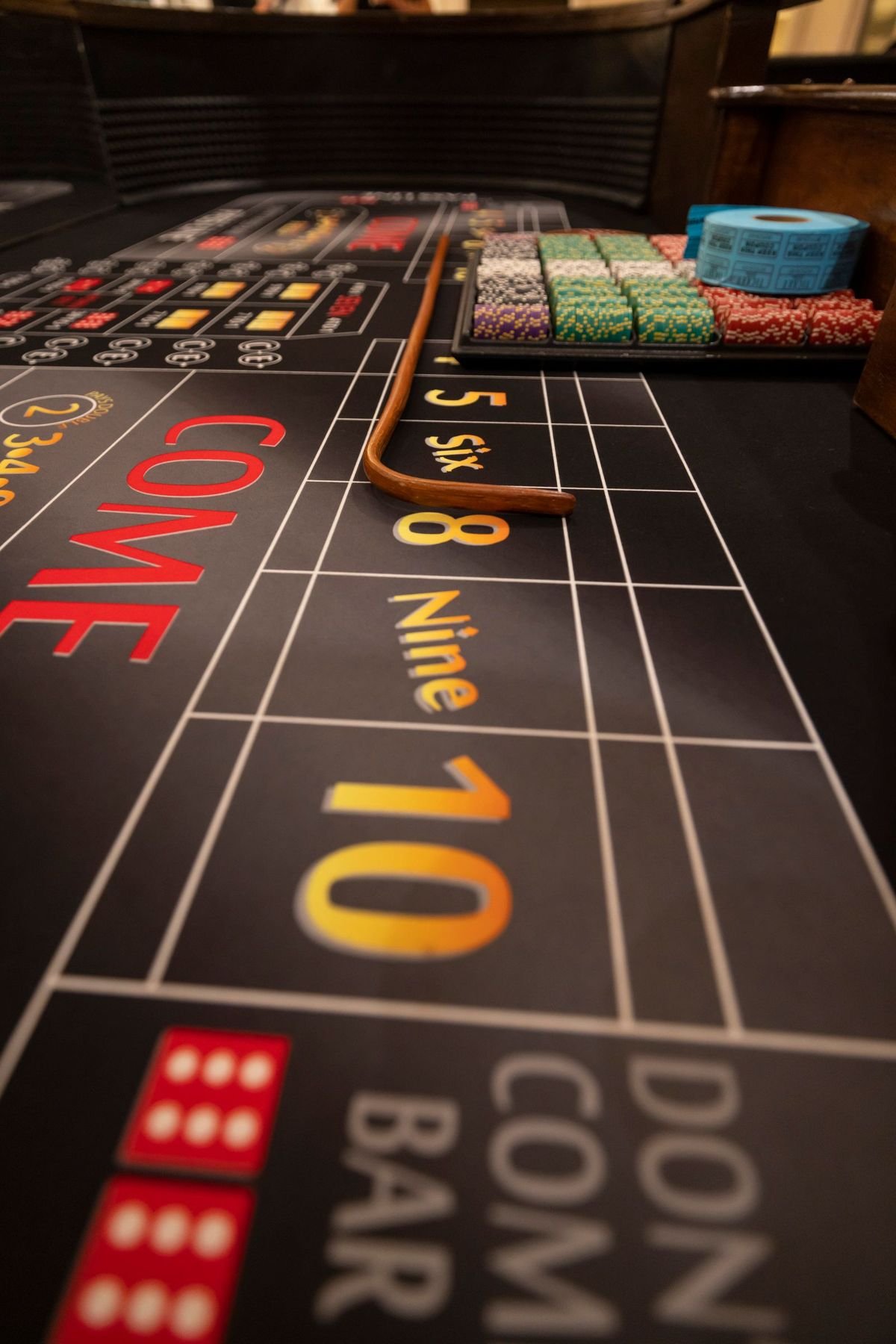
Craps looks far harder than it is. The table is large and covered in words and numbers, and eight or more players are often crowded around it, shouting at once. That noise is part of the fun, but it can make a beginner feel like they have walked into a private club.
Most of those markings are for bets you will probably never place at first. Experienced players use a handful of bets over and over and ignore the rest. The shouting is usually excitement, not anger, because strangers cheer for the same result.
Think of it as a board game where you only need two or three moves to start.
The Craps Table Layout, Explained Simply
A craps table is long and oval, with high sides so the dice stay in play. The dealer stands in the middle, players stand around the edge, and the felt is divided into betting areas. You do not need to learn every box on your first day.
For a beginner, the key areas are the Pass Line, the Don’t Pass bar, the Field, and the numbered boxes marked 4, 5, 6, 8, 9, and 10. Those are the point numbers, explained shortly.
Each player has a small area for their chips. Place your chips in the right area, or hand them to the dealer and name your bet. The dealer places middle-table bets for you, as players should not reach across.
Stand where you can see the table, watch a few rolls, and only bet when ready.
The Dice and the Shooter: Who Rolls and Why It Matters
Craps is played with two standard six-sided dice. One player at a time is the shooter, the person rolling the dice. The role moves clockwise around the table, and you can pass if you do not want to roll.
The shooter throws both dice so they hit the far wall and bounce back. That wall keeps the roll random. The casino provides the dice, and they are checked and replaced often.
Being the shooter is exciting but optional. You can bet on every roll without ever touching the dice. I did that at first, and it was a good way to learn the rhythm without the pressure of rolling in front of a crowd.
The shooter keeps rolling until they roll a seven after a point is set. That is called sevening out, and it ends their turn. Then the dice pass to the next player.
How a Round Works: The Come-Out Roll and the Point Phase
Every round starts with a come-out roll, the first roll of a new round. If the shooter rolls a 7 or an 11, Pass Line bets win straight away. If they roll a 2, 3, or 12, Pass Line bets lose. Those three losing numbers are called craps, which is where the game gets its name.
If the shooter rolls 4, 5, 6, 8, 9, or 10, that number becomes the point. The dealer marks it with a small puck so everyone can see it. The point phase has begun, and that is what is craps all about for most players: point versus seven.
In the point phase, the shooter keeps rolling until the point number or a 7 appears. Point first, and Pass Line bets win. Seven first, and they lose and the round ends. That tension is the heart of the game.
A round can last one roll or many. I have seen a shooter hold the dice for twenty minutes, and a round end on the first roll.
Pass Line and Don’t Pass Bets
If you learn only two bets, make them these two. The Pass Line bet is the most popular bet, and the one most beginners start with. Place it before the come-out roll, betting the shooter will win — by rolling a 7 or 11, or by making the point before a 7.
The Don’t Pass bet is the opposite. You are betting the shooter will lose — by rolling a 2 or 3 on the come-out, or a 7 before making the point. A 12 is usually a push, so you get your money back.
Pass Line players are called right bettors and Don’t Pass players wrong bettors, but that is just table slang. There is nothing wrong with betting Don’t Pass, though the mood can be cooler, as most people cheer for the shooter.
I started with the Pass Line because it is simple and puts me on the same side as most of the table. When everyone wins together, the celebration is half the fun, and the house edge on both bets is low.
The Main Bets Explained Simply: Odds, Place, Field, and Hardways
Once you are comfortable with the Pass Line, you will hear about odds bets, place bets, the field, and hardways. Here is the plain version of each, for learning what is craps beyond the first bet.
An odds bet is an extra bet behind your Pass Line bet after a point is set. You are betting the point will be made before a 7. It pays at true odds, with no house edge on that part. Casinos usually limit it to a multiple of your original bet.
A place bet is a bet that a specific point number — 4, 5, 6, 8, 9, or 10 — will roll before a 7. You can bet on one number or several. Payouts differ by number, as some are easier to roll than others.
A field bet is a one-roll bet that the next roll will be 2, 3, 4, 9, 10, 11, or 12. It is fast and simple, but the house edge is higher than on a Pass Line bet, so I treat it as a fun side bet.
A hardway bet is a bet that a number like 4, 6, 8, or 10 will roll as a pair — two twos for a hard four — before a 7 or the easy way. These pay well but are much harder to win, so I keep them small.
| Bet | What you are betting on | House edge (approx.) |
|---|---|---|
| Pass Line | Shooter wins the round | 1.41% |
| Don’t Pass | Shooter loses the round | 1.36% |
| Odds bet | Point is made before a 7 | 0% on the odds part |
| Place 6 or 8 | 6 or 8 rolls before a 7 | 1.52% |
| Field | Next roll is 2, 3, 4, 9, 10, 11, or 12 | 2.78% to 5.56% |
| Hardways | Number rolls as a pair before a 7 | 9.09% to 11.11% |
Craps Etiquette and Table Manners
Craps has more unwritten rules than most casino games. The most important is never to say the word seven at the table. Many players are superstitious about it, and even if you are not, respect the mood of the table.
Keep your hands out of the table area when the dice are rolling, and never reach for chips while the shooter is throwing. Wait for the dealer to finish paying out before you pick up winnings, and place money on the table rather than handing it to the dealer.
To buy in, put your cash on the table and say how much you want in chips. Tipping the dealer now and then is common, but always your choice.
I also learned to cheer with the table rather than against it. Betting Don’t Pass is fine, but loud celebrating when the shooter loses will not make you popular. A quiet, respectful game is better for your first sessions.
Craps Odds and House Edge in Plain Language
The house edge is the small advantage the casino has on each bet over the long run. It does not mean you will lose every time. It means that if a bet were repeated thousands of times, the casino would keep a small percentage of the total money wagered.
I like the basic bets because their house edge is low. The Pass Line edge of about 1.41% and the Don’t Pass edge of about 1.36% are among the fairest you will find. Add an odds bet, and the overall edge drops lower, as the odds part has no house edge.
Bets with big payouts usually have a much bigger house edge. That is why a hardway or proposition bet can look tempting, but it will eat into your bankroll faster. To check exact payouts, the Wizard of Odds craps guide is a clear reference I still use when brushing up on what is craps from the numbers side.
My rule is simple: spend most of your money on low-edge bets and keep long-shot bets small. That way, your money lasts longer.
Playing Craps Online vs in a Land Casino
Playing in a land casino is a social experience. You stand shoulder to shoulder with other players, the dice are real, and the energy when a shooter gets hot is hard to describe. Dealers help you place bets and keep the game moving.
Playing online is different, and in some ways easier for a beginner. You can play at your own speed, with no crowd watching, and most versions let you practise with small bets or in free-play mode. The social side is missing unless you choose a live-dealer version.
Online, you can take your time to look at the layout, check bet names, and think without feeling rushed. I would still recommend trying a real table once, as the atmosphere is a big part of what makes the game special.
If you are new to casino games, start with something simpler first and build your confidence. Take a look at the best casino games for beginners on this site, then come back when you feel ready to try what is craps in a lively, real-world setting.
Common Beginner Mistakes and Simple Strategy Tips for First-Timers
The most common mistake is betting on everything at once. It is tempting to cover half the felt, but spreading small bets everywhere usually means you lose a little on almost every roll. Pick one or two bets and learn them well.
Another mistake is chasing losses by doubling your bets after a bad run. A shooter can seven out several times in a row, so a calm, fixed bet size keeps you in the game longer.
A third mistake is forgetting to set a budget. Decide in advance how much you are happy to spend, bring that amount, and stop when it is gone. I also set a win limit, so I walk away happy instead of giving it all back.
For a simple first-timer strategy, start with a Pass Line bet, add a small odds bet once the point is set, and leave exotic bets alone until you understand them. Watch a few rounds first, ask the dealer if unsure, and remember every regular was once a beginner learning what is craps one roll at a time.
Frequently Asked Questions
What is craps in simple terms?
Craps is a dice game where players bet on the outcome of two dice. The shooter rolls, and players win or lose depending on the number rolled and whether a point is made before a seven.
Is craps hard to learn for a beginner?
It looks hard because the table is covered in betting areas, but the basic game is simple. Learn the Pass Line bet and how the come-out roll and point phase work, and you can play confidently.
What is the best bet for a beginner in craps?
The Pass Line bet is best for most beginners because it is simple, has a low house edge of about 1.41%, and puts you on the same side as most of the table. A small odds bet after the point is set can lower the edge further.
Can you play craps online?
Yes, in digital and live-dealer versions. Online play lets you learn at your own pace with smaller bets, while a land casino offers the social atmosphere of a real table.
How much money do you need to start playing craps?
That depends on the table minimum, which can be a few dollars online or much higher at busy tables. Set a budget you are comfortable losing, start with the minimum, and treat it as entertainment.
Conclusion
Craps earned its noisy reputation for a reason. Beneath the shouting and busy table, it is a straightforward dice game built around one question: will the shooter make the point before rolling a seven? Once you know that, the rest starts to fall into place.
My advice is to keep it simple, keep your bets small, and enjoy the shared excitement. Watch a few rounds, start with a Pass Line bet, respect the table manners, and walk away when your budget is done.
Gamble responsibly. 18+ only.