
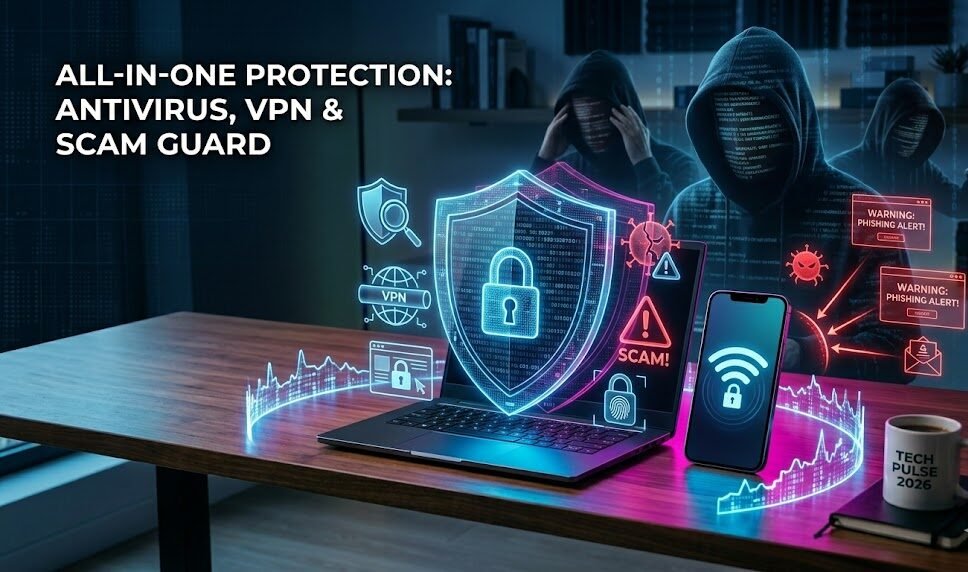
In today’s digital world, online threats are no longer limited to suspicious downloads or obvious spam emails. Cybercriminals now use increasingly advanced tactics to steal personal information, track browsing activity, lock files for ransom, and trick users into revealing sensitive details. That is why more people are searching for complete security solutions that do more than just detect viruses. They want one powerful layer of defense that can protect their devices, privacy, and identity at the same time. That is where all-in-one protection becomes essential.
A modern security suite that combines antivirus, VPN, and scam guard features gives users a smarter and more convenient way to stay safe online. Instead of relying on separate tools that may conflict with each other or leave gaps in protection, an integrated solution helps cover multiple risks in one place. For users who want strong malware protection without the hassle of managing several apps, this type of security package can be a practical and effective choice.
In this guide, we will explore how antivirus, VPN, and scam protection work together, why they matter, and what to look for when choosing the best security software for your needs. Whether you are protecting a personal laptop, a family’s devices, or a small business setup, understanding these tools can help you make a better decision and stay ahead of evolving threats.
Malware Protection That Covers More Than Just Viruses
When most people hear the word antivirus, they think of a tool that blocks traditional computer viruses. That was once the main job of security software, but threats have changed dramatically. Today, malware comes in many forms, including spyware, ransomware, adware, trojans, keyloggers, and phishing payloads designed to bypass basic defenses. This is why modern malware protection needs to be much broader than older antivirus programs.
A strong security suite looks for suspicious behavior, unsafe downloads, malicious websites, compromised attachments, and hidden scripts that may try to infiltrate your device. Instead of waiting for a known virus signature, advanced protection tools often use real-time scanning, behavior analysis, and cloud-based detection to identify threats more quickly. That matters because many harmful files are designed to change slightly so they can avoid detection by older systems.
Good malware protection also helps prevent infections before they cause damage. For example, if you accidentally click on a fake invoice, a dangerous pop-up, or a misleading software download, a security suite can warn you before the threat gets a chance to run. That early interception can save you from data loss, identity theft, and the time-consuming process of cleaning up an infected device.
Another major benefit of modern malware protection is the way it works across different threat categories. A suspicious attachment in an email may be designed to install spyware. A fake update prompt may hide ransomware. A harmful site may launch drive-by downloads. A complete security suite is built to stop all of these at different stages, which is far more useful than relying on a single basic scanner.
The best part is that stronger protection does not have to feel complicated. Good software quietly works in the background, scans in real time, and alerts you only when action is needed. That balance of convenience and safety is what makes all-in-one protection so appealing to everyday users.
Why Antivirus Alone Is Not Enough Anymore
Antivirus software remains an essential part of digital safety, but by itself it is no longer enough. Cyberattacks today often combine multiple methods, and the danger does not always come from a file on your computer. Sometimes the threat starts with a fake login page, a malicious ad, a rogue Wi-Fi network, or a scam message that persuades you to take action.
A traditional antivirus program may detect suspicious files after they are downloaded, but it may not prevent your data from being intercepted on public Wi-Fi. It may warn you about malware, but it cannot always protect your browsing privacy from advertisers, trackers, or network snoops. It may block dangerous files, but it may not always identify a cleverly disguised scam page that asks for your credentials.
That is why combining antivirus with a VPN and scam guard creates a more complete shield. Antivirus protects your device from known and emerging threats. A VPN helps protect your internet traffic and location. Scam guard helps warn you about deceptive sites, texts, emails, and other traps that try to manipulate users rather than software. Together, they address different attack paths that modern criminals commonly use.
The reality is that most users do not just need a virus blocker. They need a layered defense that protects them while downloading files, shopping online, banking, communicating, and browsing on shared networks. That layered strategy is far more effective against today’s threats and is one reason all-in-one security has become so popular.
How a VPN Strengthens Your Online Privacy
A VPN is one of the most valuable additions to a security package because it protects your internet connection and privacy. When you connect through a VPN, your traffic is encrypted and routed through a secure server, which makes it much harder for outsiders to see what you are doing online. This is especially useful on public Wi-Fi, where hackers may try to intercept data or exploit weak network security.
Privacy is not only about hiding from hackers. It is also about reducing the amount of information websites, advertisers, and third parties can collect about you. A VPN can mask your IP address, making it harder to infer your real location or build a detailed profile based on your browsing habits. For many users, this is a simple but meaningful way to regain some control over personal data.
A VPN is also useful for people who travel frequently, work remotely, or connect to the internet in cafés, airports, hotels, or shared offices. These environments can be convenient, but they are often less secure than home networks. A VPN adds an extra layer of encryption that helps protect logins, messages, and other sensitive activity from prying eyes.
It is important to understand that a VPN is not a magic shield against every threat. It does not automatically remove malware, block scams, or make risky downloads safe. However, when combined with antivirus and scam protection, it becomes part of a much stronger defense strategy. It protects the connection while the other tools protect the device and the user’s decisions.
For people looking for all-in-one protection, a VPN is not just a bonus feature. It is a core part of modern online safety because privacy and security are now deeply connected.
Scam Guard Protection for the Threats That Try to Trick You
Many of the worst cyber threats do not rely on technical hacking at all. They rely on persuasion, urgency, and emotional pressure. Scam guard features are designed to help users avoid those deceptive tactics before it is too late. This type of protection can be incredibly valuable because scams often target human behavior rather than software vulnerabilities.
A scam guard tool may warn you about suspicious websites, risky messages, impersonation attempts, fake shopping pages, or fraudulent offers. It can help identify emails that pretend to be from your bank, delivery service, social media platform, or employer. It may also alert you when a site looks like a clone of a legitimate brand but is actually set up to collect passwords or payment information.
These warnings matter because many online scams are carefully designed to look believable. The logos, colors, wording, and layouts may seem authentic enough to pass a quick glance. People who are busy or distracted can easily miss the signs. Scam guard features reduce that risk by acting as a second set of eyes.
Some security suites also look for dangerous phone numbers, suspicious text messages, or web links shared through messaging apps. That is useful because scams increasingly move across channels. A fake payment alert might begin in email, continue in text, and end on a malicious website. Protection that tracks these patterns can help interrupt the fraud before it spreads.
In practice, scam protection is about confidence. It gives users more peace of mind when clicking links, responding to messages, and shopping online. That confidence can lead to safer habits and fewer mistakes, which makes it a valuable part of a comprehensive malware protection strategy.
Why All-in-One Protection Is Better for Everyday Users
Most people do not want to manage five different security apps, keep track of separate subscriptions, or figure out which tool is responsible for which warning. That is one reason all-in-one protection has become so attractive. It simplifies online safety without forcing the user to become a cybersecurity expert.
With antivirus, VPN, and scam guard in one suite, the experience becomes much smoother. You can scan your device, secure your connection, and check suspicious links all within a single ecosystem. That convenience matters because the easier a security tool is to use, the more likely people are to keep it active and updated.
Another benefit is consistency. Separate security apps can sometimes overlap or interfere with one another. A unified suite is built to work together, which can reduce conflicts and make alerts more reliable. It also means one login, one dashboard, and one support system if something goes wrong.
For families, all-in-one protection can be especially useful. Parents may want to secure multiple devices, protect children from scam sites, and help ensure safe browsing on home and public networks. A combined suite can make those goals easier to manage. For remote workers and freelancers, it can support privacy, device security, and safe communication without adding unnecessary complexity.
All-in-one protection also helps users keep pace with changing threats. Security companies frequently update their detection methods, add new scam intelligence, and improve VPN infrastructure. When these services are part of one package, users can benefit from those updates more easily and stay better protected over time.
What to Look for in the Best Malware Protection Suite
Choosing the right security software is not just about brand recognition. It is about finding a suite that offers strong protection, useful privacy tools, and a smooth experience. One of the most important things to check is the quality of the malware protection itself. The suite should provide real-time defense, regular updates, and the ability to detect both common and emerging threats.
You should also look for a VPN that offers solid encryption, a clear privacy policy, stable performance, and enough server availability for everyday use. A slow or unreliable VPN can be frustrating, especially if you stream content, join video calls, or work online frequently. A good VPN should protect privacy without making your connection unusable.
Scam guard features deserve close attention as well. The best tools do more than block a few suspicious URLs. They analyze website behavior, compare known fraud patterns, and warn users before they enter sensitive information. That added intelligence can be the difference between avoiding a scam and becoming a victim.
Ease of use is another key factor. A powerful security suite is only useful if people actually use it correctly. Look for a clean dashboard, simple navigation, clear alerts, and straightforward setup. You should be able to enable protection, run scans, and review warnings without digging through confusing menus.
Performance matters too. Security software should protect your device without slowing it to a crawl. Resource-friendly design is especially important for older laptops or users who multitask heavily. Good software works in the background without interrupting normal work, study, or entertainment.
Finally, consider support and reputation. Reliable help resources, transparent pricing, and a strong history of software updates all point to a better long-term experience. The best malware protection suites combine strong technology with practical design, giving users both safety and peace of mind.
How Combined Protection Helps Stop Real-World Threats
The real strength of all-in-one protection becomes obvious when you think about everyday scenarios. Imagine receiving an email that looks like it came from a delivery service. It includes a link to track a package you never ordered. A scam guard feature may flag the site as suspicious before you click. If you accidentally download a file from that page, antivirus protection can help detect the malicious content before it runs.
Now imagine connecting to public Wi-Fi at an airport. Without a VPN, your traffic may be more exposed to interception. With a VPN active, your connection is encrypted, making it much harder for anyone nearby to observe or manipulate your data. If you later visit a fake banking website, scam protection may warn you that the page is not legitimate.
Another common situation involves social media messages or shopping ads that promise unrealistic discounts. These often lead to fake stores or phishing pages. A good scam guard system can flag the destination and help you avoid entering your card details. If a malicious file is hidden in a download, antivirus helps catch it before it infects your device. Each layer covers a different part of the threat, which is why the combined approach is so effective.
This layered model is especially important because cybercriminals rarely rely on one single attack method. They mix social engineering, malware, and network tricks to improve their chances. A security suite that includes antivirus, VPN, and scam guard is better prepared for that reality than a single-function product.
Why Malware Protection Is Important for Families and Remote Workers
Families and remote workers often have the most to lose from a security mistake. A single infected device can expose photos, documents, passwords, saved cards, work files, and personal messages. For households with children or older family members, the risk can be even greater because not everyone has the same level of digital awareness.
Malware protection helps create a safer environment for everyone on the network. It can reduce the risk of accidental downloads, fake apps, and dangerous websites. A VPN can help protect household browsing on shared networks, especially when multiple people are connecting from different devices. Scam guard tools can warn less experienced users before they click something harmful.
Remote workers also face unique challenges. They often switch between home networks, office systems, coffee shop Wi-Fi, and travel connections. They may handle client data, company logins, or confidential files. A combined security suite helps protect both the device and the connection, which is important when work and personal life overlap on the same laptop or phone.
The convenience of a single solution can make a big difference here. Instead of trying to train every family member or team member on several tools, one integrated suite can provide a more consistent baseline of safety. That consistency helps reduce mistakes and improves overall digital hygiene.
The Role of Real-Time Detection in Strong Security
Real-time detection is one of the most important features in modern malware protection. It means the software is actively watching for threats as you browse, download, open files, or install apps. This immediate response can stop attacks before they fully develop.
Traditional antivirus often worked like a scanner that checked items after the fact. Modern solutions are much more proactive. They may analyze file behavior, observe system changes, and compare suspicious activity against known attack patterns. This approach is valuable because new malware may not yet have a public signature, but it still often behaves in recognizable ways.
Real-time detection is especially useful when combined with web protection and scam guard capabilities. A bad download might be blocked the moment it is detected. A dangerous link might be flagged before the page loads. A fake login form might be recognized as suspicious before you have the chance to submit your details.
This kind of protection works best when it is always on. That is why users should choose software that makes active protection simple to enable and easy to trust. A tool that is disabled often or turned off because it is too annoying will not provide much real-world value. The best security is the one that actually stays in use.
Why Updates Matter More Than Most People Realize
Cyber threats change constantly. New malware variants appear, scam websites are created daily, and attackers refine their tactics to avoid detection. Because of this, security software must stay updated to remain effective. Outdated malware protection can miss threats that newer systems are designed to recognize.
Regular updates improve more than detection. They also help maintain VPN reliability, improve scam filtering, patch software vulnerabilities, and refine user experience. When security software evolves quickly, it can respond better to current attack trends and emerging risks.
This is one of the biggest advantages of reputable all-in-one protection suites. They are often backed by ongoing research and threat intelligence, which means users benefit from a system that is constantly learning. That matters because the internet changes fast, and the tools protecting you must keep up.
For users, the practical takeaway is simple. Choose software that updates automatically and does not require much manual maintenance. Strong malware protection should not depend on constant effort from the user. It should adapt behind the scenes and stay ready for the next threat.
How to Make the Most of Your Security Suite
Even the best security software works better when combined with smart habits. Malware protection, VPN, and scam guard features give you a strong foundation, but your behavior still matters. You should always be cautious with unknown links, fake downloads, urgent payment requests, and suspicious attachments. Security tools reduce the risk, but awareness still adds another layer.
It also helps to keep your operating system, browser, and apps updated. Many attacks exploit old vulnerabilities, so routine updates close some of the most common entry points. Strong passwords and two-factor authentication also make a major difference, especially for email, banking, and cloud accounts.
Using a VPN regularly on public Wi-Fi is another smart habit. It is not just for advanced users or people in risky locations. Anyone who travels, studies, works remotely, or shops online while away from home can benefit from encrypted traffic. Likewise, paying attention to scam warnings instead of ignoring them can help prevent costly mistakes.
The best approach is to treat all-in-one protection as part of a broader safety routine. Security software, careful habits, and basic digital awareness work best together. When those pieces are in place, you can browse, shop, stream, and work with much more confidence.
Choosing the Right Protection for Long-Term Peace of Mind
There are many security products on the market, but not all of them offer the same value. Some focus heavily on antivirus and treat privacy as an afterthought. Others provide a VPN but do little to stop scams or malicious links. A truly useful all-in-one solution should balance all three areas effectively.
The ideal product should offer dependable malware protection, a strong and easy-to-use VPN, and intelligent scam guard features that help prevent human error. It should also be affordable enough to stay in place long term, because security only works when it remains active. A short-term trial is useful, but the real question is whether the software is practical enough for everyday use.
Look for a suite that makes security feel effortless rather than overwhelming. Many people stop using tools that are confusing, too aggressive, or difficult to manage. The best software gives clear feedback, strong automatic protection, and enough customization to fit different needs without becoming a burden.
Long-term peace of mind often comes from knowing one solution is handling several important risks at once. That sense of simplicity can be just as valuable as the technology itself. When you do not have to worry about whether your device is protected, you can focus more on work, family, and daily life.
Final Thoughts: Strong Malware Protection Starts With the Right Layers
Online threats are more advanced, more deceptive, and more widespread than ever before. That is why a modern security strategy should go beyond basic antivirus. The best approach combines malware protection, VPN privacy, and scam guard intelligence into one practical system that helps defend against multiple attack types at once.
This layered protection is ideal for families, remote workers, students, travelers, and anyone who wants to use the internet with more confidence. It helps reduce risk from malicious files, unsafe websites, public Wi-Fi threats, phishing scams, and hidden digital traps. More importantly, it creates a simpler and more reliable security experience for everyday life.
If you are looking for a smarter way to stay safe online, all-in-one protection is one of the most effective choices available. It delivers convenience, coverage, and peace of mind in a single package. In a digital world where one careless click can lead to serious trouble, that extra layer of defense is not just useful. It is essential.
Protect your data, secure your connection, and stay one step ahead of cyber threats. The right security suite can make all the difference, and the best time to strengthen your protection is before a problem starts.